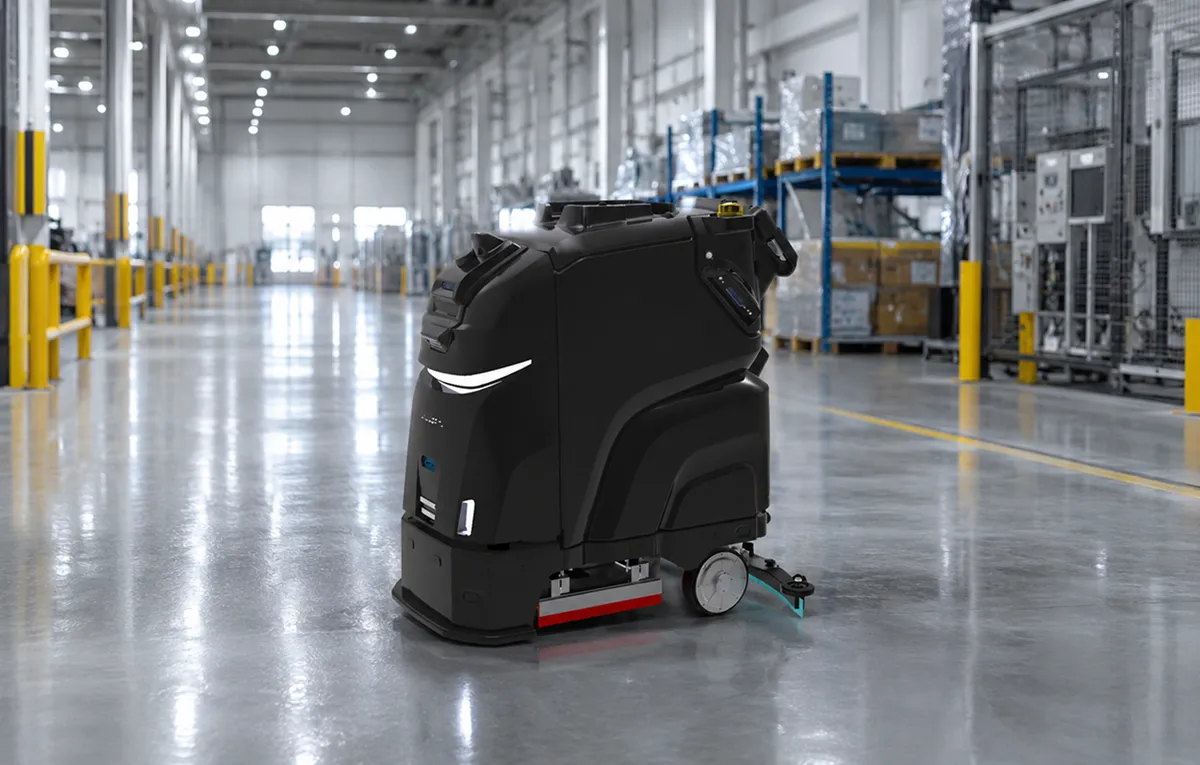

Large commercial and industrial facilities face continuous pressure to maintain clean, safe, and professional environments. Factories, warehouses, airports, shopping malls, hospitals, corporate parks, transport stations, and manufacturing plants often operate for long hours across wide floor areas. Dust, spills, packaging waste, tyre marks, dirt, and constant movement can make routine cleaning difficult to manage.
Traditional cleaning teams remain essential, but manual cleaning alone may not provide the consistency required across every shift and location. Employees may spend several hours operating floor-cleaning equipment or repeatedly covering the same routes. This limits the time available for inspections, detailed cleaning, spill response, waste handling, and other important facility tasks.
Autonomous Cleaning Robots offer a practical way to support these teams. The robots can handle planned floor-cleaning routes while employees focus on tasks that require human observation, flexibility, and judgment. Vulcan by Kody Robots supports this changing facility-management model by helping organizations automate repetitive floor-cleaning work. The goal is not to remove people from cleaning operations. The goal is to help teams achieve better coverage, improved consistency, and more efficient use of staff.
Key Takeaways
- Autonomous Cleaning Robots help commercial and industrial facilities manage routine floor care across large spaces.
- Cleaning automation can reduce repetitive manual work and allow housekeeping teams to focus on detailed tasks.
- Vulcan by Kody Robots can support factories, warehouses, airports, malls, hospitals, corporate parks, and transport facilities.
- The best cleaning model combines autonomous robots with trained human teams.
- Robot deployment works best when routes, schedules, responsibilities, and performance goals are clearly defined.
- Organizations can buy or lease cleaning robots based on their facility size, budget, and long-term automation strategy.
What Are Autonomous Cleaning Robots?
Autonomous Cleaning Robots are robotic systems designed to support routine floor-cleaning operations without requiring an employee to continuously guide the machine.
A facility team can define suitable cleaning areas and operating schedules. The robot can then support repetitive cleaning work across designated routes. Employees remain responsible for preparing the machine, monitoring operations, responding to unexpected conditions, and completing detailed cleaning tasks.
Autonomous cleaning systems can be used in:
- Industrial plants
- Warehouses
- Airports
- Shopping malls
- Hospitals
- Corporate parks
- Metro and railway stations
- Hotels
- Convention centres
- Educational campuses
- Large commercial buildings
The strongest use cases are usually found in wide, open, and repeatedly cleaned spaces. A robot can support large floor areas while employees manage washrooms, corners, stairs, spills, waste bins, glass surfaces, and sensitive zones.
Why Businesses Are Moving Toward Cleaning Automation?
Cleaning is a necessary operational function, but it is also physically demanding and repetitive. Large facilities may require the same corridors, production paths, warehouse aisles, or public areas to be cleaned multiple times each day.
Several operational challenges are encouraging businesses to explore autonomous cleaning.
Larger facilities require more coverage
Commercial buildings, factories, warehouses, and transport hubs are becoming larger. Expanding floor space increases the distance cleaning teams must cover during every shift.
High footfall creates repeated cleaning needs
Airports, malls, hospitals, and stations experience continuous movement. A floor cleaned in the morning may need attention again within a few hours.
Facility teams manage multiple responsibilities
Housekeeping employees do more than clean floors. Teams also manage spills, waste, washrooms, entrances, detailed cleaning, inspections, and visitor-facing issues.
Cleaning consistency can vary
Workload, staff availability, shift timing, and operational pressure can affect how consistently each area is cleaned.
Businesses need better productivity
Organizations want to improve cleaning output without placing excessive physical pressure on employees.
Autonomous cleaning helps create a more structured workflow. The robot handles routine floor routes, while employees manage the tasks that require greater attention.
How Vulcan Supports Industrial Cleaning?
Vulcan by Kody Robots can support businesses that need regular floor cleaning across large commercial and industrial environments.
The robot can be integrated into a planned facility workflow rather than being used only as a demonstration. Facility managers can identify priority areas, establish cleaning windows, assign employee responsibilities, and evaluate the results over repeated cycles.
Vulcan can support cleaning across:
- Production floor pathways
- Warehouse aisles
- Dispatch zones
- Airport concourses
- Mall corridors
- Hospital common areas
- Corporate building lobbies
- Transport station walkways
- Convention and event spaces
An Autonomous Cleaning Robot becomes valuable when it solves a real operational problem.
Regular use across suitable routes can help cleaning teams achieve better coverage without repeatedly operating the same equipment manually.
Use Case 1 Manufacturing Plants
Manufacturing facilities contain production zones, material movement paths, assembly areas, storage sections, and employee walkways. Dust, packaging material, equipment movement, and industrial activity can affect floor cleanliness.
Autonomous Cleaning Robots can support routine cleaning across suitable factory areas while trained staff handle machine-side cleaning, spills, safety-sensitive zones, and detailed work.
Potential benefits include:
- More consistent production floor cleaning
- Reduced repetitive equipment operation
- Cleaner worker movement paths
- Better support during long shifts
- Improved facility presentation
- More time for inspection-based cleaning
Robot routes should be planned around production schedules, employee movement, and material-handling activity.
Use Case 2 Warehouses and Distribution Centres
Warehouses rely on clean and organized floor space. Forklifts, pallets, trolleys, packaging material, workers, and inventory move across the facility throughout the day.
Dust and debris can build up in aisles, staging areas, packing zones, and dispatch sections. Cleaning these wide spaces manually can consume significant time.
Autonomous Cleaning Robots can support:
- Main warehouse aisles
- Packing areas
- Dispatch floors
- Staging zones
- Worker pathways
- Storage support areas
- Loading-zone surroundings
Warehouse teams can schedule cleaning during suitable operating windows to reduce disruption to inventory movement.
Use Case 3 Airports and Transport Hubs
Airports, metro stations, railway stations, and transport terminals receive heavy public traffic. Luggage wheels, trolleys, footwear, food packaging, and outdoor dirt can affect floors throughout the day.
Cleaning robots can support routine floor care across:
- Check-in halls
- Arrival areas
- Departure concourses
- Public corridors
- Waiting zones
- Baggage areas
- Ticketing sections
- Retail walkways
Human teams remain essential for spills, washrooms, passenger assistance, waste handling, and detailed cleaning. Robots support the large-area floor-cleaning layer.
Use Case 4 Shopping Malls
Shopping malls need clean floors to maintain a comfortable and premium visitor experience. Common areas can include long retail corridors, atriums, food courts, event zones, elevator lobbies, and entrance areas.
Cleaning demand changes throughout the day based on visitor traffic, events, weather, and food court activity.
Autonomous cleaning can support mall teams through:
- Repeated corridor cleaning
- Atrium floor care
- Entrance maintenance
- Food court surrounding cleaning
- Retail walkway support
- Event-area cleanup
- Common-area floor maintenance
A clean mall environment supports visitor comfort, tenant satisfaction, and overall brand perception.
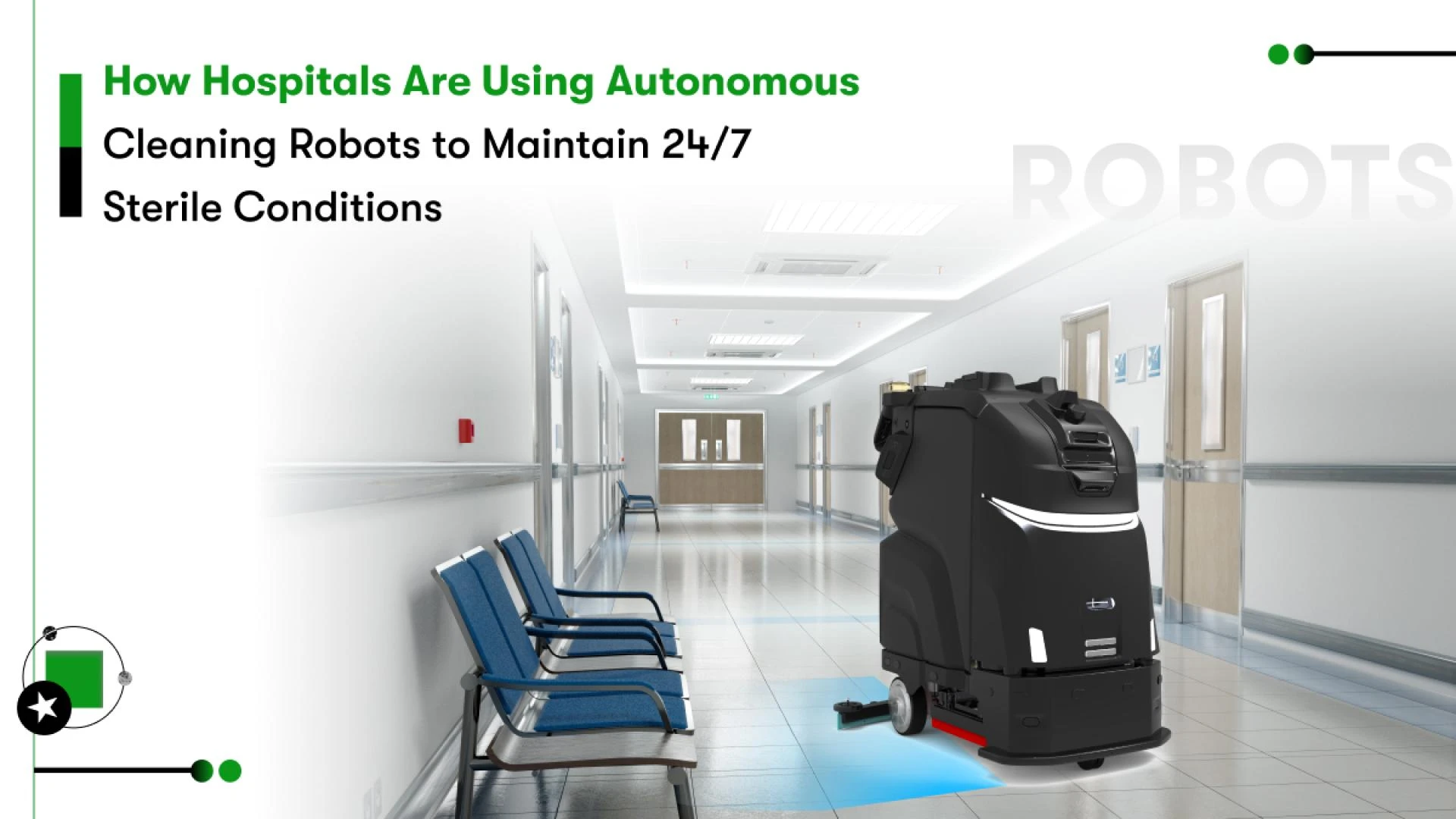
Use Case 5 Hospitals and Healthcare Facilities
Hospitals need carefully managed cleaning processes. Waiting rooms, corridors, entrances, lobbies, consultation floors, and public movement areas require regular maintenance.
Autonomous Cleaning Robots can support suitable non-critical floor-cleaning routes. Healthcare teams must continue following all internal hygiene, sanitation, safety, and infection-control requirements.
Robots can assist with:
- Public corridor cleaning
- Waiting-area floor care
- Lobby maintenance
- Visitor-zone cleaning
- Administrative floor cleaning
- Common walkway maintenance
Hospital employees remain responsible for clinical areas, sanitation protocols, urgent spills, detailed disinfection, and patient-sensitive tasks.
Use Case 6 Corporate Parks and Office Campuses
Corporate parks include office towers, cafeterias, reception areas, elevator lobbies, shared corridors, event spaces, and visitor zones.
Thousands of employees may move through these areas during a normal workday. Maintaining clean common spaces supports employee experience and creates a stronger impression for visitors and clients.
Cleaning robots can support:
- Office building lobbies
- Common corridors
- Cafeteria surroundings
- Reception areas
- Shared walkways
- Training and event zones
- Elevator lobby floors
Facility teams can use robotic cleaning during low-traffic periods or across carefully planned routes.
How Autonomous Cleaning Robots Improve Safety?
Safety is an important part of facility cleaning. Dirty floors, loose debris, and unmanaged spills can create operational concerns. Cleaning equipment can also place physical strain on employees when used repeatedly across long shifts.
Autonomous cleaning supports safety by helping facilities maintain more regular floor-care schedules. It can also reduce the need for employees to manually operate large cleaning machines for every routine cycle.
However, robots do not remove the need for supervision. Facility teams must continue to:
- Inspect cleaning routes
- Respond to spills immediately
- Keep pathways clear
- Follow workplace safety procedures
- Monitor sensitive areas
- Maintain the robot
- Train employees
- Review operating conditions
Safety improves when robotics, staff training, and facility procedures work together.
Productivity Benefits of Cleaning Robots
Reduced repetitive work
Employees can spend less time covering the same large floor routes.
Better cleaning coverage
Planned robot routes can help teams clean priority areas more consistently.
Improved staff allocation
Facility managers can assign employees to detailed and urgent tasks while the robot supports routine cleaning.
Support across longer operating hours
Robots can help businesses maintain cleaning workflows across multiple shifts and suitable time windows.
More organized operations
Cleaning automation encourages teams to define areas, schedules, responsibilities, and expected results.
Easier scaling
Businesses can expand robotic cleaning to additional areas after a successful initial deployment.
Benefits for Housekeeping Teams
Cleaning robots should improve the working environment for employees. They should not reduce the importance of trained housekeeping professionals.
Employees can benefit from:
- Less repetitive machine operation
- Reduced long-distance walking
- Lower physical strain
- More time for inspections
- Better focus on washrooms and corners
- Faster response to spills
- Clearer task allocation
- Stronger support during peak periods
Human teams bring observation, flexibility, and judgment. Robots bring consistency and support for repeated routes.
Human Teams and Robots Working Together
Fully robotic cleaning is not practical for most facilities. Every commercial and industrial environment includes unpredictable situations that require people.
Human teams should handle:
- Spill response
- Washroom cleaning
- Waste collection
- Corners and edges
- Stairs
- Glass surfaces
- Sensitive equipment areas
- Inspection rounds
- Safety decisions
- Detailed sanitation
Robots can support:
- Wide floor areas
- Repeated routes
- Main corridors
- Warehouse aisles
- Common walkways
- Scheduled floor cleaning
- Large public areas
The most effective cleaning strategy is a hybrid model. Robots support the routine work, while people maintain overall cleaning quality.
How to Plan a Successful Deployment?
Identify a real cleaning challenge
Businesses should begin with an area where repetitive floor cleaning consumes significant staff time.
Review the facility layout
Open and structured spaces are usually more suitable for autonomous cleaning.
Select priority routes
Start with high-impact areas such as main corridors, warehouse aisles, lobbies, concourses, or production pathways.
Plan operating windows
Robot schedules should match staff shifts, visitor traffic, production movement, and facility operating hours.
Train employees
Teams should understand how to prepare, supervise, pause, and maintain the robot.
Measure performance
Facility managers should review route coverage, staff feedback, cleaning consistency, and operating value.
Expand gradually
After proving the workflow in one area, the business can consider additional cleaning zones.
Buy or Lease an Autonomous Cleaning Robot
Different businesses have different financial and operational requirements. Some facilities need a long-term cleaning solution for daily use. Others may want to test robotic cleaning before making a larger commitment.
The Buy or Lease Autonomous Cleaning Robot option gives companies flexibility.
Buying may suit:
- Manufacturing plants
- Airports
- Warehouses
- Hospitals
- Shopping malls
- Corporate parks
- Large commercial facilities
- Businesses with long-term automation plans
Leasing may suit:
- Pilot projects
- Short-term trials
- Seasonal cleaning demand
- New facility launches
- Temporary events
- Multi-location evaluation
The right model depends on floor area, cleaning frequency, budget, expected usage, and long-term facility plans.
What Businesses Should Evaluate Before Adoption?
Before selecting an autonomous cleaning solution, facility managers should review:
- Total cleaning area
- Floor condition
- Route width
- Daily cleaning frequency
- Visitor and employee movement
- Warehouse or production activity
- Staff readiness
- Maintenance requirements
- Technical support
- Expected productivity gains
The robot should fit the facility’s workflow. The facility should not be forced to build an impractical process around the robot.
Why Kody Robots Fits Cleaning Automation?
Kody Robots is a robotics company in India focused on autonomous solutions for commercial and enterprise environments. Vulcan fits businesses that want to introduce structured robotic support into facility cleaning operations. The robot can assist teams with repeated floor-cleaning routes while employees focus on more detailed and responsive tasks.
The value of robotics comes from regular operational use. When routes, staff roles, and cleaning schedules are planned carefully, Vulcan can become part of a practical facility-management strategy.
The Future of Autonomous Cleaning Robots
Cleaning automation will continue to become more common across industrial and commercial facilities. Businesses need cleaner environments, better workforce utilization, stronger operational consistency, and smarter facility systems.
Future cleaning operations may combine:
- Autonomous Cleaning Robots
- Smart facility dashboards
- Digital cleaning schedules
- Maintenance records
- Building management systems
- Facility performance reports
- Security and patrol robots
- Predictive maintenance tools
Technology will not remove people from facility cleaning. It will give teams better tools for handling large spaces and repetitive work.
Conclusion
Autonomous Cleaning Robots are delivering important benefits across factories, warehouses, airports, malls, hospitals, corporate parks, and transport facilities. They help organizations manage large floor areas, improve cleaning consistency, reduce repetitive staff workload, and create more structured facility operations.
Vulcan by Kody Robots can support businesses that want to introduce automation into daily floor-cleaning workflows. Human teams remain essential for inspections, spills, washrooms, detailed cleaning, and safety decisions, while robots handle suitable repeated routes.
For businesses looking to create smarter, safer, and cleaner facilities, autonomous cleaning offers a practical path toward modern facility management.



















Sign in to leave a comment.