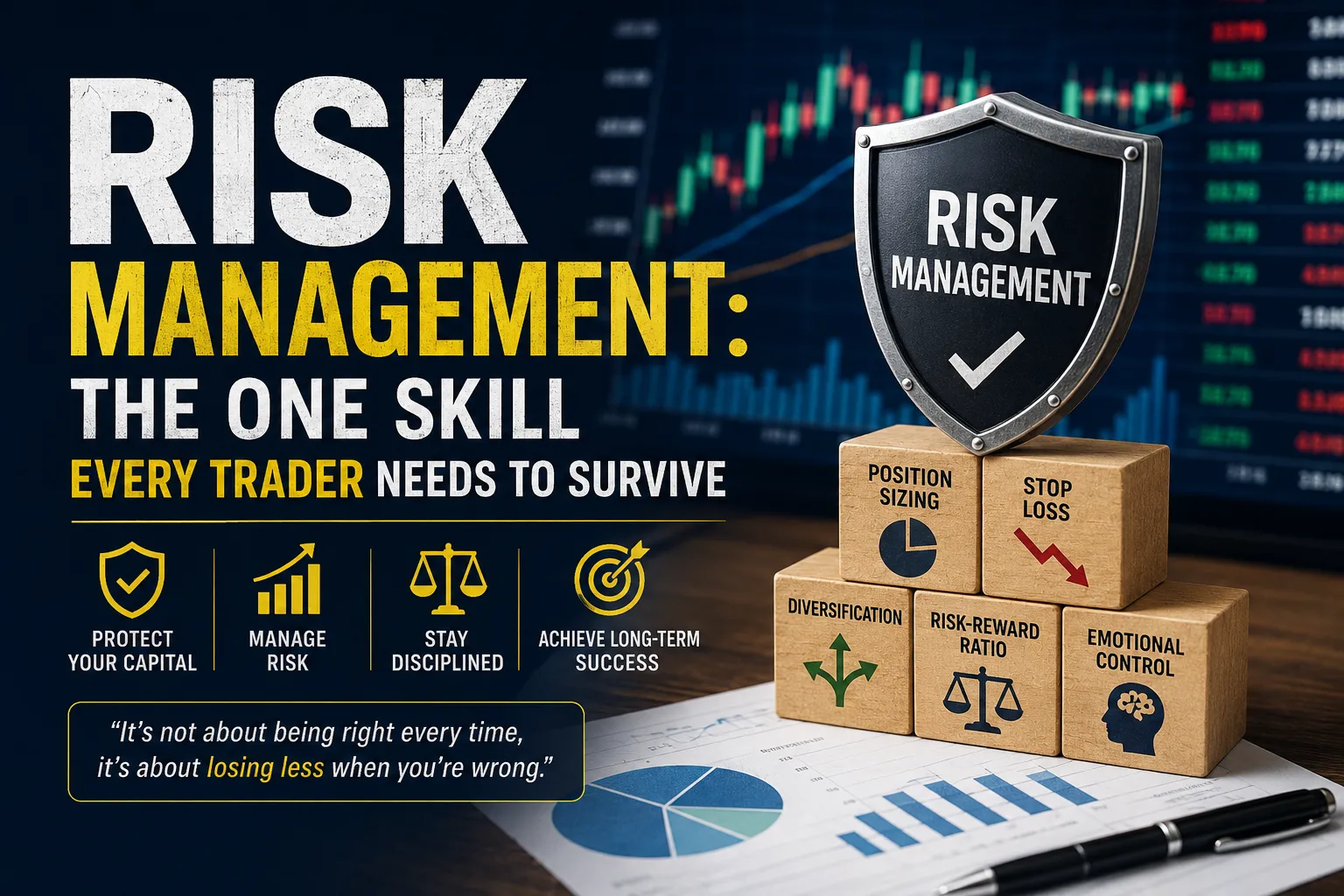

Summary
Most traders enter the market thinking success depends on finding the perfect stock, indicator, or strategy. But after spending enough time in the market, many realize something important: survival matters more than prediction.
The stock market rewards discipline more than excitement. And the one skill that separates long-term traders from those who quit after heavy losses is risk management.
Whether you trade daily, invest for the long term, or use advanced strategies, managing risk is what protects your capital, your confidence, and your future in the market.
Introduction
Trading often looks glamorous from the outside. Social media is full of screenshots showing massive profits, quick gains, and “perfect trades.” But what most people never see are the losses behind those posts.
The truth is, even the best traders lose trades regularly.
What keeps them profitable is not avoiding losses completely. It is controlling them.
A trader who makes 20% returns but loses 50% of their capital during bad phases will struggle to survive. On the other hand, a disciplined trader with proper risk management can stay consistent for years, even with average win rates.
In the market, survival comes first. Growth comes second.
What Is Risk Management in Trading?
Risk management is the process of protecting your trading capital from large or unnecessary losses.
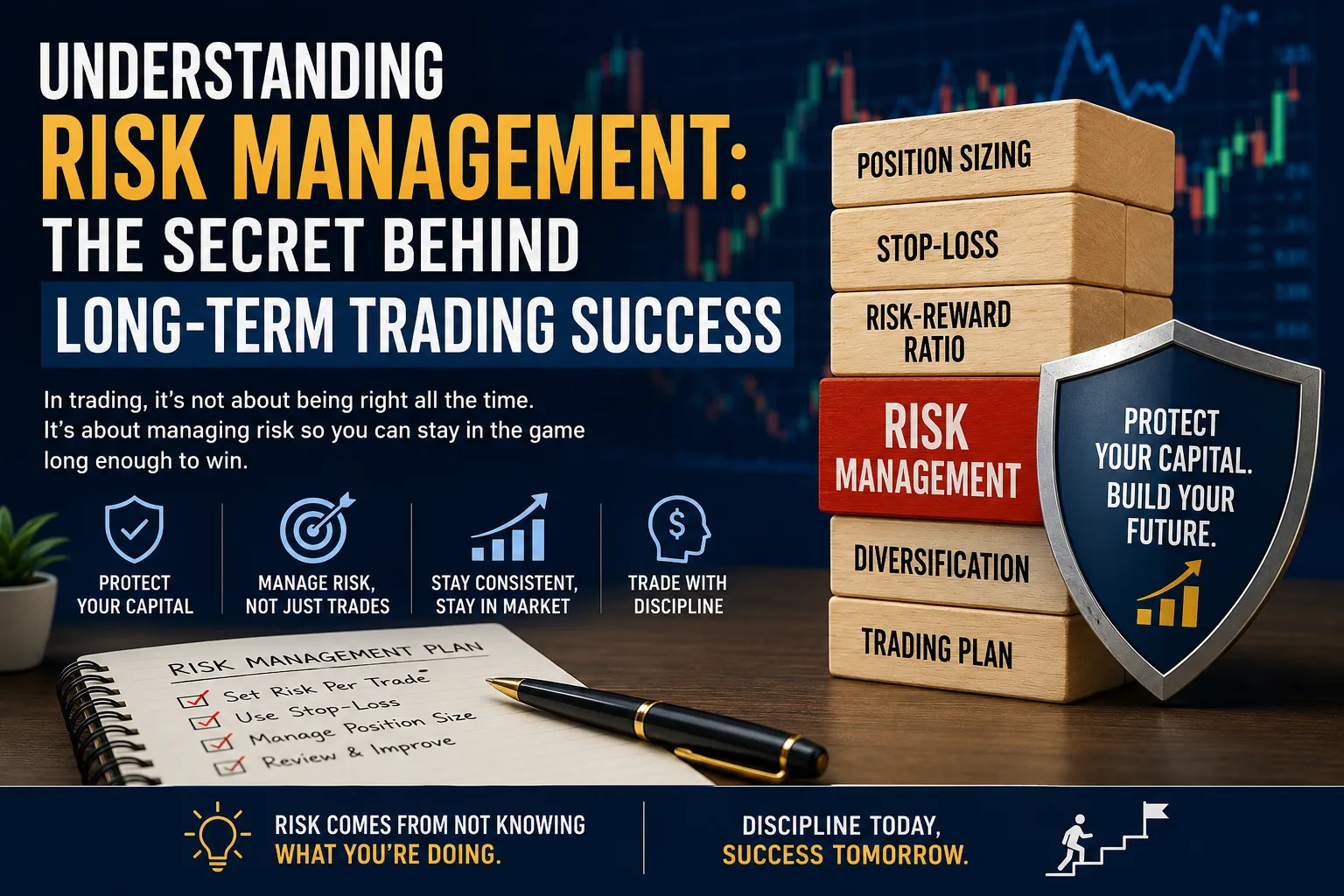
It includes:
- Deciding how much money to risk on a trade
- Setting stop losses
- Managing position sizes
- Avoiding emotional decisions
- Diversifying investments
- Protecting profits during volatile markets
In simple words, risk management is about staying in the game long enough to succeed.
Because no matter how smart someone is, nobody wins every trade.
Why Most Traders Ignore Risk Management
Many beginners focus only on profits. They spend hours searching for “winning strategies” but almost no time learning how to control losses.
This usually happens because:
- Big profits feel exciting
- Social media promotes unrealistic expectations
- Traders become overconfident after a few successful trades
- People underestimate how quickly losses can grow
A single emotional trade can damage months of hard work.
And unfortunately, many traders learn about risk management only after facing major losses.
Common Risk Management Mistakes
1. Overleveraging
Using too much capital in one trade increases both profit potential and risk. While leverage can magnify gains, it can also destroy accounts quickly during volatile moves.
2. Not Using Stop Losses
Many traders avoid stop losses because they “hope” the market will reverse.
Hope is not a strategy.
Without proper exit planning, small losses can turn into devastating ones.
3. Risking Too Much on One Trade
Professional traders rarely risk large portions of their capital on a single setup.
One bad trade should never have the power to end your trading journey.
4. Revenge Trading
After taking losses, many traders immediately enter new trades emotionally, trying to recover money quickly.
This usually creates even bigger losses.
5. Ignoring Market Conditions
A strategy that works in trending markets may fail during volatile or sideways conditions. Good traders adjust risk according to the market environment.
How Professional Traders Manage Risk
Experienced traders understand one important reality: protecting capital is more important than chasing profits.
Some common habits followed by professionals include:
- Risking only a small percentage of capital per trade
- Following strict trading rules
- Maintaining proper risk-reward ratios
- Reducing exposure during uncertain markets
- Keeping emotions under control
- Tracking trading performance regularly
They think like risk managers first and traders second.
That mindset changes everything.
The Emotional Side of Risk Management
Risk management is not only mathematical. It is psychological too.
Fear and greed influence trading decisions every day.
When traders become greedy, they take oversized positions. When they become fearful, they exit good trades too early.
Emotional instability often leads to inconsistent performance.
This is why discipline matters so much in trading.
A calm trader with a simple strategy usually performs better than an emotional trader using advanced systems.
Why Risk Management Creates Long-Term Success
The market will always provide new opportunities.
But traders who lose all their capital cannot benefit from future opportunities.
Risk management creates:
- Consistency
- Emotional stability
- Better decision-making
- Long-term confidence
- Sustainable growth
The goal is not to become rich overnight.
The goal is to survive long enough to grow steadily.
That is how real wealth is built in the market.
Final Thoughts
Most traders spend years searching for the perfect indicator, strategy, or stock tip. But over time, many successful investors realize that long-term survival matters more than short-term excitement.
Risk management may sound boring compared to profit-making strategies, but it is the foundation behind every successful trading career.
The market can be unpredictable. Losses are unavoidable. Emotional pressure is real. But traders who know how to manage risk give themselves something extremely valuable: staying power.
And in trading, staying power is often the difference between failure and long-term success.
Because at the end of the day, the traders who survive are usually the traders who manage risk better than everyone else.
FAQs
1. What is risk management in trading?
Risk management is the process of controlling losses and protecting trading capital through disciplined strategies.
2. Why is risk management important?
It helps traders survive market volatility and avoid large financial losses.
3. What is the ideal risk per trade?
Many professional traders risk only 1–2% of their capital per trade.
4. What is a stop loss?
A stop loss is a predefined price level where a trader exits a losing trade automatically.
5. Can traders succeed without risk management?
Usually not for long. Without risk control, even profitable traders can lose everything.
6. What is overleveraging?
Using excessive borrowed capital in trades, which increases both profit potential and risk.
7. How does psychology affect risk management?
Fear, greed, and emotional decisions often lead to poor trading behavior.
8. What is revenge trading?
Entering emotional trades after losses in an attempt to recover money quickly.
9. Does risk management guarantee profits?
No. It reduces damage and improves long-term consistency, but losses are still possible.
10. What is the biggest mistake beginner traders make?
Risking too much money without proper planning or emotional discipline.



























Sign in to leave a comment.