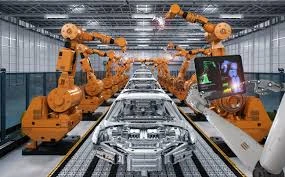

The integration of robotic arms in manufacturing has revolutionized production processes, enabling greater precision, efficiency, and scalability. These advanced automation tools have become a critical component in industries such as automotive, aerospace, electronics, and medical device manufacturing. By leveraging robotic arms, manufacturers can achieve higher levels of productivity while minimizing human error and operational costs.
What Are Robotic Arms in Manufacturing?
Robotic arms are programmable mechanical systems designed to mimic human arm movements for assembly, welding, material handling, and machining. These systems are equipped with sensors, actuators, and AI-driven software to perform highly complex tasks with speed and accuracy.
Types of Robotic Arms in Manufacturing
- Articulated Robots – Multi-jointed arms with high flexibility for assembly lines and welding applications.
- SCARA Robots (Selective Compliance Assembly Robot Arm) – Used in pick-and-place operations with fast, precise movements.
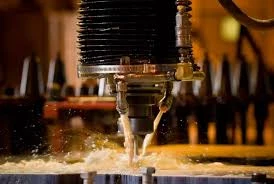
- Cartesian Robots – Operate on three linear axes, commonly used in CNC automation and material handling.
- Delta Robots – High-speed robotic systems ideal for lightweight assembly and packaging.
- Collaborative Robots (Cobots) – Designed to work alongside human operators, enhancing workplace safety and efficiency.
Benefits of Robotic Arms in Manufacturing
- Enhanced Precision & Accuracy – Reduces human error in repetitive tasks.
- Increased Production Speed – Performs tasks faster than manual labor, improving workflow efficiency.
- Cost Reduction – Lowers labor costs and minimizes material waste through optimized operations.
- Improved Workplace Safety – Reduces the risk of injuries in hazardous environments.
- Scalability & Flexibility – Easily adaptable to various manufacturing needs and industry applications.
Applications of Robotic Arms
- Automotive Industry – Assembly, welding, painting, and quality inspection of vehicle components.
- Electronics Manufacturing – Precision soldering, circuit board assembly, and semiconductor production.
- Aerospace Engineering – Fabrication of aircraft components with high precision.
- Medical Device Manufacturing – Production of surgical instruments and prosthetics.
- Food & Beverage Industry – Sorting, packaging, and handling perishable goods.
Future of Robotics in Manufacturing
As industries embrace AI-driven automation, IoT connectivity, and machine learning, robotic arms will become even more intelligent and autonomous. Advancements in predictive maintenance, remote monitoring, and adaptive learning will further optimize manufacturing processes, making them more efficient and cost-effective.























Sign in to leave a comment.