
Introduction
Modern architecture is driven by complexity and customization. Safety, comfort, high-performance layouts and sustainable energy systems, all demand precise MEPF drawings. Proper MEPF systems and automated environmental controls are needed to improve occupant safety as well as comfort.
Accurate spatial coordination ensures that bottlenecks are prevented between service paths and structural clearances. So MEP engineers, designers, consultants and contractors rely on 3D clash detection BIM tools like Revit and Navisworks for precise alignment between HVAC ducts and electrical containment. Many firms also leverage MEP BIM Services to improve multidisciplinary coordination, increase model accuracy, and reduce installation conflicts during construction.
Coordinated MEPF documentation including shop drawings and spool maps enable precise offsite MEP component assembly and installation. If you work in the fabrication, assembly or installation team, MEPF drawings ensure your component fit within the structural grid.
Resolving spatial flaws prevents disciplines to fight for spaces, encourages seamless installation and sets a good path for commissioning. This blog discusses why MEPF drawings are crucial in modern construction.
MEPF drawings: The backbone of integrated building systems
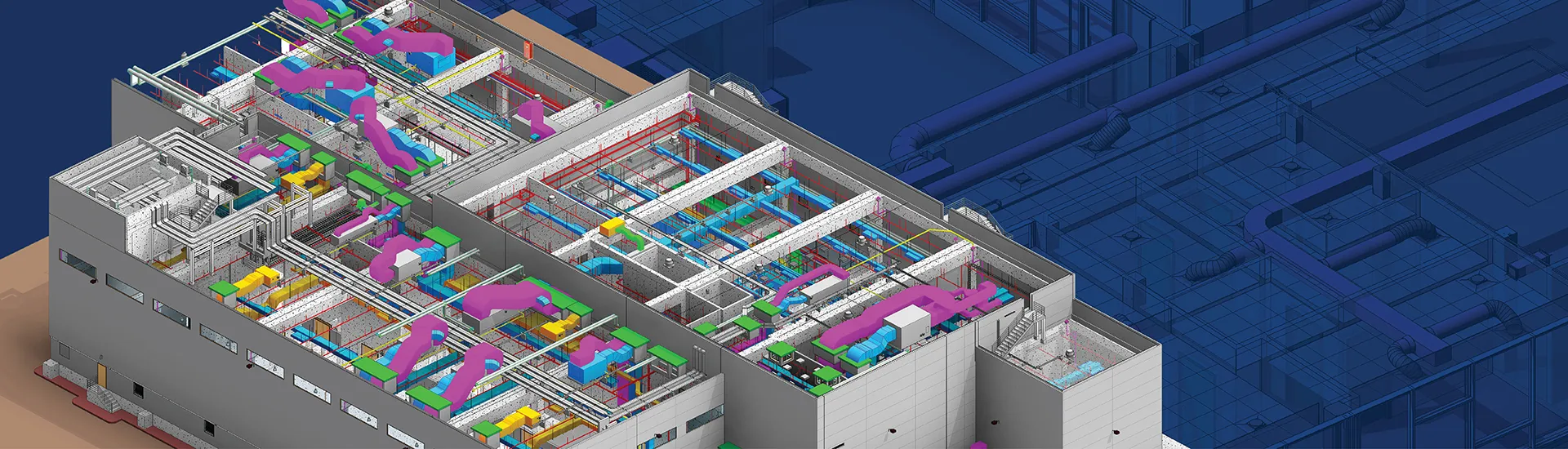
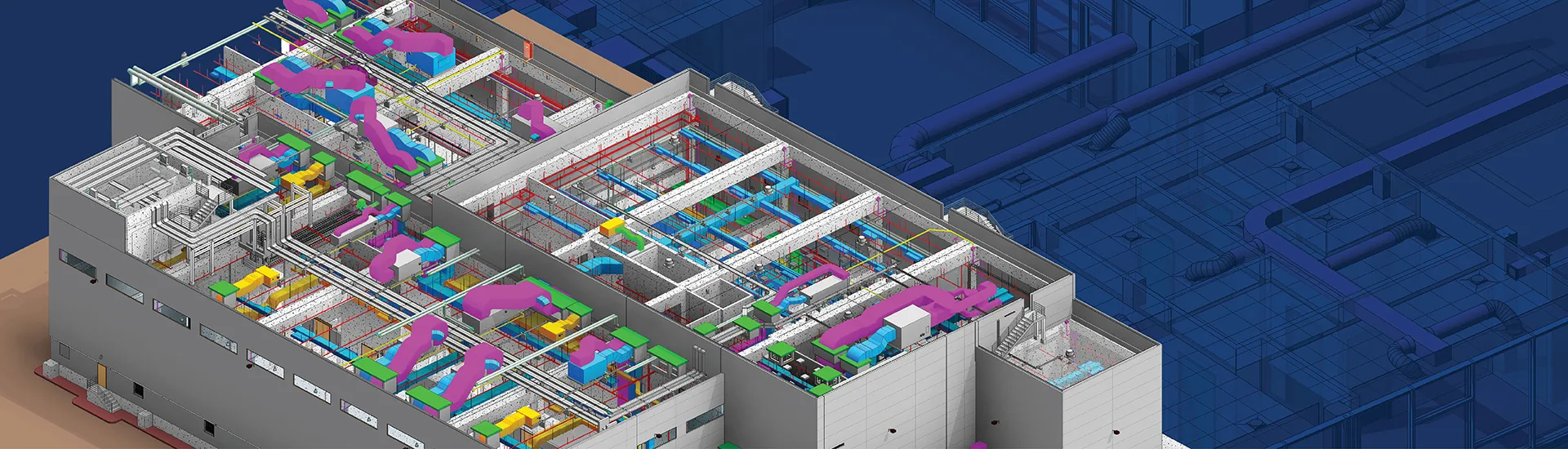
MEPF drawings are crucial for HVAC ductwork, power distribution, plumbing and installation of fire protection systems. These drawings provide accurate details of schedules, route pipes, electrical circuitry and sprinkler layouts.
While conceptual schematics may offer limited visualization, Revit MEPF drawings provide precise spatial coordinates, material specifications and pipe slopes. This brings in greater project clarity for stakeholders.
They help you move away from “what is required” to “how MEPF systems can work together”- a capability that can ensure success for a large-scale project.
There is a deep connection between MEPF drawings and constructability. They close the gap between engineering and onsite work. Even clearances are well defined within MEPF drawings, reducing onsite rework.
3 common risks when MEPF drawings are incomplete
- Using incomplete drawings forces teams on the site to seize work as they require clarification on routing details or lost elevations. Increased RFIs creates roadblocks and delays the construction schedule.
- Failure to define paths causes trade clashes. When this happens, rework is imminent. Continuous redesign is chaotic and frustrating for stakeholders, which can also increase material costs. It even compromises the original architectural scope.
- Inconsistent documentation is not efficient for stakeholders. Missing details on valves or inaccessible components make service routes difficult and unsafe. Over time, these gaps bring about ineffective system performance and greater costs.
Why MEPF drawings are essential in modern construction

MEPF drawings in construction improve on-site execution: MEPF drawings convert engineering concepts into accurate physical instructions, providing the right coordinates and material specifications. Clarity at this level ensures viability of structural and spatial design for the field crew.
Detailed 3D views and annotated dimensions are strong pillars that remove guesswork; they remove incorrect and ambiguous installation sequences. Ability to visualize all the MEPF elements in the Revit 3D model ensures precise routing.
Managers can use MEPF drawings to plan operations and avoid disciplines from restraining each other’s access. Also, a well-documented source of truth ensures inspection and commissioning becomes seamless.
MEPF coordination drawings prevent costly trade conflicts: Usually, MEPF equipment is confined to limited shaft areas and ceiling spaces; dense routing and frequent directional modifications create disagreements between teams. If your design inputs are delayed, then it amplifies systems and spatial interferences.
Aligned elevations, clearances, and services zones are driven by coordinated MEPF drawings. Your firm can quickly resolve issues pertaining to duct-cable tray overlaps and pipe-sprinkler conflicts.
MEPF drawings that are free of any conflicts eliminate site rework; they also reduce RFI creation during onsite construction. Installation predictability increases for people working on the site.
- MEPF layout drawings ensure accurate space planning: Space planning is an important part of construction as it defines accurate access zones and clearances to prevent clashes and ensures layouts are compliant as per required standards.
Coordination between pipes and ducts avoids rerouting at a later stage. The required floor or ceiling height can also be easily used without wasting space.
When accurate and data-rich MEPF drawings are used, they improve dimensional accuracy and system routing which helps offsite fabrication. Layout drawings promote modular assembly, minimize site rework, and improve installation speed. MEPF drawings reduce project cost and improve schedule control: Coordinated MEPF drawings spot clashes and highlight constructability problems early. It eliminates rework and reduces change orders on the field.
Precise MEPF drawings can help your client with accurate quantity takeoffs for fittings, system, and equipment. It enhances procurement planning, lowers material waste, and keeps project costs in control.
With accurate MEPF drawings, consultants can speed up reviews, resulting in expediated approvals from authorities. Precise construction sequencing and improved schedule control on the work site are also added advantages.
BIM-based MEPF drawings enable better design and coordination: 3D BIM models replace static drawings with parametric MEPF components which reflects connectivity, geometry, and performance. Precise load analysis and routing across trades becomes easy.
When your team works on a federated 3D model, it can easily catch multiple types of clashes in Navisworks before construction starts. It also brings with it higher constructability, system validations, and code compliance.
MEPF drawings are exceptional assets that include capacities, specifications, and maintenance parameters. Data within the Revit 3D model assists with seamless handover and operations.
MEPF drawings support compliance and quality standards: MEPF drawings are prepared as per industry standards and include precise calculation of load limits along with code led clearances. They even support equipment compliance across various stages in the 3D MEPF model.
When these drawings are applied for practical uses, they help stakeholders integrate fire detection and suppression systems in architectural and structural layouts. This reduces conflicts and assures efficient operations of life safety systems.
MEPF drawings simplify routing, capacities and access zones for operations and maintenance. They ensure that every system is built with the required performance specs so that inspections and services become a smooth process.
Conclusion
Witnessing the scale and complexity of modern construction, it is clear that accurate and data-rich MEPF drawings play a critical role in project coordination, installation accuracy, and long-term facility performance.
When tools like Revit, Navisworks, and other BIM platforms are integrated into project workflows, they support clash-free designs, accurate quantity takeoffs, and better code compliance. These outcomes further highlight the benefits of MEP coordination in improving construction efficiency, safety, and operational performance.
Model-based MEPF drawings will continue to support efficient construction, streamlined commissioning, and long-term facilities management.




























Sign in to leave a comment.