Managing a multi-unit property in the Bronx comes with a unique set of responsibilities, and roofing is one of the most critical among them. Unlike single-family homes, these buildings experience higher levels of wear due to increased occupancy, structural complexity, and continuous usage. Over time, even the most durable roofing systems begin to show signs of deterioration, making replacement not just an option but a necessity.
Roof replacement in multi-unit properties is not a simple project. It requires careful planning, budgeting, and coordination to ensure minimal disruption to tenants while achieving long-term performance. One of the first steps in this process is understanding the current condition of the roof. Many property owners delay replacement because visible damage may seem minor, but underlying issues such as moisture intrusion or insulation failure can significantly impact the building’s overall integrity.
A comprehensive inspection provides clarity. Professional contractors assess not only the surface condition but also the underlying structure, drainage systems, and ventilation. This holistic approach helps identify whether a full replacement is required or if partial solutions could extend the roof’s lifespan. However, in most multi-unit properties, recurring issues often indicate that replacement is the more cost-effective option in the long run.
Budgeting is another major consideration. Roof replacement involves significant investment, but it should be viewed as a long-term strategy rather than an immediate expense. High-quality materials and professional installation reduce the likelihood of frequent repairs, ultimately saving money over time. Property managers who prioritize durability and performance often see better returns through reduced maintenance costs and increased tenant satisfaction.
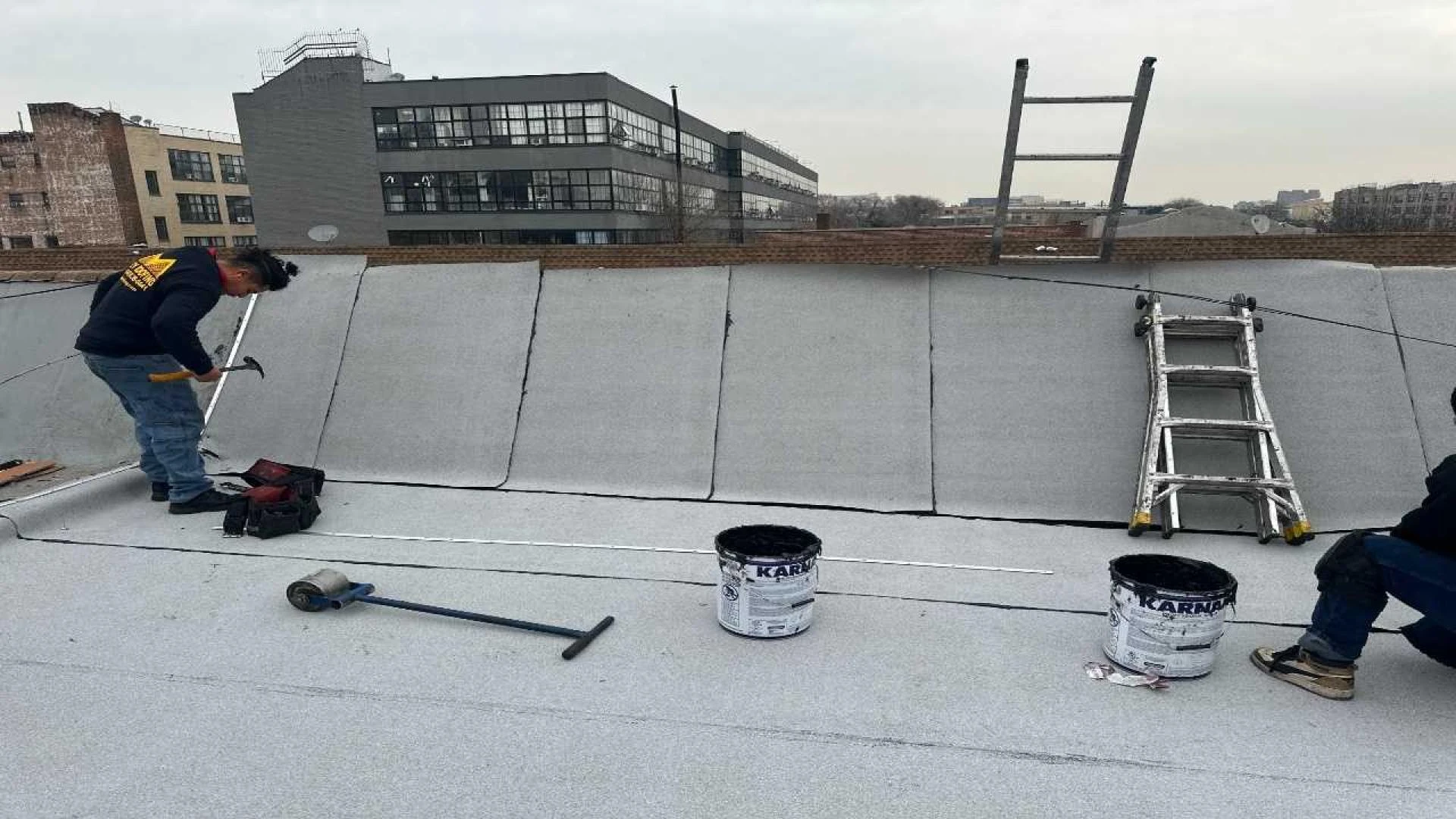
Material selection plays a crucial role in the success of a replacement project. Flat roofing systems are common in Bronx multi-unit buildings, and materials such as modified bitumen and rubber membranes are widely used for their durability and weather resistance. The choice of material should align with the building’s structure, usage patterns, and environmental exposure. Experienced contractors guide property owners through these decisions, ensuring that the selected system meets both functional and budgetary requirements.
Tenant management during the replacement process is equally important. Roofing projects can be disruptive, involving noise, restricted access, and temporary inconveniences. Clear communication helps manage expectations and minimize complaints. Scheduling work during less disruptive hours and maintaining safety standards ensures that the project progresses smoothly without affecting daily operations.
Drainage is another critical factor often overlooked during planning. Improper drainage leads to water accumulation, which accelerates roof deterioration. A replacement project provides an opportunity to address these issues by improving slope design, installing efficient drainage systems, and ensuring proper water flow. This not only enhances the roof’s lifespan but also protects the building’s structure.
Working with experienced professionals is essential for successful execution. Contractors specializing in Bronx roof replacement understand the unique challenges associated with multi-unit properties. From navigating local building codes to handling large-scale projects efficiently, their expertise ensures that the replacement is completed to the highest standards.
Timing also plays a role in planning. Scheduling roof replacement during favorable weather conditions reduces delays and ensures better installation quality. In New York, this often means planning projects during spring or early fall when conditions are more predictable.
Ultimately, roof replacement for multi-unit properties in the Bronx is about more than just installing new materials. It is a strategic investment in the building’s future. Proper planning, quality materials, and skilled execution contribute to improved structural integrity, energy efficiency, and tenant satisfaction.
Property owners who approach this process proactively are better positioned to avoid emergency repairs and unexpected expenses. By working with experienced contractors and prioritizing long-term performance, they can ensure that their buildings remain safe, functional, and valuable for years to come.























Sign in to leave a comment.