

A roof rarely fails all at once. In most homes, the warning signs appear slowly: one lifted shingle after a windy night, a small ceiling stain after heavy rain, granules collecting near the downspout or a cold draft in the attic that was not there before. These signs may look minor, but they often point to problems that can become expensive once storm damage spreads.
For homeowners searching for Roofing Newmarket Ontario, the real concern is not only fixing today’s leak. It is understanding whether the roof is still protecting the structure properly. Newmarket homes face changing weather throughout the year, including rain, snow, wind, freeze-thaw cycles and summer heat. Over time, these conditions can weaken shingles, flashing, vents, gutters, soffit, fascia and the roof deck below the visible surface.
The earlier you identify roof damage, the easier it is to control repair costs, prevent interior damage and extend the life of your roofing system. This guide explains the practical signs that your roof may need attention before the next storm makes the problem worse.
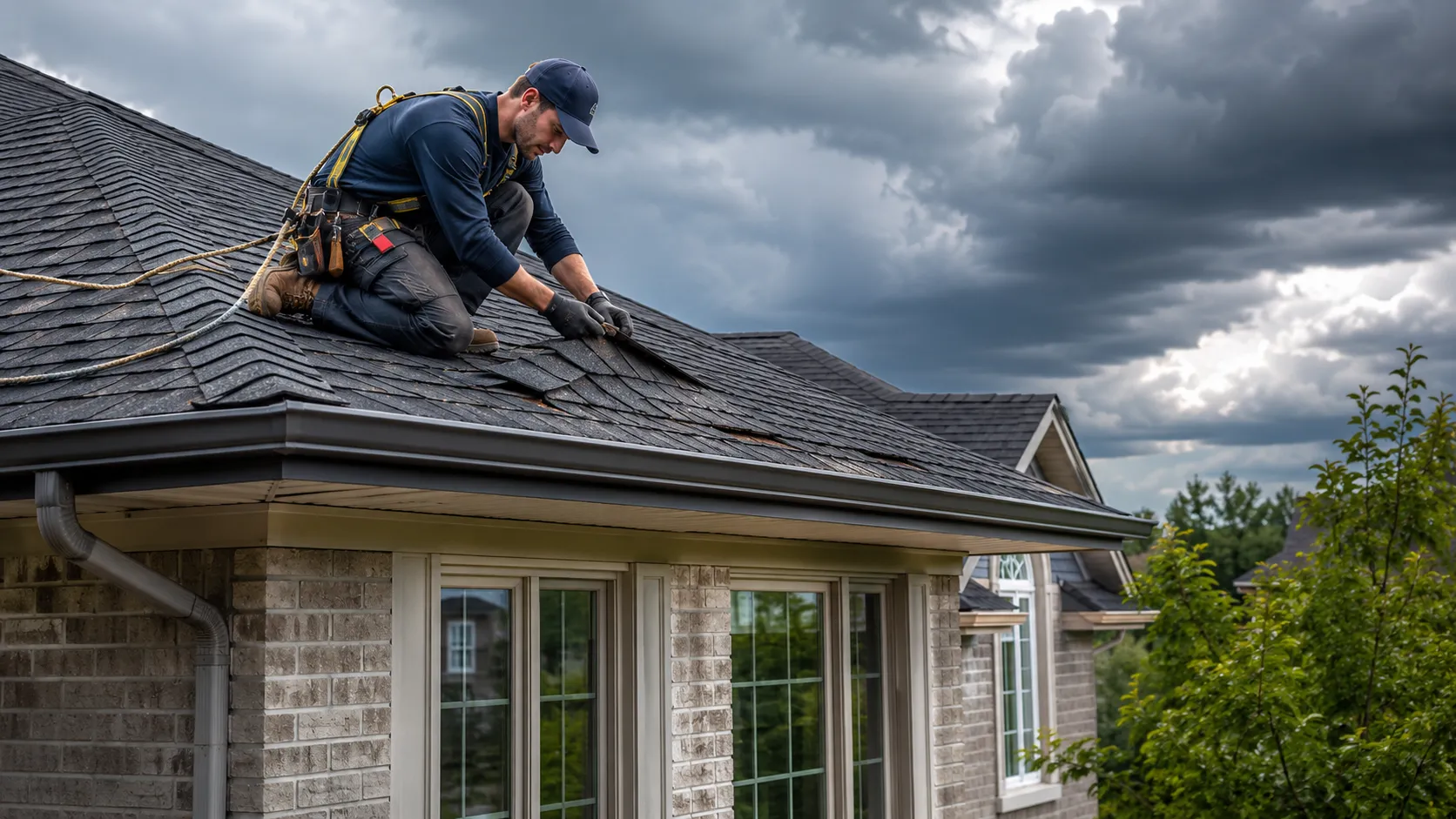
Why Roof Damage Should Never Be Ignored
A damaged roof is more than an exterior issue. It protects insulation, walls, ceilings, electrical areas, attic ventilation and the overall comfort of the home. When water enters through a weak spot, it does not always appear directly below the problem. Moisture can travel along rafters, behind drywall or into insulation before a visible stain appears inside.
This is why waiting can be risky. A small shingle repair today may become a larger roof deck repair later. A loose flashing section may allow water into the attic. Blocked eavestroughs may cause water to back up under the roof edge. Once moisture sits inside a structure, it can contribute to rot, mold concerns, poor indoor air quality and energy loss.
Professional roofing services help homeowners identify whether the issue is isolated or part of a wider roofing problem. A proper inspection can determine if the roof needs a simple repair, targeted maintenance or a more serious replacement discussion.
Sign 1: Missing, Lifted or Cracked Shingles
Shingles are the first visible layer of protection on most residential roofs. If you notice missing shingles from the ground, lifted corners, cracked surfaces or shingles that look curled, the roof should be checked. Wind can loosen shingles and once an edge lifts, rain can reach the underlayment below.
Cracked or brittle shingles may also suggest age-related wear. In colder months, shingles can become less flexible. During summer, heat can dry them out. When shingles no longer seal properly, storms can exploit those weak points quickly.
Homeowners should avoid climbing onto the roof without proper safety equipment. A roofing professional can inspect the slope, check shingle adhesion, examine nail placement and confirm whether the damage is repairable.
Sign 2: Water Stains on Ceilings or Walls
A brown, yellow or grey stain on a ceiling is one of the clearest signs of possible water entry. However, the leak source may not be directly above the stain. Water can travel along roof framing before it reaches the ceiling surface.
Even a small stain should be taken seriously if it grows after rainfall or appears near chimneys, skylights, vents or exterior walls. These areas are common leak points because they involve flashing, sealants and roof penetrations.
If a stain appears only after storms, the problem may be wind-driven rain, damaged flashing, missing shingles, clogged gutters or an ice-related issue. Early inspection helps prevent drywall damage, insulation saturation and recurring interior repairs.
Sign 3: Granules in Gutters or Around Downspouts
Asphalt shingles have protective granules on the surface. These granules help shield the roof from sunlight and weather exposure. Over time, some granule loss is normal, especially on older roofs. But heavy granule buildup in gutters or near downspouts may indicate that the shingles are wearing out faster than expected.
Granule loss can make shingles more vulnerable to cracking, curling and water penetration. It may also show that certain roof sections are aging unevenly due to sun exposure, poor ventilation, storm wear or installation issues.
During a roof inspection, the contractor should check whether the granule loss is limited to a small section or appears across the entire roof system.
Sign 4: Damaged Flashing Around Chimneys, Vents
and Skylights
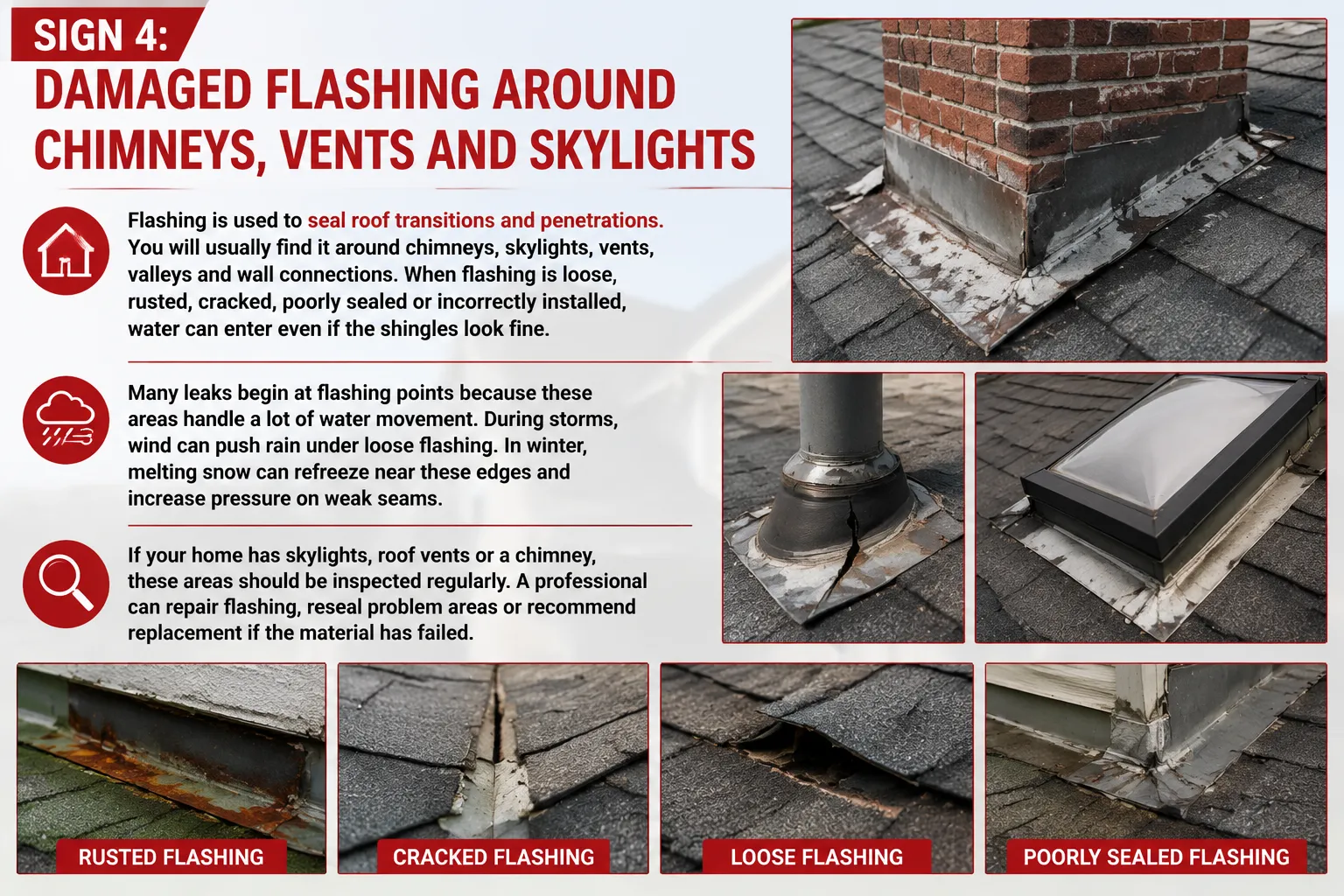
Flashing is used to seal roof transitions and penetrations. You will usually find it around chimneys, skylights, vents, valleys and wall connections. When flashing is loose, rusted, cracked, poorly sealed or incorrectly installed, water can enter even if the shingles look fine.
Many leaks begin at flashing points because these areas handle a lot of water movement. During storms, wind can push rain under loose flashing. In winter, melting snow can refreeze near these edges and increase pressure on weak seams.
If your home has skylights, roof vents or a chimney, these areas should be inspected regularly. A professional can repair flashing, reseal problem areas or recommend replacement if the material has failed.
Sign 5: Sagging or Uneven Roof Areas
A roof should have a consistent shape. If you notice sagging sections, soft-looking areas, dips or uneven roof lines, this may indicate deeper structural concerns. Possible causes include trapped moisture, damaged decking, poor attic ventilation, old materials or long-term water exposure.
Sagging is not a cosmetic issue. It may suggest that the roof support system has been weakened. This is especially important after long periods of snow load or repeated water intrusion.
Any sagging roof section should be inspected as soon as possible. Delaying repairs can increase safety risks and may make the final repair more complex.
Sign 6: Eavestrough and Drainage Problems
Your roof and eavestrough system work together. If gutters are blocked, leaking, pulling away or overflowing, water may not drain away from the roof edge correctly. This can damage fascia boards, soffit areas, siding and the foundation area around the home.
Overflowing water can also back up under shingles near the lower roof edge. In winter, poor drainage may contribute to ice buildup. Once ice forms along the roofline, melting water may find its way into vulnerable areas.
Cleaning gutters and inspecting downspouts are simple maintenance steps, but damaged eavestroughs may need professional repair or replacement. A roof inspection should include drainage because water control is a major part of roof performance.
Sign 7: Attic Moisture, Poor Ventilation or Unusual Drafts
Many roof problems are first noticed inside the attic. Moisture on the underside of the roof deck, damp insulation, musty odours, frost in winter or unusual drafts may point to ventilation or roof leakage issues.
Good attic ventilation helps regulate temperature and moisture. When ventilation is poor, heat and moisture can build up under the roof. This can shorten shingle life, contribute to condensation and increase the risk of ice dams during colder months.
A roofing contractor should check attic airflow, vent placement, insulation conditions and any signs of water entry. Repairing the roof surface without addressing ventilation may not fully solve the issue.
Sign 8: Rising Energy Bills Without a Clear Reason
A damaged or poorly ventilated roof can affect energy efficiency. If warm air escapes in winter or heat builds up in summer, your heating and cooling systems may work harder. While energy bills can rise for many reasons, the roof and attic should not be overlooked.
Air leaks, wet insulation, damaged vents and poor roof ventilation can reduce comfort inside the home. If your upper rooms feel unusually hot in summer or cold in winter, it may be worth having the attic and roof system assessed together.
When Repair Is Better Than Replacement

Not every roofing issue requires a full replacement. Repairs may be enough when the roof is generally in good condition and the damage is limited to a smaller area. Examples include a few missing shingles, minor flashing repair, localized leak repair or a small section of gutter-related damage.
However, repair may not be the best long-term answer if the roof is near the end of its service life, has widespread shingle failure, repeated leaks, sagging areas, major granule loss or multiple previous repairs. In these cases, patching one issue may only delay a larger problem.
A reliable contractor should explain the condition clearly, show what was found and help you compare repair and replacement options honestly.
What a Professional Roof Inspection Should Include
A proper inspection should look beyond the surface. It should include shingles, flashing, valleys, vents, roof penetrations, gutters, fascia, soffit, drainage, attic conditions and visible structural warning signs. The goal is to understand why the problem happened, not only where the visible damage appears.
Homeowners should ask for clear findings, photos when possible, repair recommendations and a written quote. This helps avoid confusion and makes it easier to compare solutions.
Spiros Aluminum & Roofing Inc. provides roofing services for homeowners who want practical answers, durable workmanship and proper attention to the roof system as a whole.
How to Protect Your Roof Before the Next Storm
The best time to check your roof is before severe weather arrives. Homeowners can reduce risk by keeping gutters clear, trimming overhanging branches, watching for loose shingles, checking ceilings after heavy rain and scheduling roof inspections after strong wind or hail.
Do not wait for water to drip into the living space. By then, the problem may already involve insulation, drywall or hidden wood damage. Preventive maintenance is usually more affordable than emergency repairs.
For dependable service in Newmarket, Spiros Aluminum & Roofing Inc. can help inspect roof concerns, repair vulnerable areas and guide homeowners toward the right solution before storm damage spreads.
Conclusion
Roof problems are easier to manage when they are found early. Missing shingles, ceiling stains, damaged flashing, granule loss, gutter overflow, attic moisture and sagging roof sections are all signs that should not be ignored.
A strong roof protects your home, comfort, safety and long-term property value. Whether the solution is a small repair, a detailed inspection or a larger replacement plan, timely action can prevent storm damage from becoming a costly structural issue.
If your Newmarket home is showing signs of roof wear, schedule a professional inspection before the next heavy rain, snowfall or windstorm turns a manageable problem into an emergency.
Frequently Asked Questions
1. How can I tell if my roof leak is serious or minor?
A roof leak should always be treated seriously until inspected. A small stain may come from a minor flashing issue, but it may also indicate hidden water travel inside the attic or walls. If the stain grows after rain, appears near vents or skylights or returns repeatedly, professional inspection is recommended.
2. Is it better to repair a few damaged shingles or replace the whole roof?
It depends on the roof’s age, overall condition and extent of damage. If only a few shingles are missing and the rest of the roof is healthy, repair may be enough. If damage is widespread, shingles are brittle or leaks keep returning, replacement may be more cost-effective.
3. Can poor attic ventilation damage my roof?
Yes. Poor ventilation can trap heat and moisture inside the attic. Over time, this may affect shingles, roof decking, insulation and indoor comfort. In winter, poor ventilation can also contribute to ice dam formation. A complete roof inspection should include attic airflow.
4. How often should Newmarket homeowners inspect their roofs?
Homeowners should visually check their roofs from the ground after major storms and schedule professional inspections when they notice leaks, missing shingles, gutter problems or aging signs. Many homes benefit from seasonal checks before winter and after heavy spring rain or wind.
5. What should I ask before hiring a roofing contractor?
Ask about insurance, experience, materials, warranty details, repair process, inspection findings, cleanup, timeline and written pricing. A trustworthy contractor should explain the problem clearly, provide practical options and help you understand whether repair or replacement is the better choice.


























Sign in to leave a comment.