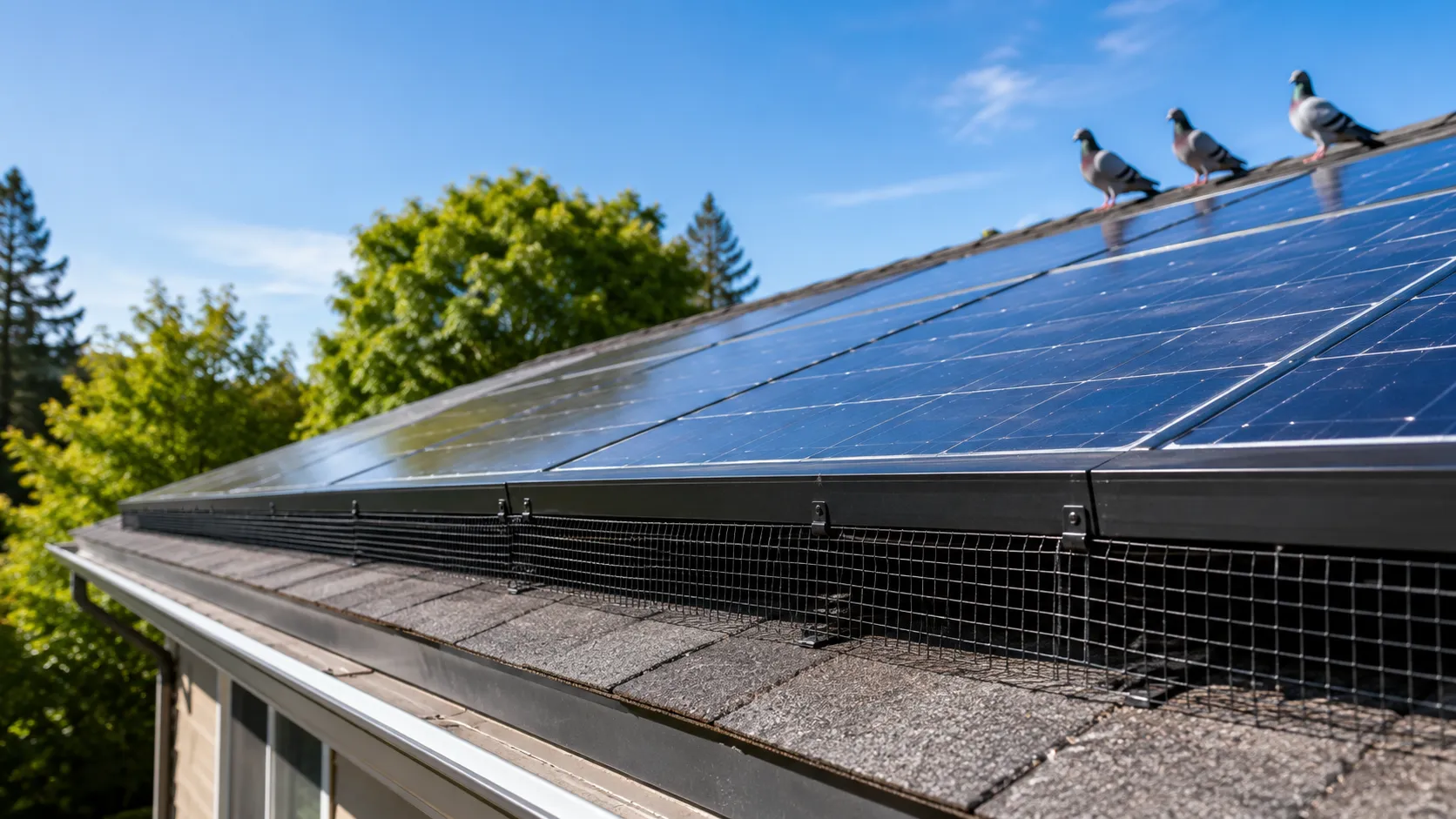

Solar panels have become a familiar sight on rooftops across the UK, and it's easy to see why. They cut energy bills, reduce carbon footprints, and add value to a property. But there's one issue that many homeowners never consider until it's too late: birds. Pigeons, starlings, and gulls are drawn to the warm, sheltered gap beneath solar arrays, and once they move in, the problems start to multiply. This is where solar panel bird protection becomes essential rather than optional.
The Hidden Problem Beneath Your Panels
At first glance, a solar array looks like a sealed, self-contained unit. In reality, there's usually a gap of a few inches between the panels and the roof surface. To a nesting bird, this space is close to perfect. It's dry, elevated, hidden from predators, and shielded from the wind and rain. Pigeons in particular are notorious for taking advantage of this shelter, often returning to the same spot year after year to raise multiple broods.
Once birds settle in, the consequences go well beyond a bit of noise. Nesting material, feathers, and droppings accumulate under the panels, which can block drainage, corrode wiring, and even present a fire risk in extreme cases. Droppings are acidic and, over time, can degrade roofing materials and guttering. There's also the smell and mess that comes with an established colony, along with the risk of parasites such as bird mites finding their way into loft spaces. For these reasons, solar panel bird protection isn't just about tidiness; it's about protecting a significant financial investment.
Why Prevention Is Better Than Cure
Removing an established nest is far more difficult, and often more expensive, than preventing one from forming in the first place. Many bird species are protected under the Wildlife and Countryside Act 1981, meaning that once eggs or chicks are present, it becomes illegal to disturb or remove the nest until the young have fledged. This can leave homeowners with a mess they're legally unable to deal with for weeks or even months.
Taking a proactive approach to solar panel bird protection avoids this situation entirely. By installing a barrier before birds have the chance to settle, you remove the temptation altogether. Most systems work by fitting a mesh or wire guard around the perimeter of the array, closing off the gap without affecting the panels' performance or appearance. It's a simple, low-maintenance solution that pays for itself many times over by avoiding costly repairs and cleaning bills down the line.
What Good Bird Proofing Actually Looks Like
Not all bird deterrent systems are created equal. A well-fitted solution should be barely noticeable from ground level, durable enough to withstand years of British weather, and installed in a way that doesn't void the solar panel warranty or interfere with airflow around the panels, which is important for keeping them running efficiently.
Specialists such as solar panel bird proofing Kent tend to use galvanised or PVC-coated mesh, chosen specifically because it resists rust and won't degrade in sunlight the way cheaper plastics can. The mesh is fixed using clips that grip the panel frame rather than adhesives or screws, which means no damage is done to the roof or the panels themselves. This kind of careful, non-invasive fitting is what separates a professional job from a DIY fix that might come loose within a season.
Homeowners researching options often find that companies like Solar Panel Bird Proofing Kent are worth speaking to precisely because they understand the balance between effective bird deterrence and preserving panel performance. A badly fitted barrier that traps heat or blocks ventilation can actually reduce energy output, so getting the installation right matters just as much as doing it at all.
Signs You Might Already Have a Problem
It's worth knowing the warning signs, especially if your panels have been installed for more than a year without any protective measures. Listen out for scratching, cooing, or fluttering sounds coming from beneath the panels, particularly in the early morning. Look for feathers or twigs caught around the edges of the array, or streaks of droppings running down the roof tiles below. A sudden increase in flies or a persistent musty smell near the loft can also point to an active nest.
If you spot any of these signs, it's best to act quickly, before eggs are laid and legal protections come into force. A visual inspection from a professional can confirm whether birds have already moved in and advise on the safest way to proceed.
Choosing the Right Approach for Your Home
Every roof is a little different, and the best solar panel bird protection setup will depend on factors like the pitch of your roof, the type of panels installed, and the local bird population in your area. Coastal and rural properties, for instance, often see more interest from gulls and larger birds, while urban rooftops tend to attract pigeons.
A good installer will assess these factors before recommending a solution, rather than offering a one-size-fits-all fix. This is another area where experience counts. Teams that have handled a wide variety of roof types and bird species, such as Solar Panel Bird Proofing Kent, are generally better placed to spot potential weak points in a barrier before they become a problem.
Final Thoughts
Solar panels are a long-term investment, and protecting that investment means thinking beyond just the panels themselves. A small, often-overlooked gap can turn into a costly nesting problem if it's left unaddressed. Fitting a proper barrier early on is a straightforward, affordable step that saves considerable hassle later, and it's one that any solar panel owner should seriously consider as part of their routine home maintenance.
Whether you've just had panels fitted or you're noticing the early signs of unwanted visitors, taking action sooner rather than later will keep your roof, your panels, and your peace of mind intact.

























Sign in to leave a comment.