
A textile trader in Vastrapur spent ₹2.8 lakh on a custom-coded website in March 2025. Three months later, he couldn't update a single product photo without calling his developer. Meanwhile, a bakery chain in Satellite launched a WordPress site for ₹38,000 and runs weekly menu changes on their own, no developer on speed dial.
Both made the right choice for their situation. The WordPress vs custom website business decision isn't about which platform is "better" - it's about which one matches your budget, your team's skills, and what you actually need the site to do.
What Is the Real Cost of WordPress vs Custom Website Development in India?
Budget is usually the first filter, and rightly so. A standard WordPress website in India costs between ₹25,000 and ₹1,20,000 depending on theme complexity, plugin needs, and design customisation. A custom-built site, on the other hand, starts around ₹1,50,000 and can cross ₹8,00,000 for feature-heavy builds.
That price gap matters for a startup in Navrangpura running on seed money just as much as it does for an established manufacturer in Naroda GIDC.
WordPress Costs: What You're Actually Paying For
The WordPress software itself is free. Your money goes toward hosting (roughly ₹3,600 to ₹12,000 per year), a premium theme (₹4,500 to ₹8,000, one-time), and plugins for SEO, security, and contact forms. If you hire a freelancer or agency for setup, expect ₹25,000 to ₹65,000 for a 5-8 page business site.
Annual maintenance sits at around ₹8,000 to ₹18,000 for plugin updates, backups, and security patches. A cloud kitchen owner in Bopal we've worked with pays close to ₹14,200 per year for hosting and maintenance combined.
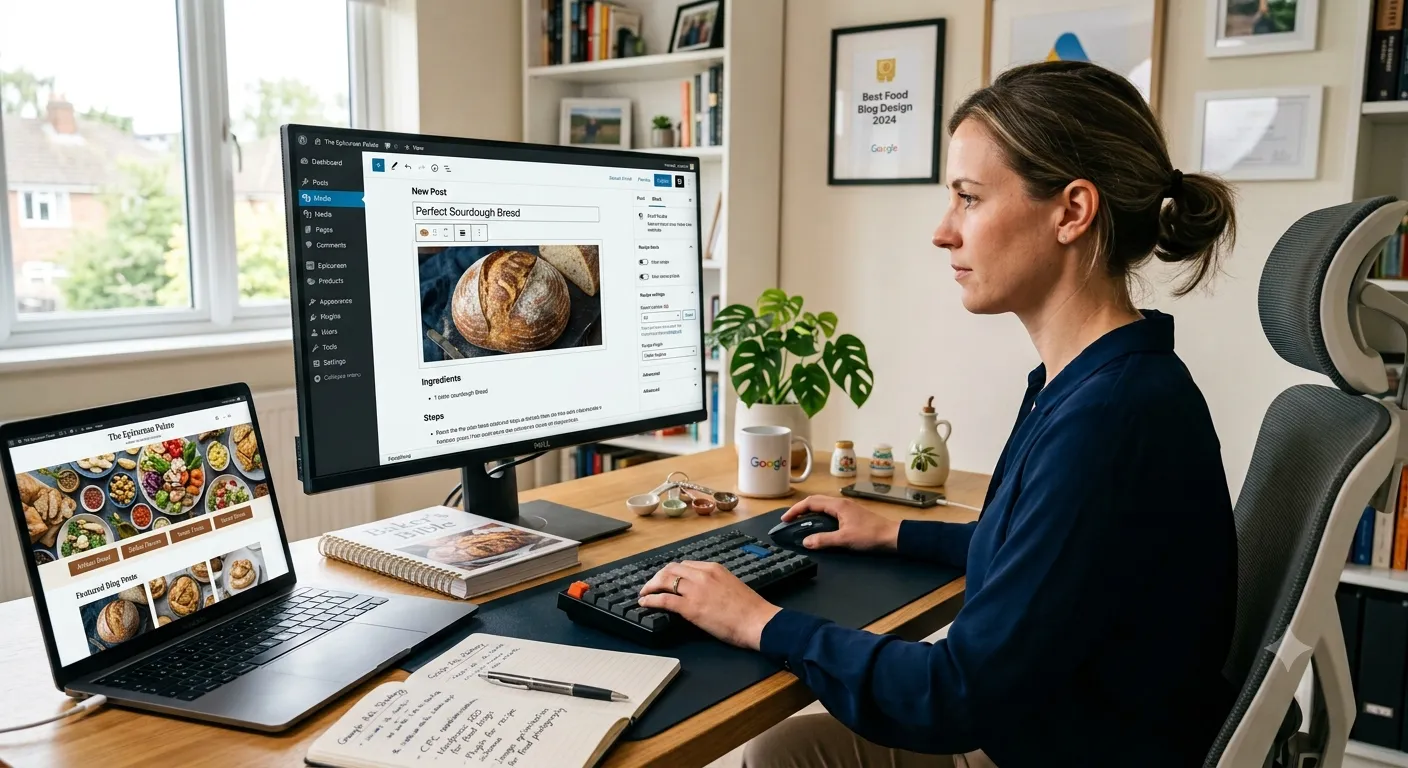
Across projects we've handled at Kosmonk, roughly 7 out of 10 small business clients pick WordPress because they want to update content without waiting for a developer.
Custom Website Costs: Where the Money Goes
Custom development bills by the hour, and rates in Gujarat typically range from ₹800 to ₹2,500 per hour depending on the developer's experience. A React or Laravel build with a custom admin panel, payment gateway integration, and API connections can take 300-500 development hours.
That puts your total between ₹2,40,000 and ₹6,50,000 before ongoing maintenance. Post-launch support often runs ₹15,000 to ₹30,000 per month, since only the original developer (or someone very familiar with the codebase) can make changes.
How Do WordPress and Custom Websites Compare on Features?
The right answer depends on what your business actually needs the website to do. A five-page brochure site for a CA firm in Ashram Road doesn't need custom code. But an ed-tech startup in GIFT City building a student portal with live classes, payment processing, and progress tracking probably does.
Here's a side-by-side breakdown:
| Feature | WordPress | Custom Website |
|---|---|---|
| Setup time | 1-3 weeks | 6-16 weeks |
| Cost range (India) | ₹25,000 - ₹1,20,000 | ₹1,50,000 - ₹8,00,000+ |
| Design flexibility | Theme-based, moderate | Unlimited |
| Content updates | Owner can do it | Usually needs a developer |
| SEO readiness | Strong (with plugins like Yoast/Rank Math) | Depends entirely on how it's built |
| Security | Plugin-dependent, needs regular updates | More control, but also more responsibility |
| Scalability | Good up to ~50,000 monthly visitors | Built to handle any scale |
| Third-party integrations | 60,000+ plugins available | Custom APIs, full control |
| Ongoing maintenance cost | ₹8,000 - ₹18,000/year | ₹1,80,000 - ₹3,60,000/year |
WordPress powers 43% of websites worldwide according to W3Techs (2025), making it the most widely adopted CMS. Custom-coded websites account for a smaller share but serve businesses needing features no plugin can replicate, like proprietary booking engines or multi-tenant dashboards.
Is WordPress Secure Enough for a Business Website?
Security concerns are the most common reason business owners hesitate with WordPress, but the fear is often overblown. Yes, WordPress sites do get targeted - Sucuri's 2023 Website Threat Research Report found that WordPress accounted for about 96.2% of infected CMS sites. But that stat is misleading because WordPress also powers 43% of the web. A larger target surface means more attacks, not weaker software.
The real risk comes from outdated plugins, weak passwords, and cheap shared hosting. A WordPress site with a managed host, two-factor authentication, and monthly plugin updates is, for most business purposes, secure enough.
I'd argue that a custom site with sloppy code and no dedicated security reviews is more vulnerable than a well-maintained WordPress install. Security is a practice, not a platform feature.
We've seen businesses in Prahladnagar and SG Highway assume custom code is "safer by default." In practice, the ones running WordPress with a proper security plugin and a managed host (Cloudways, Starter plan at ₹1,650/month) had fewer incidents than custom sites without a security audit schedule.
When Should You Pick WordPress Over a Custom Site?
WordPress is the better fit for most small and mid-sized businesses in India, and that isn't a controversial opinion. If your site needs to display services, collect enquiries, publish blog posts, and show up on Google, WordPress handles all of that without custom development.
You're a Good Fit for WordPress If:
- Your budget is under ₹1,25,000 for the full build
- You want to update pages, blog posts, or images yourself
- Your site is primarily informational (services, about, contact, blog)
- You need to launch within 2-3 weeks, not 2-3 months
- You plan to run SEO or Google Ads and need quick landing page creation
A jewellery brand in Maninagar launched their WordPress site in February 2025, added WooCommerce for 120 products, and started taking online orders within 11 days of project kickoff. Total spend: ₹47,800 including theme, plugins, and agency setup.
You're a Good Fit for a Custom Website If:
Your requirements move past what plugins can handle. Think user dashboards, role-based access, real-time data processing, or integration with proprietary software. An ERP company in Prahlad Nagar, for instance, needed a client portal that synced with their internal CRM through a custom API. No WordPress plugin could replicate that workflow.
Custom builds also make sense for businesses expecting heavy traffic from day one - say, an event ticketing platform launching in time for the Navratri season in September 2025 and expecting 2 lakh+ concurrent users.
Based on roughly 150 web projects handled between 2022 and 2025, we've found that businesses with fewer than 50 pages and no proprietary backend logic are better served by WordPress in nearly every case. The exceptions were always tied to unique data processing or integration requirements.
Can You Start with WordPress and Switch to Custom Later?
Yes, and many growing businesses do exactly that. Starting with WordPress keeps your initial costs low while you validate your business model, test your messaging, and build an audience. Once you outgrow what WordPress can do - whether that's handling complex user flows, processing high transaction volumes, or running custom algorithms - you migrate.
The migration itself typically costs ₹80,000 to ₹2,50,000 depending on how much content and functionality you're moving. Plan for 4-8 weeks of development and testing. The key is to keep your WordPress content well-organised (clean URLs, proper categories, consistent image naming) so the transition doesn't turn into a data cleanup project.
A D2C skincare brand in Ahmedabad started on WordPress in July 2024 with 35 products. By April 2025, they'd grown to 200+ SKUs with subscription boxes and personalised skincare quizzes. That's when they moved to a custom Shopify Plus + headless frontend setup, and the WordPress phase gave them 9 months of market data to inform the custom build.
Conclusion
The WordPress vs custom website business decision comes down to three things: your budget right now, your technical needs today, and your growth trajectory over the next 18-24 months. Most businesses under 50 pages with standard requirements will do well on WordPress. Businesses building proprietary tools, handling complex user interactions, or processing heavy real-time data should invest in custom development from the start.
Don't overthink it. Pick the option that matches where your business is today, not where you imagine it'll be in five years. You can always migrate later, and the cost of starting wrong is almost always lower than the cost of not starting at all.


















Sign in to leave a comment.