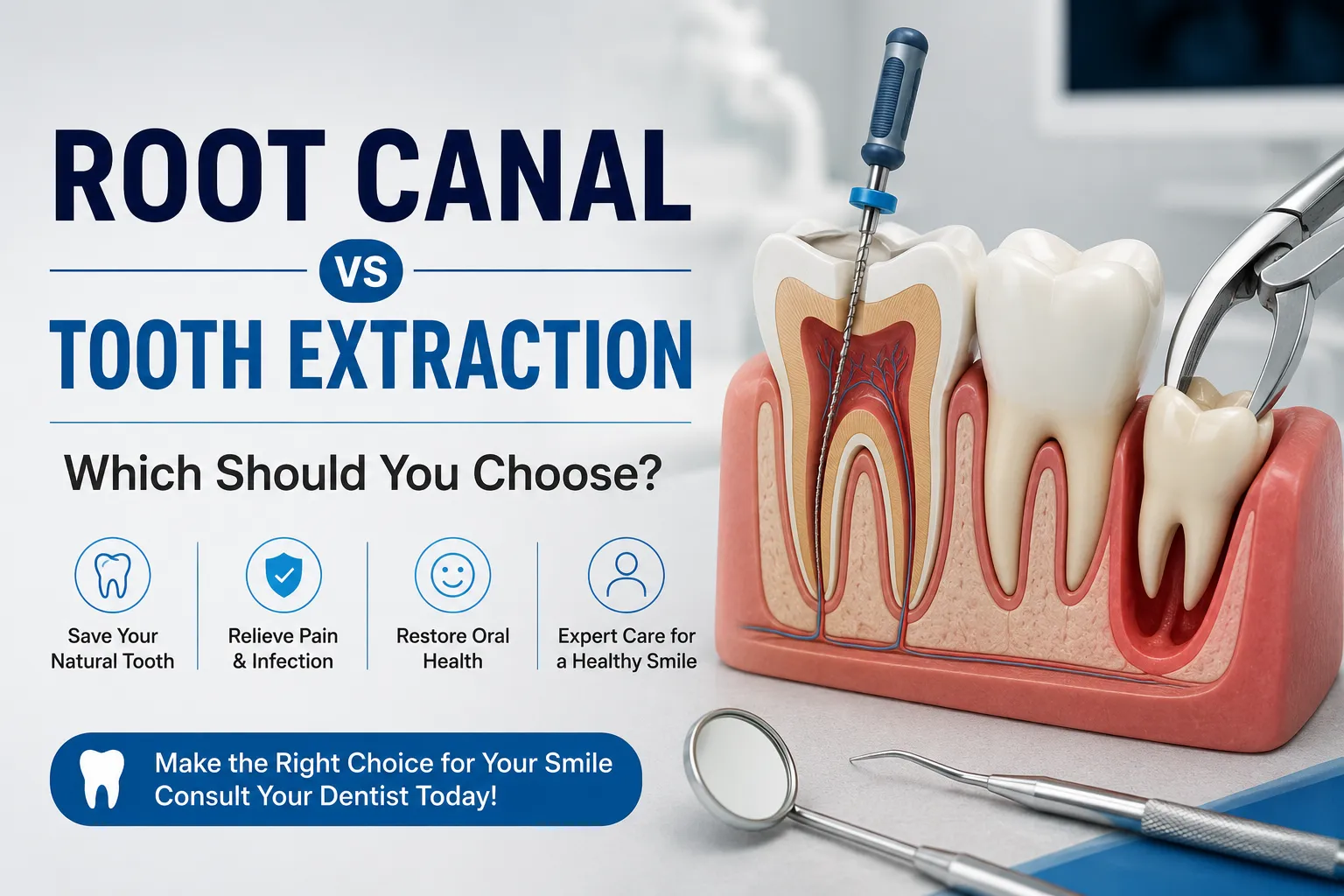

A severe toothache can quickly turn everyday activities like eating, speaking, and even sleeping into a challenge. When a tooth is badly damaged or infected, many patients find themselves comparing Root Canal vs Tooth Extraction and wondering which option is right for them. The answer depends on several factors, including the condition of the tooth, your oral health, and your long-term dental goals.
Modern dentistry offers effective ways to relieve pain and restore oral health. Understanding the differences between these treatments can help you make an informed decision with confidence.
Understanding the Problem
When the inner part of a tooth becomes infected due to deep decay, trauma, or repeated dental procedures, treatment is usually required to prevent the infection from spreading. Ignoring the issue can lead to worsening pain, swelling, and further complications.
At this stage, dentists generally recommend one of two approaches: treating the infection while preserving the natural tooth or removing the tooth completely.
What Is a Root Canal?
A root canal treatment is a procedure designed to remove infected tissue from inside the tooth. After cleaning and disinfecting the root canals, the dentist seals the tooth to prevent future infection.
Many people associate this treatment with discomfort, but modern techniques and local anaesthesia have made the procedure far more comfortable than its reputation suggests.
Why Many Dentists Prefer Saving Natural Teeth
Natural teeth are designed to function as part of a complete system. Preserving them whenever possible helps maintain proper chewing ability, jaw alignment, and overall oral health.
One of the biggest root canal benefits is that it allows patients to keep their original tooth while eliminating infection and pain.
What Happens During an Extraction?
A tooth extraction involves removing the affected tooth from its socket. Dentists may recommend this option when the tooth is severely damaged, fractured below the gum line, or cannot be restored successfully.
The tooth extraction procedure may be relatively simple or more complex depending on the position and condition of the tooth.
While extraction removes the immediate problem, it also creates a gap that may need replacement through implants, bridges, or dentures to restore function and appearance.
Root Canal or Extraction: Key Differences
When deciding between root canal or extraction, it helps to compare the long-term effects of each option.
Preserving Your Natural Tooth
A treated tooth can often last for many years with proper care. Many patients prefer to save tooth with root canal because it maintains natural biting strength and appearance.
Recovery Time
Most patients can return to normal activities shortly after treatment. Extraction recovery may take longer, especially if additional procedures are required later to replace the missing tooth.
Cost Considerations
At first glance, extraction may seem less expensive. However, replacing a missing tooth can add significant costs over time. In many cases, preserving the tooth can be more economical in the long run.
Oral Health Impact
A missing tooth can cause neighbouring teeth to shift over time, potentially affecting your bite. Retaining the natural tooth helps maintain stability within the mouth.
When a Root Canal May Be the Better Choice
Dentists often recommend endodontic treatment when:
- The tooth structure is still strong enough to support restoration
- Infection is confined to the inner pulp
- The surrounding bone remains healthy
- The patient wants to retain their natural tooth
Preserving a tooth whenever possible is generally considered the preferred option in modern dentistry.
When Extraction May Be Necessary
There are situations where removal becomes the most practical solution, such as:
- Severe fractures extending below the gum line
- Advanced decay that cannot be repaired
- Extensive bone loss around the tooth
- Failed previous treatments with limited restorative options
In these cases, your dentist will discuss suitable replacement options to maintain oral function.
How to Decide Which Treatment Is Right for You
Every dental situation is unique. Factors such as age, overall oral health, budget, and the condition of the affected tooth all play a role in determining the most suitable treatment.
The most important step is to seek professional evaluation as early as possible. Early intervention often increases the likelihood of preserving the tooth and avoiding more complex procedures later.
Choosing the Right Dental Care Provider
A thorough examination and accurate diagnosis are essential before making any treatment decision. An experienced dental team can explain your available dental treatment options, discuss expected outcomes, and help you choose the solution that aligns with your needs.
If you are searching for the Best Dental clinic in Jakkur, it is important to choose a clinic that prioritises patient education, advanced technology, and personalised care. Patients seeking the best root canal treatment in Bangalore should look for dentists who focus on preserving natural teeth whenever clinically appropriate.
Final Thoughts
Choosing between a root canal and extraction is not always straightforward. While both treatments can address infection and pain, preserving a natural tooth is often the preferred option whenever possible. A timely dental consultation can help determine the most suitable approach and prevent minor issues from becoming major problems.
The sooner you seek treatment, the more options you are likely to have for protecting your oral health and maintaining your smile.
Frequently Asked Questions
1. Is a root canal better than removing a tooth?
In many cases, preserving a natural tooth is preferred because it helps maintain chewing function, jaw alignment, and overall oral health.
2. How painful is a root canal procedure?
Modern dental techniques and local anaesthesia make the procedure comfortable for most patients, often no more uncomfortable than a standard filling.
3. Can an extracted tooth be replaced later?
Yes. Missing teeth can be replaced with dental implants, bridges, or dentures depending on your oral health and preferences.
4. How long does a treated tooth last after a root canal?
With proper oral hygiene and regular dental visits, a treated tooth can last for many years.
5. What happens if I delay treatment for an infected tooth?
The infection may spread, causing increased pain, swelling, bone damage, and additional treatment needs.
6. Is it cheaper to remove a tooth instead of saving it?
The initial cost may be lower, but replacing a missing tooth can increase overall expenses over time.
7. How do dentists decide between a root canal and extraction?
The decision depends on factors such as tooth condition, bone support, extent of infection, and long-term prognosis.
8. Which treatment helps me keep my natural smile?
When the tooth can be successfully restored, preserving it is often the most effective way to maintain a natural appearance and function.



























Sign in to leave a comment.