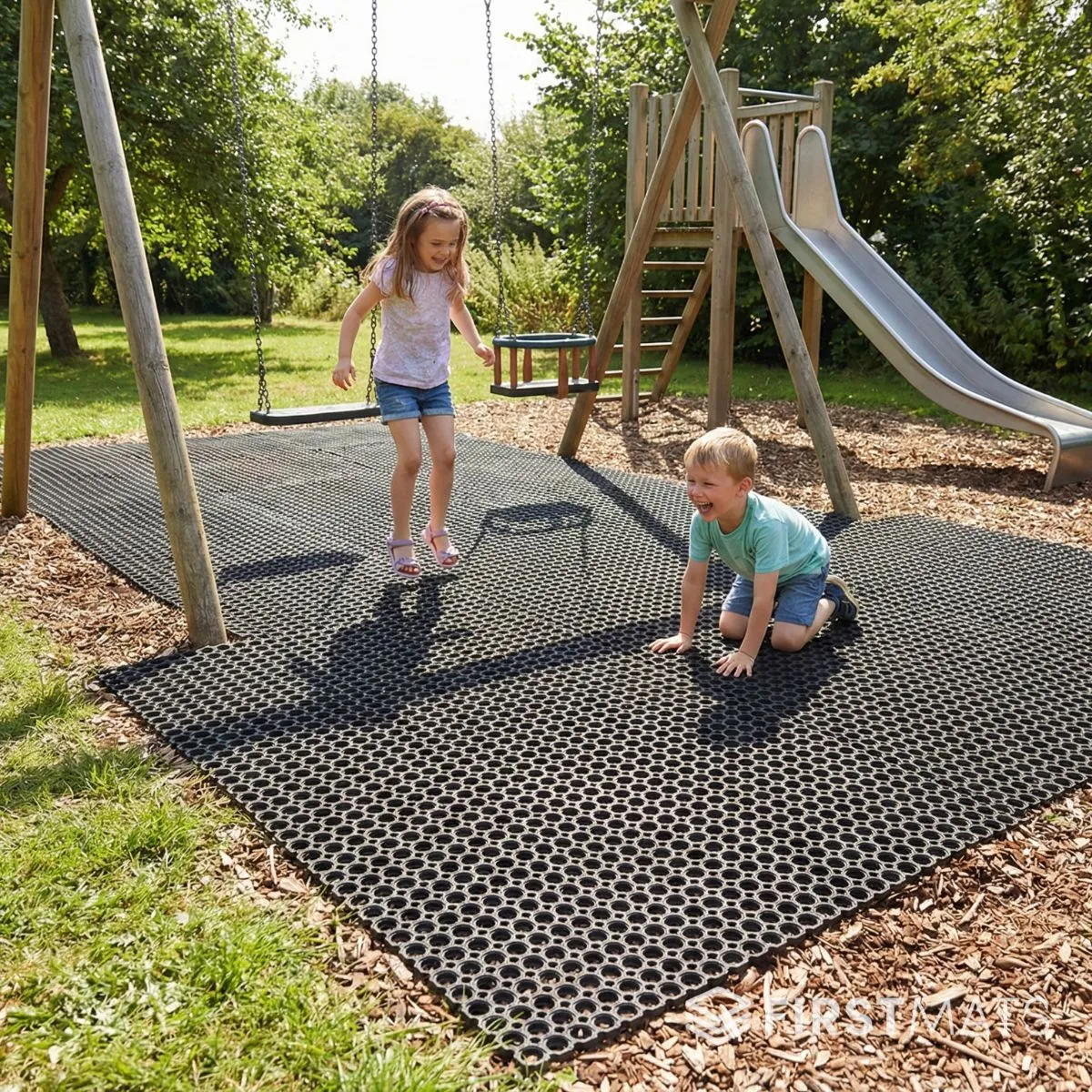

I’ll never forget the sound of my youngest son hitting the parched, summer-hardened earth after losing his grip on the monkey bars. It wasn't just the scrape or the tears; it was that sickening thud that tells a parent the ground simply didn't give way. We often spend months picking out the perfect swing set or the tallest slide, yet we treat the ground beneath it as an afterthought. I learned the hard way that grass—while beautiful—is a terrible safety net when it’s baked under the sun. That’s when I started looking into playground mats. These aren't just floor coverings; they are a critical safety barrier that turns a potential emergency into a simple "oops" moment. They provide that much-needed bounce-back, ensuring that the only thing your kids bring back from the park is a tired smile, not a bruised knee.
The Day the Jungle Gym Won: A Parent’s Lesson in Gravity
Gravity is a relentless teacher. When my kid fell, the grass was yellow, and the soil was as hard as concrete. It struck me then: why do we invest so much in "safe" toys if we ignore the landing pad? Using high-quality playground mats transforms a high-risk zone into a sanctuary. It’s like wrapping your entire backyard in a giant, invisible hug. Since we installed our rubberized protectors, the "thud" has been replaced by a soft "whump." The kids feel more confident to climb higher, and honestly, I can finally finish a cup of coffee without hovering like a nervous helicopter.
Beyond Grass and Dirt: The Hidden Dangers of Natural Surfaces
We tend to think of nature as soft, but dirt compacts over time. Woodchips rot and harbor insects, and sand... well, sand just ends up everywhere except where you need it. Rubberized protectors don't shift, rot, or get blown away by the wind. They stay exactly where the impact is most likely to happen.
Shock Absorption 101: Saving Knees and Elbows
The magic of these surfaces lies in their internal structure. Unlike stone or packed earth, rubber has "elastic memory." When a child falls, the material compresses, soaking up the kinetic energy that would otherwise travel straight into a little one’s bones.
Understanding the G-Force: How Rubber Dissipates Energy
Every impact has a force. Professional-grade playground mats are engineered to reduce the G-force of a fall. It’s the difference between a car with airbags and one without. The rubber cells collapse under pressure and then spring back, making the ground feel like a firm mattress rather than a brick wall.
Weather Resistance: Keeping the Fun Going Through Rain or Shine
One of the biggest headaches with traditional play areas is the mud. One rainstorm and the area under the swings become a swamp for three days. With a porous rubber system, the water drains away almost immediately, meaning the kids can head back outside the moment the sun peeks through the clouds.
The Anatomy of a Perfect Play Surface
A good mat needs to be thick enough to protect but firm enough to walk on. It shouldn't feel like a trampoline, but it shouldn't feel like a sidewalk either. It’s that perfect middle ground—durable, resilient, and ready for a decade of heavy-duty play.
Slip Resistance: Staying Grounded During High-Speed Tag
Kids don't just fall off things; they fall on things while running. A wet wooden deck or slippery grass is a recipe for a twisted ankle. The textured surface of a rubberized mat provides mechanical grip, even when it’s damp, allowing for high-speed games of tag without the sliding disasters.
Maintenance Hacks: Say Goodbye to Mud and Woodchips
I used to spend my weekends raking wood chips back under the slide. It was a losing battle. Since switching to solid playground mats, my maintenance schedule consists of... well, nothing. Occasionally I hit them with a garden hose to get rid of some spilled juice or bird droppings, and that’s it. No more splinters, no more mud tracked onto the carpet, and no more refilling expensive bark every spring.
DIY vs. Professional Installation: Setting the Foundation
You don’t need a degree in construction to set these up. Most interlocking systems are designed for a weekend warrior to handle. The secret is the prep—leveling the ground and ensuring a solid base. Once you snap that last tile into place, the satisfaction is immense. You’ve just built a fortress of safety for your family.
A Sustainable Playground: The Eco-Friendly Side of Rubber
I love knowing that my backyard safety doesn't come at the cost of the environment. Many of the best products are made from recycled tires, giving old rubber a second life. I’ve found that Rubber Fit Floors offers exactly this kind of responsible quality. Their materials are incredibly tough, standing up to the harshest UV rays and freezing winters without cracking or losing their color. When you choose a brand that prioritizes both the safety of your children and the health of the planet, you’re making a choice you can truly feel good about. It’s about creating a legacy of safe, happy memories on a foundation that was built to last as long as the childhoods it protects.
Conclusion: Investing in Peace of Mind and Play
At the end of the day, a playground is a place for growth, and growth involves taking risks. As parents, we can't stop the falls, but we can definitely control how hard the ground is when they happen. By upgrading to a professional surface, you aren't just buying rubber; you’re buying the freedom for your kids to be adventurous and the peace of mind for you to watch them do it. Your backyard is more than just a plot of land—it's the stage for their biggest adventures. Make sure the stage is set for a safe performance.
FAQs
How thick do my playground mats really need to be for a standard swing set?
The thickness you need depends entirely on the "critical fall height" of your equipment. For most standard backyard swing sets or climbing frames that are about 1.5 to 2 meters high, a thickness of 40mm to 50mm is usually recommended. This provides enough shock absorption to cushion a fall from the highest point. If you have taller equipment, you might need to go even thicker to ensure that the impact protection remains effective. Always check the safety rating of the specific mat to match it with your tallest play structure.
Do these mats get too hot for bare feet during the peak of summer?
Like any outdoor surface exposed to direct sunlight, rubber can absorb heat. However, because playground mats are often textured and porous, they don't hold heat quite as intensely as solid asphalt or dark concrete. If your play area is in a very sunny spot, we recommend choosing lighter colors like red or green rather than black, as they tend to stay cooler. Additionally, a quick spray with a garden hose will cool them down instantly, making them perfectly comfortable for little feet even on a July afternoon.
Can I install playground mats directly over my existing grass?
While it is physically possible to lay mats over grass, it isn't the best long-term strategy. Over time, the grass underneath will die and rot, which can create an uneven surface and lead to some unpleasant odors. For the best results, it’s worth the effort to remove the turf, level the area with some sand or fine gravel, and then lay your mats on top. This ensures a perfectly flat, stable, and well-draining surface that won't shift or sag as the years go by.
How do I clean up things like spilled drinks or bird droppings from the rubber?
Maintenance is incredibly easy! Because the material is generally non-porous and weather-resistant, most messes can be cleaned up with a simple garden hose. For tougher stains like bird droppings or sticky juice, a soft-bristled brush and some mild, eco-friendly dish soap will do the trick. You don't need any harsh chemicals or pressure washers. Just a quick scrub and a rinse, and your play area will look as good as new, without the risk of leaving any toxic residue where your kids play.
How long will these mats last before they start to crumble or lose their color?
High-quality mats are built to be incredibly durable and are treated with UV stabilizers to prevent them from breaking down in the sun. In a typical residential backyard, you can expect a professional-grade mat to last anywhere from 10 to 15 years. They are designed to withstand freezing temperatures, heavy rain, and constant foot traffic without losing their shock-absorbing properties. While some slight fading of the color might happen over a decade of sun exposure, the safety benefits will remain intact for the life of the product.






















Sign in to leave a comment.