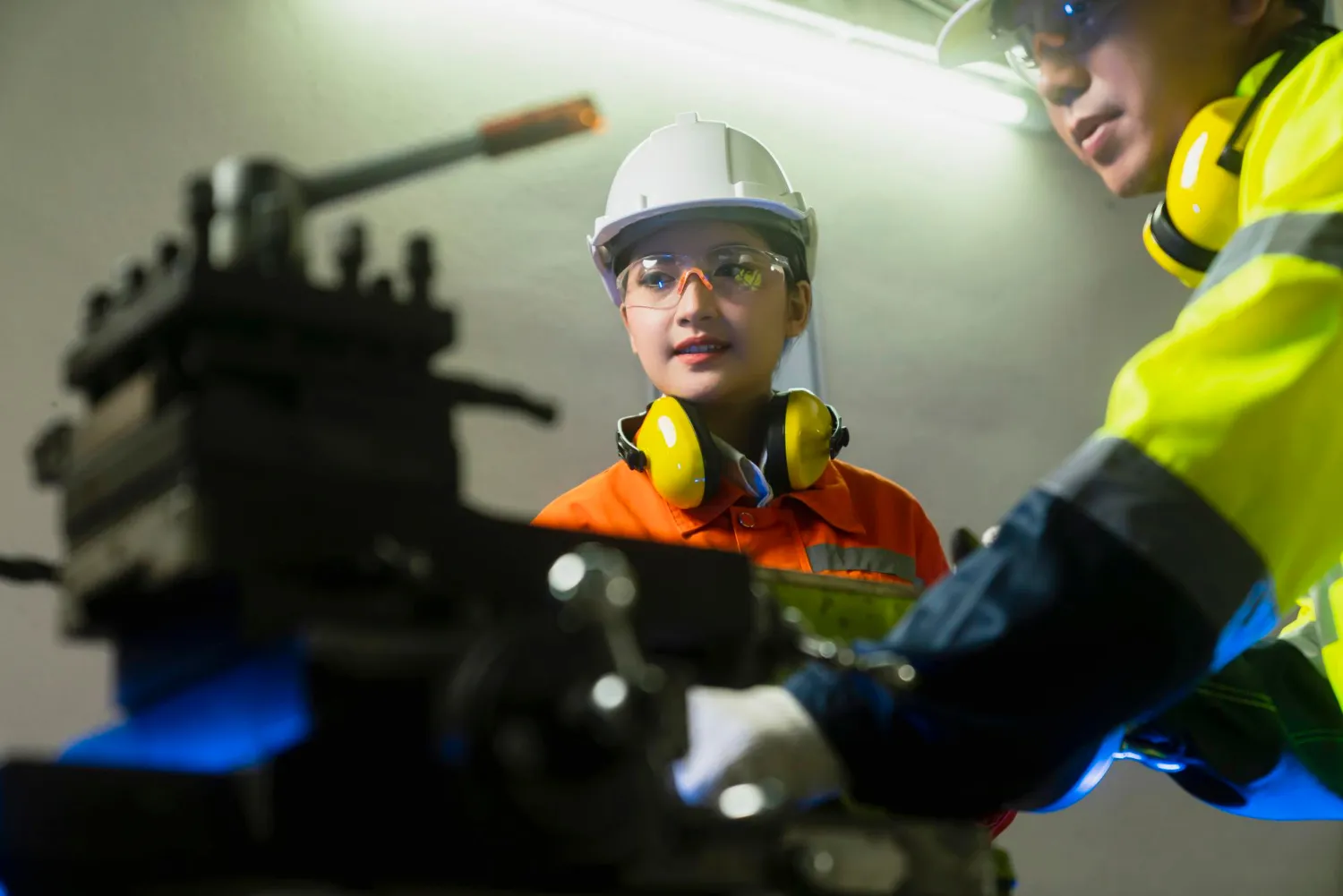

Every year, workplaces across the UAE report preventable accidents — incidents that, in most cases, trace back to one root cause: inadequate onboarding and safety communication. When employees do not fully understand site-specific hazards, emergency protocols, or regulatory compliance expectations before they begin work, the risk of injury rises sharply. For businesses operating in high-stakes environments such as oil and gas, construction, manufacturing, and logistics, this is not a marginal concern — it is an operational and legal liability.
The problem is not a lack of intent. Most organizations in the UAE invest in safety programs. The breakdown occurs in execution. Traditional safety briefings — printed handbooks, static presentations, or verbal walkthroughs- fail to hold attention, struggle with multilingual workforces, and leave no verifiable record of comprehension. In industries regulated by UAE Federal Law and Abu Dhabi or Dubai municipality standards, inconsistent induction delivery exposes businesses to regulatory penalties and, more critically, to real harm.
Compounding this is the scale of workforce movement across UAE projects. Large infrastructure developments, mega-events, and industrial expansions bring hundreds or thousands of new workers onsite within compressed timeframes. Delivering consistent, high-quality safety induction to every individual, in every language, on every shift, is not achievable through traditional methods alone.
Why Video Is the Standard for Safety Communication
The research is consistent: people retain significantly more information from visual and auditory content than from text alone. For safety-critical environments, this translates directly into behavior change and accident reduction. A well-produced safety induction video production ensures that every worker, regardless of literacy level, native language, or prior experience receives the same standardized message with the same visual clarity.
Video also creates an auditable trail. Organizations can document that an employee watched the induction content before accessing a site, satisfying the evidentiary requirements of HSE audits and legal proceedings. In the event of an incident, that documentation becomes invaluable.
Beyond compliance, video communicates authority. When an organization presents a professionally produced induction video, it signals a genuine commitment to safety culture, not merely a checkbox exercise. Workers respond to that signal, and so do clients, insurers, and regulatory bodies.
The Cost of Getting It Wrong
Consider the downstream consequences of a poorly executed safety induction. A worker unfamiliar with lockout/tagout procedures causes a machinery incident. A new contractor does not recognize the emergency muster point. A team operating near overhead utilities has not been briefed on proximity rules. Each scenario represents not only human cost but financial exposure — legal liability, project delays, reputational damage, and increased insurance premiums.
For businesses operating across multiple UAE sites or managing international contractor pools, the inconsistency risk multiplies. A single poorly produced or outdated video, or worse, no video at all, creates compliance gaps that regulators and auditors are specifically trained to identify.
This is precisely why more businesses in the UAE are moving toward professional industrial safety video production as a core component of their HSE strategy rather than an optional supplement.
What Professional Safety Video Production Delivers
Choosing the right safety video production company for your UAE operation is a strategic decision, not a vendor selection. The difference between a generic corporate video house and a specialist production partner is significant, and the gap becomes visible the moment the content is deployed onsite.
A qualified specialist brings several capabilities that generic producers cannot replicate:
Regulatory alignment. Safety video content in the UAE must account for OSHAD-SF (Abu Dhabi), TRAKHEES, Dubai Municipality guidelines, and sector-specific frameworks for oil and gas, construction, and utilities. A specialist producer understands these frameworks and builds compliance into the content architecture from the outset.
Multilingual production. The UAE workforce spans dozens of nationalities. Effective induction video accounts for this diversity through Arabic, English, Hindi, Urdu, Tagalog, and other languages, either through dubbed narration or on-screen text, ensuring comprehension across the entire workforce population.
Site-specific customization. Generic induction footage does not reflect your hazards, your equipment, your emergency procedures, or your culture. Specialist producers shoot on location, incorporate actual site environments, and build content that workers recognize as relevant to their specific context.
Engaging production quality. Animation, motion graphics, scenario-based storytelling, and professional narration are not aesthetic luxuries; they are retention tools. Workers who engage with the content learn from it. Workers who switch off do not.
Reducing Accidents Through Effective Training
The measurable outcome of a professional safety video is accident reduction. Organizations that implement structured workplace safety training video production as part of their onboarding process report measurable declines in near-miss incidents, recordable injuries, and lost-time accidents.
This is particularly relevant in the UAE context, where Vision 2030 initiatives and Expo-era infrastructure development have placed enormous pressure on project timelines. Fast-tracked projects bring accelerated workforce onboarding requirements. When safety induction is conducted at speed through inadequate channels, the statistical risk of incidents rises proportionally with workforce volume.
Video-based induction solves this at scale. A single high-quality production can be deployed simultaneously to thousands of workers across multiple sites, in multiple languages, through tablet or kiosk delivery with integrated quizzes to verify comprehension and generate compliance records.
Building a Safety Induction Video for the UAE Market
Producing an effective safety induction video for a UAE-based operation requires a defined process:
Discovery and hazard mapping. Before scripting begins, the production team should conduct a full site audit, identify site-specific risks, and align with your HSE team on priority messaging.
Script and storyboard development. Content must be clear, direct, and hierarchically structured, leading with life-critical information and reinforcing it with visual examples.
On-location filming and animation. A mix of live-action footage and animation works well for safety content, combining the authenticity of real environments with the clarity of illustrated hazard scenarios.
Multilingual localization. All content should be reviewed by native speakers to ensure cultural appropriateness alongside linguistic accuracy.
Compliance review. Final content should be reviewed against the applicable UAE regulatory frameworks before deployment.
Distribution and reporting integration. Modern safety induction platforms track individual viewing completion and quiz scores, generating the audit-ready data that HSE managers and regulators require.
Take the Next Step
Organizations operating in the UAE that have not yet formalized their safety induction through professional video production are carrying an unnecessary risk, one that is straightforward to eliminate. Whether managing a single high-risk site or a multi-location operation across the Emirates, the standard of safety communication directly impacts workforce protection, regulatory compliance, and business continuity.
Consult a specialist safety video production partner to assess your current induction process, identify gaps, and develop a production plan aligned with UAE regulatory requirements. The investment in quality safety content is measured not only in compliance outcomes, but in the lives and well-being of every person who walks onto your site.























Sign in to leave a comment.