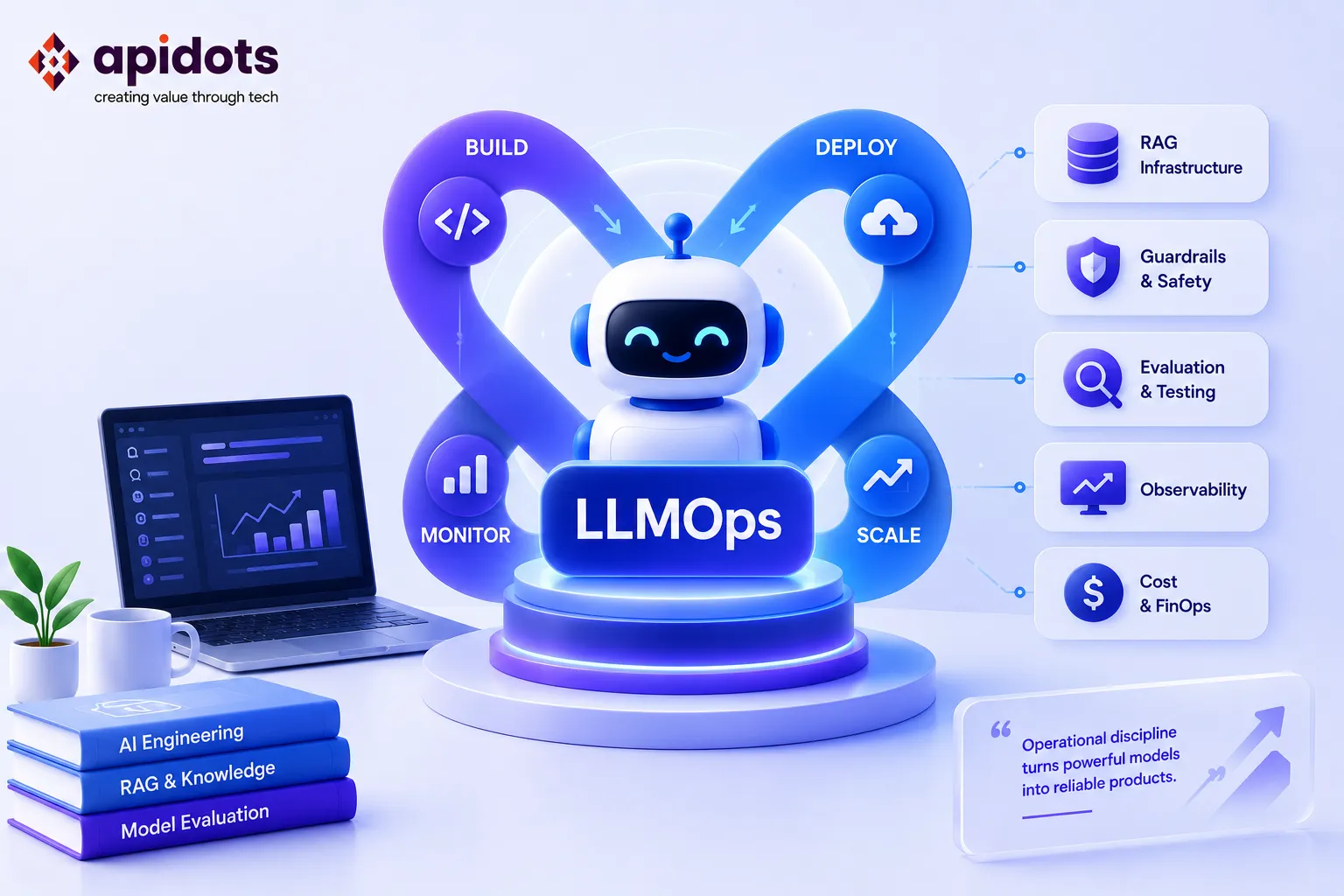

An LLM demo that works smoothly for ten beta testers can fall over completely under real production load. Response times that felt fine at low volume become a bottleneck, vector database queries slow down as the index grows, and API rate limits from model providers start throttling traffic during peak hours.
Scaling an LLM app means designing every layer of the stack — model hosting, vector search, caching, and orchestration — to handle fluctuating, bursty traffic rather than a steady baseline. That often means adding request queuing, aggressive caching for repeat queries, and fallback logic when a preferred model or provider is temporarily unavailable.
The teams that scale smoothly are the ones that load-test their LLM pipeline the same way they'd load-test any other critical service, well before real user volume forces the issue.
Multi-provider fallback is worth planning for early rather than retrofitting during an outage. If a primary model provider degrades or hits capacity limits, having a tested path to a secondary model — even one with slightly lower quality — keeps the product usable instead of fully down.
Read More: Scaling LLM applications past the prototype stage






























Sign in to leave a comment.