
If you struggle with blurry vision, chronic dry eyes, or conditions like keratoconus, you already know that regular glasses or soft contact lenses often don’t deliver lasting comfort or clarity. This is where scleral contacts are transforming modern eye care.
Unlike traditional lenses, scleral lenses are large-diameter gas permeable lenses that rest gently on the white part of your eye (the sclera) rather than the sensitive cornea. This design creates a smooth optical surface and a fluid-filled cushion that keeps the eyes hydrated all day.
For patients in the USA dealing with complex vision issues, scleral contacts are no longer a niche solution—they are becoming a life-changing standard.
What Makes Scleral Contacts Different?
A Protective Fluid Reservoir for Dry Eye Relief
One of the biggest advantages of scleral contacts is their ability to trap a layer of saline between the lens and the eye. This acts like a constant moisture shield, making them highly effective for severe dry eye disease and ocular surface disorders.
Stable, Clear Vision for Irregular Corneas
Conditions such as keratoconus, corneal scarring, or post-surgical complications often distort the eye’s surface. Scleral lenses create a perfectly smooth refractive surface over these irregularities, delivering sharp and stable vision that glasses cannot achieve.
Comfort Designed for Long Wear
Because scleral contacts do not directly touch the cornea, many patients experience significantly less irritation compared to traditional rigid lenses. This makes them suitable for extended daily wear.
Who Can Benefit from Scleral Contacts?
Scleral lenses are commonly prescribed in the United States for patients who have:
- Keratoconus or corneal ectasia
- Severe dry eye syndrome
- Astigmatism that cannot be corrected with standard lenses
- Post-LASIK or post-corneal transplant complications
- High refractive errors or irregular corneal shapes
Eye care specialists often recommend scleral contacts when other treatments fail to provide consistent visual improvement or comfort.
Why Custom Fitting Matters More Than You Think
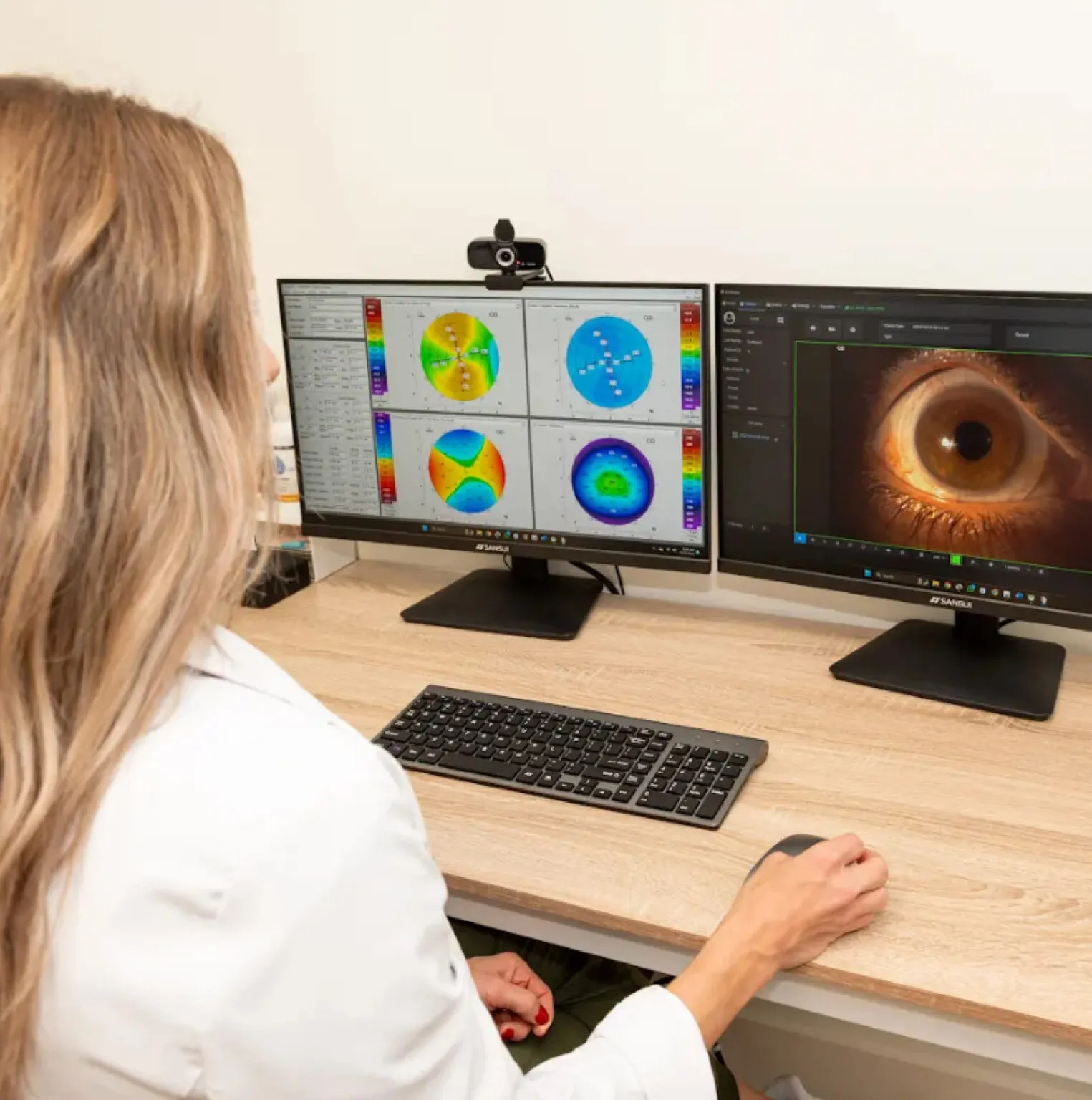
Unlike soft lenses, scleral contacts are not “one-size-fits-all.” Each lens is custom-designed using detailed eye mapping technology. An eye care professional measures the exact curvature and shape of your eye to ensure precision fit.
A properly fitted scleral lens improves:
- Visual sharpness
- Oxygen flow to the cornea
- Long-term comfort
- Eye health safety
This is why it’s essential to work with a trained optometrist or ophthalmologist experienced in specialty contact lenses.
What to Expect During the Fitting Process
Getting scleral contacts is a step-by-step process:
- Comprehensive Eye Exam – Your doctor evaluates eye health and vision needs.
- Corneal Mapping – High-tech imaging captures the exact shape of your eye.
- Trial Lenses – Temporary lenses are tested for fit and clarity.
- Custom Design – Your final scleral lenses are manufactured based on precise measurements.
- Follow-Up Adjustments – Fine-tuning ensures optimal comfort and vision.
While the process may take a few weeks, the long-term results are often life-changing.
Are Scleral Contacts Worth It?
For many patients, the answer is yes. Although scleral contacts can be more expensive than standard lenses, they provide unmatched benefits in vision clarity and eye comfort—especially for complex cases.
Patients often report improved quality of life, better productivity, and reduced eye discomfort after switching.
Frequently Asked Questions (FAQ)
1. What are scleral contacts used for?
Scleral contacts are used to treat irregular corneas, severe dry eye, keratoconus, and other complex vision conditions that cannot be corrected with standard lenses.
2. Are scleral lenses comfortable to wear?
Yes. Once properly fitted, many patients find them more comfortable than traditional rigid lenses because they do not touch the cornea directly.
3. How long can I wear scleral contacts daily?
Most patients can wear them for 10–14 hours per day, depending on eye health and doctor recommendations.
4. Do scleral lenses require special care?
Yes. They require daily cleaning, proper storage, and saline filling before insertion to maintain hygiene and performance.
5. Are scleral contacts covered by insurance?
Coverage varies by provider in the USA. Some medical insurance plans may partially cover them if they are medically necessary.
Final Thoughts: A New Standard in Vision Care
If you’ve been struggling with uncomfortable lenses or inconsistent vision, scleral contacts may be the solution you’ve been searching for. Designed for precision, comfort, and long-term eye health, they offer a breakthrough option for patients with complex vision needs.


























Sign in to leave a comment.