

Seismic testing plays a vital role in modern geotechnical and geophysical investigations. It provides engineers, geologists, and construction professionals with accurate information about subsurface materials without the need for extensive excavation. By measuring how seismic waves travel through soil and rock layers, seismic testing helps determine mechanical properties that directly impact design, safety, and long term performance of structures.
As infrastructure projects grow more complex and regulations become stricter, reliable subsurface data is no longer optional. Seismic testing has become an essential part of site characterization for civil engineering, offshore construction, and environmental assessments.
What Is Seismic Testing?
Seismic testing is a non destructive method used to evaluate subsurface conditions by generating and recording seismic waves. These waves travel through the ground at different speeds depending on material density, stiffness, and composition. By analyzing wave velocities, engineers can determine key parameters such as shear wave velocity, compression wave velocity, and elastic moduli.
Two primary wave types are measured during seismic testing. P waves, or compression waves, move fastest and travel through solids, liquids, and gases. S waves, or shear waves, move more slowly and only travel through solids. Measuring both provides a comprehensive understanding of subsurface behavior.
Why Seismic Testing Matters in Engineering Projects?
Accurate subsurface data is essential for safe and cost effective project design. Seismic testing allows engineers to evaluate soil stiffness, identify weak layers, and assess ground response under dynamic loads such as earthquakes or heavy machinery.
In foundation design, seismic testing helps determine whether soil conditions can support structures without excessive settlement or failure. For transportation projects like bridges, highways, and rail systems, it ensures stability and long term performance. Offshore and marine projects rely on seismic testing to evaluate seabed conditions before installing platforms, pipelines, or wind turbines.
Seismic testing also plays a key role in seismic hazard analysis. By measuring shear wave velocity profiles, engineers can classify site conditions and predict how ground motion may be amplified during seismic events.
Common Seismic Testing Methods
Several seismic testing methods are used depending on project requirements, site conditions, and depth of investigation. Surface based methods include seismic refraction and multichannel analysis of surface waves. These techniques are effective for shallow investigations and large area coverage.
Borehole seismic testing provides higher resolution data at greater depths. Downhole and crosshole testing are commonly used to measure wave velocities directly within soil and rock layers. Borehole methods reduce uncertainty by minimizing surface noise and environmental interference.
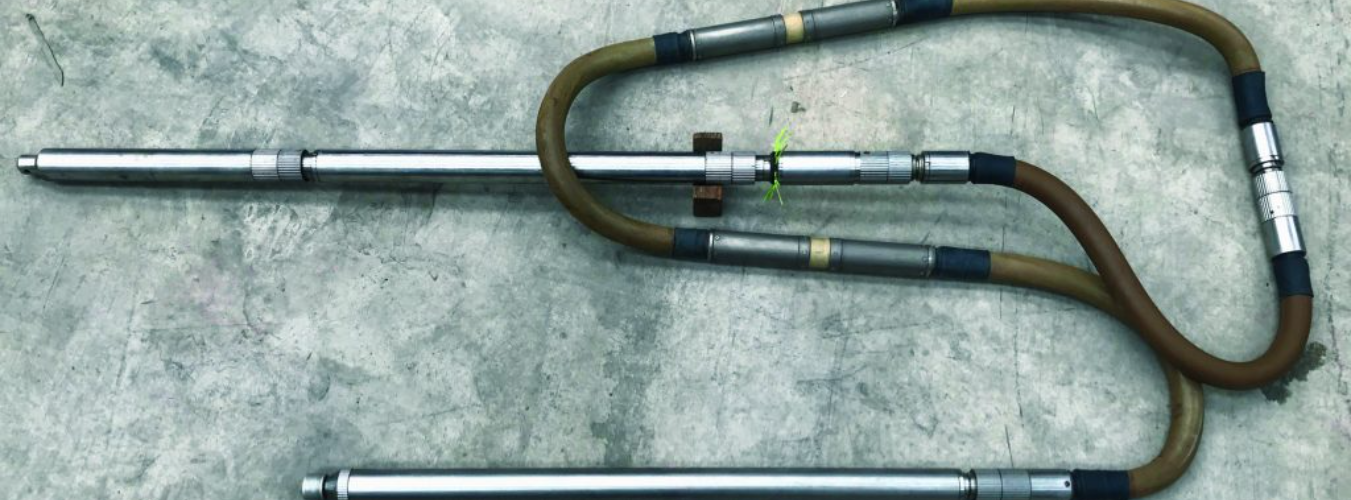
Advanced borehole tools have further improved seismic testing efficiency. Modern systems can measure P wave and S wave velocities without external energy sources, allowing for faster data collection and greater accuracy in challenging environments.
Applications of Seismic Testing Across Industries
Seismic testing is widely used across multiple industries. In civil engineering, it supports foundation design, slope stability analysis, and ground improvement verification. In offshore engineering, it helps assess seabed strength and stratigraphy before construction.
Environmental and geotechnical consultants use seismic testing for site assessments, land development planning, and remediation projects. The mining and energy sectors rely on seismic data to evaluate rock properties and support safe extraction operations.
Seismic testing is also used in research and academic settings, contributing to advances in soil mechanics, earthquake engineering, and geophysical modeling.
Advantages of Modern Seismic Testing Technology
Technological advancements have significantly improved the reliability and efficiency of seismic testing. Modern instruments offer high resolution measurements, automated data processing, and advanced waveform analysis. These features reduce testing time while improving data quality.
Compact and self contained seismic testing tools allow for easier deployment in confined or offshore environments. The ability to measure elastic properties directly from wave velocities provides engineers with actionable data for design and analysis.
Improved software capabilities enable faster interpretation and clearer visualization of subsurface conditions. This leads to better decision making and reduced project risk.
Choosing the Right Seismic Testing Solution
Selecting the appropriate seismic testing method depends on project goals, site conditions, and required depth of investigation. Surface methods are suitable for preliminary studies, while borehole testing is preferred for detailed engineering analysis.
Working with experienced professionals and using proven seismic testing equipment ensures accurate results and regulatory compliance. High quality data reduces uncertainty, minimizes costly design changes, and enhances overall project success.
The Future of Seismic Testing
As construction and infrastructure demands continue to evolve, seismic testing will remain a cornerstone of subsurface investigation. Ongoing innovation in sensor technology, data acquisition, and analysis software will further enhance precision and efficiency.
With its ability to deliver critical subsurface insights quickly and non destructively, seismic testing continues to support safer designs, smarter construction decisions, and more resilient infrastructure worldwide.



























Sign in to leave a comment.