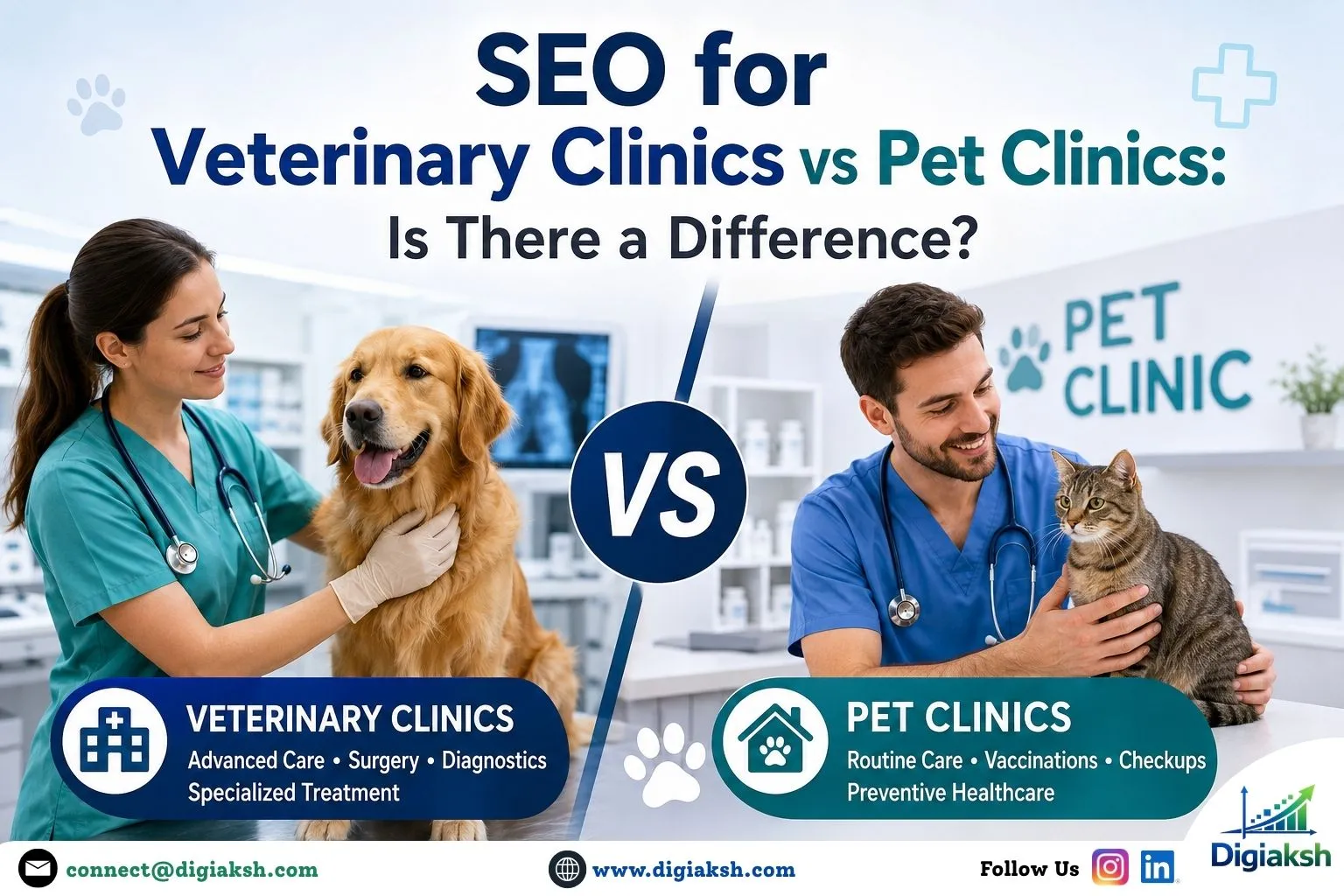

When people search online for a trusted veterinary practice, they often use terms like "pet clinic near me," "veterinary clinic," or "animal hospital." While these businesses may appear similar, their services, target audience, and search intent can vary. That's why SEO for pet clinic websites requires a tailored approach rather than a one-size-fits-all strategy. Whether you run a small neighborhood pet clinic or a multi-specialty veterinary hospital, understanding these differences can help you attract more qualified visitors, increase appointments, and improve your visibility on Google.
What Is the Difference Between a Veterinary Clinic and a Pet Clinic?
Although the terms are often used interchangeably, there are subtle differences.
A pet clinic generally focuses on routine healthcare services such as vaccinations, health checkups, deworming, grooming advice, and preventive care. These clinics usually cater to pet owners looking for convenient, local services.
A veterinary clinic, on the other hand, may offer advanced medical care, surgeries, diagnostics, emergency treatment, and specialized services. Many veterinary clinics also treat a wider range of animals beyond cats and dogs.
From an SEO perspective, these differences influence the keywords users search, the content you publish, and the services you optimize on your website.
Is SEO for Pet Clinic Different from Veterinary Clinic SEO?
The foundation of SEO remains the same, but the keyword strategy and content planning are different.
SEO for pet clinic focuses on attracting local pet owners searching for everyday pet care services. Keywords often include:
- Pet clinic near me
- Dog vaccination clinic
- Cat health checkup
- Puppy vaccination
- Pet doctor
In contrast, veterinary clinic SEO targets broader and more specialized searches, such as:
- Veterinary surgeon
- Emergency veterinary clinic
- Animal hospital
- Orthopedic surgery for pets
- Veterinary dermatologist
By understanding the intent behind these searches, you can create pages that match what your potential clients are looking for.
Why Veterinary SEO Requires Service-Based Optimization
Successful veterinary SEO goes beyond adding keywords to your website. Google prefers websites that clearly explain their services and demonstrate expertise.
For example, instead of having one generic "Services" page, create dedicated pages for:
- Vaccination
- Pet surgery
- Dental care
- Emergency treatment
- Diagnostics
- Pet grooming (if offered)
- Preventive healthcare
Each service page should answer common questions, explain the treatment process, and include location-specific keywords to improve local search visibility.
This approach helps Google understand your expertise while making it easier for pet owners to find the exact service they need.
Local SEO Is Essential for Both Clinics
Whether you operate a pet clinic or a veterinary hospital, most customers come from nearby locations. This makes local SEO one of the most important ranking factors.
Here are a few essentials:
- Optimize your Google Business Profile.
- Keep your clinic's name, address, and phone number consistent across directories.
- Collect genuine customer reviews.
- Add Local Business and Veterinary schema markup.
- Create location-specific landing pages if you serve multiple areas.
A strong local presence helps your clinic appear in Google Maps and local search results when users search for nearby veterinary services.
Content Marketing Helps Build Trust
Many clinic websites only list their services and contact details. However, publishing educational blogs can significantly improve your search visibility.
Consider writing articles such as:
- How often should dogs be vaccinated?
- Signs your pet needs emergency care
- Common skin diseases in cats
- Tips for first-time pet owners
- Pet nutrition guide
These articles answer real user questions while helping your website rank for additional keywords. They also establish your clinic as a trusted source of information.
Technical SEO Should Never Be Ignored
Even the best content may struggle to rank if your website has technical issues.
Make sure your website:
- Loads quickly on mobile devices.
- Uses HTTPS for security.
- Has optimized images.
- Includes proper title tags and meta descriptions.
- Uses clear URL structures.
- Has an XML sitemap submitted to Google Search Console.
- Fixes broken links and crawl errors.
These improvements enhance user experience and make it easier for search engines to crawl and index your website.
Should You Target Both Pet Clinic and Veterinary Keywords?
Yes. Most clinics benefit from targeting both keyword groups naturally.
For example, your homepage can focus on broader veterinary clinic SEO keywords, while individual service pages and blog posts target phrases related to SEO for pet clinic. This balanced strategy allows your website to attract users searching for both routine pet care and specialized veterinary services.
Instead of competing for a single keyword, you expand your visibility across multiple relevant search queries.
Conclusion
There isn't a huge difference between optimizing a veterinary clinic and a pet clinic website, but understanding your audience's search intent makes all the difference. A successful SEO strategy combines local optimization, high-quality content, technical improvements, and service-focused pages that answer the questions pet owners are asking.
Whether your goal is to rank for SEO for pet clinic, strengthen your veterinary clinic SEO, or build a long-term veterinary SEO strategy, investing in search engine optimization can help your clinic attract more qualified visitors and convert them into loyal clients.
If you're looking for an SEO Expert in Mumbai, working with someone who understands local SEO, healthcare SEO, and the veterinary industry can help your clinic achieve sustainable rankings and generate consistent appointment inquiries.




























Sign in to leave a comment.