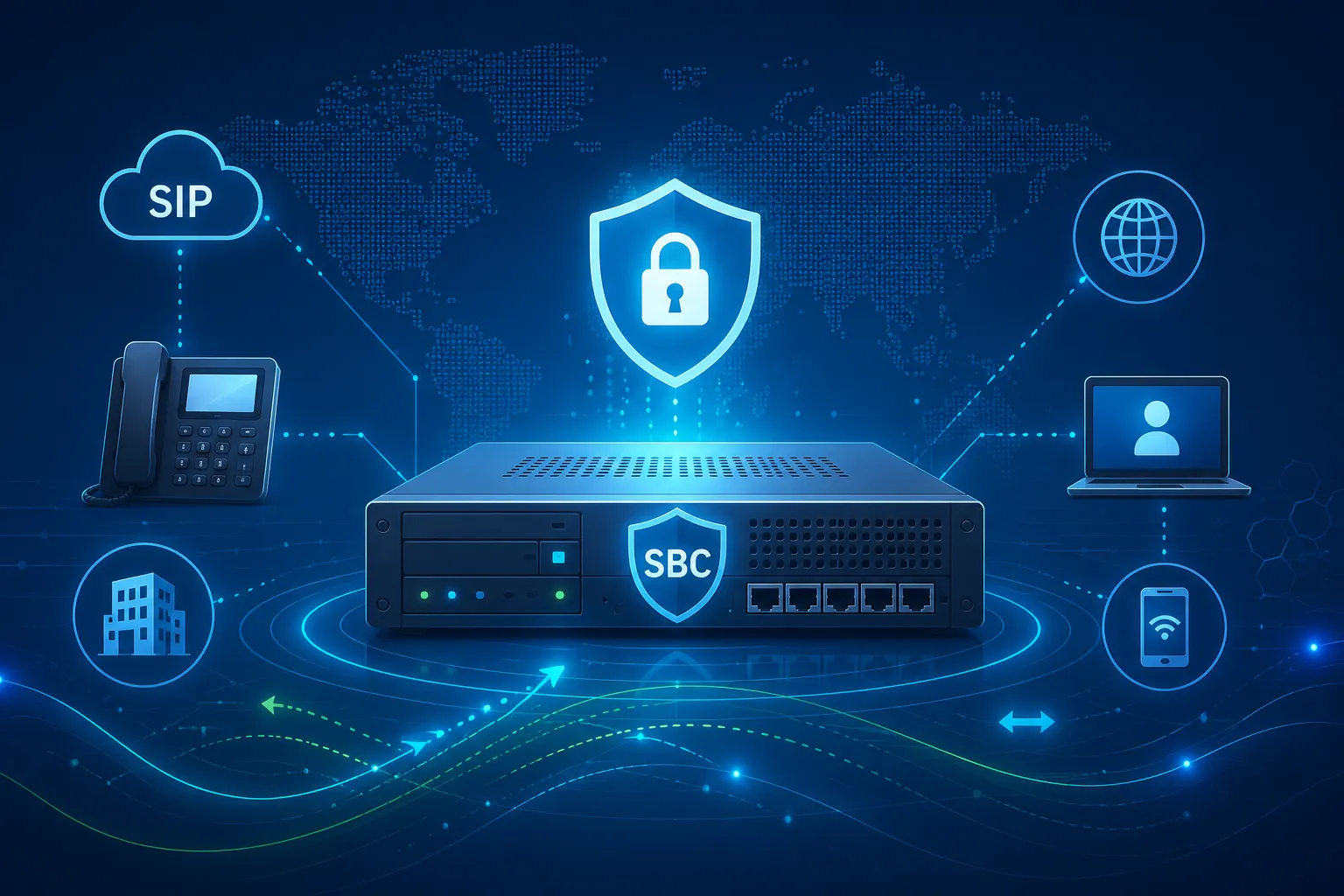

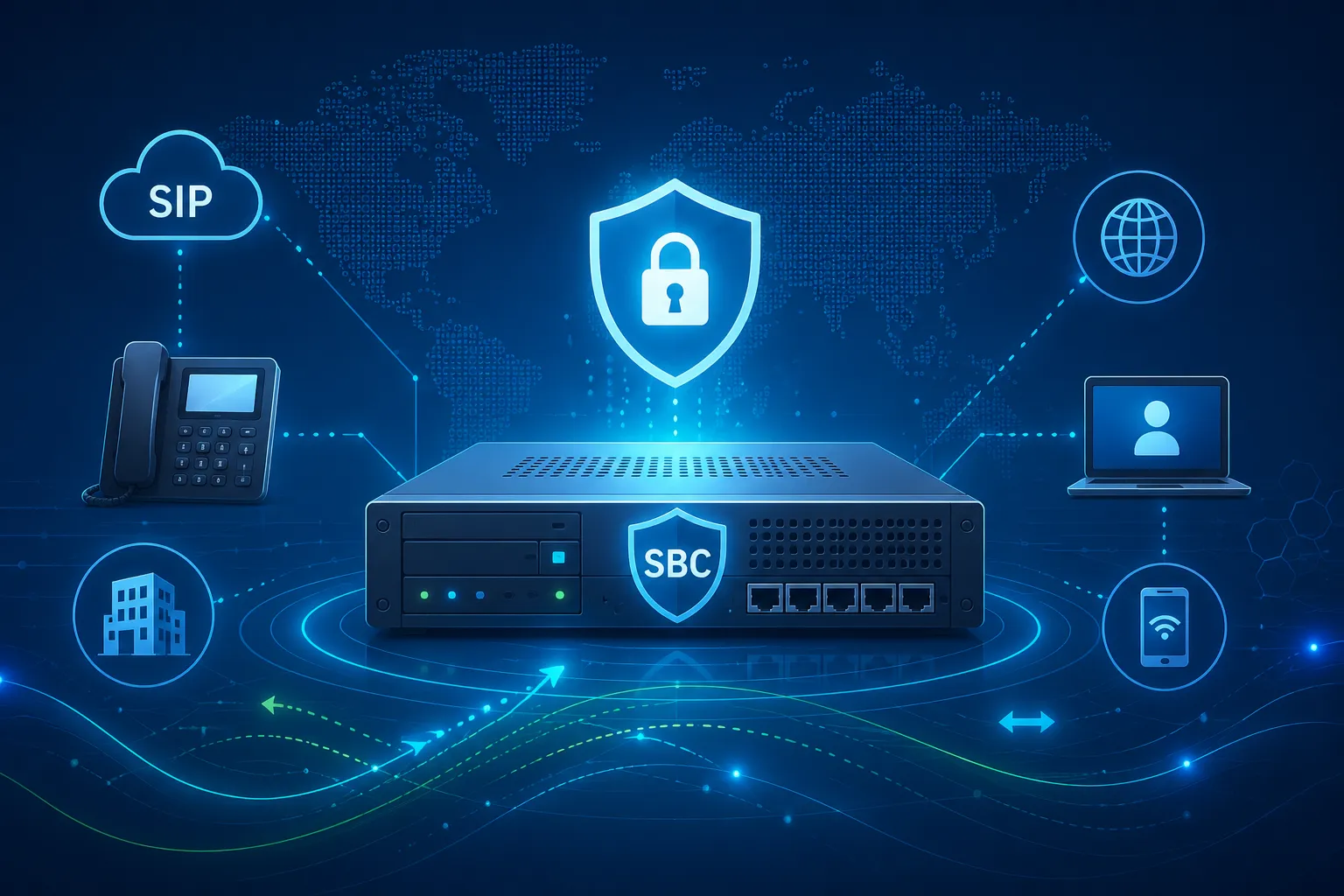
Most session border controller development projects start with a clean whiteboard and a clear goal. Build an SBC. Handle SIP routing. Secure the edge. Ship it.
The first two weeks usually go well. You pick a platform, you get basic call routing working, you test a few scenarios. Then production reality starts showing up, and the project quietly expands into territory nobody scoped for.
I've been involved in enough SBC builds to notice a pattern. The core engineering isn't what stalls projects. It's the three areas that teams consistently underestimate because they don't look like problems until you're already deep into the work.
Carrier interconnects are where timelines break
Session border controller development feels straightforward when you're testing against a single SIP trunk. Your Kamailio or OpenSIPS config handles registration, your dialplan routes calls, and everything works.
Then you connect to a second carrier. And a third. And suddenly your clean SBC configuration is full of carrier-specific workarounds.
One provider sends malformed SIP headers that your parser chokes on. Another has quirks in how they handle re-INVITEs during call transfers. A third requires a specific codec negotiation sequence that doesn't match your default profile. These aren't documented anywhere. You find them by watching calls fail and tracing the SIP logs until you figure out what's different about this particular carrier's behavior.
The core SIP routing logic for a production SBC might take a few weeks to build. The carrier-specific normalization and edge-case handling can easily stretch to two or three months. And every new carrier you add brings its own set of surprises.
If you're planning an SBC development project, double whatever time you've allocated for carrier integration. Then add a buffer on top of that.
Media handling is a different project inside the same project
Teams usually start their SBC focused on SIP signaling. That's natural because signaling is the routing brain. But once you need call recording, NAT traversal, or codec transcoding, you're suddenly dealing with RTP media streams, and that changes the engineering picture completely.
The typical production setup pairs Kamailio or OpenSIPS (for SIP proxy and routing) with RTPEngine (for media relay). FreeSWITCH sometimes sits behind that if you need application-level media processing like IVR, conferencing, or real-time transcription.
Here's where the planning gap shows up. An SBC doing pure media relay (just passing RTP packets through without touching them) has very low CPU overhead per call. An SBC doing full codec transcoding between G.711 and Opus might consume 4x to 8x more CPU for the same number of concurrent calls. Teams that size their infrastructure for relay mode and then discover halfway through deployment that a carrier requires transcoding are looking at a hardware bill they didn't budget for.
The fix is simple but requires discipline: decide your media handling approach before you spec your servers. Not after. That one decision affects CPU sizing, memory allocation, and your concurrent call ceiling more than almost anything else in the SBC architecture.
High availability gets pushed to "later" and then costs six months
Almost every SBC project I've seen follows the same HA story. The team builds a single-node SBC. It works. They deploy it. Someone eventually asks what happens if it goes down, and the answer is uncomfortable silence.
Retrofitting high availability into an SBC that wasn't designed for it is one of the most expensive refactors in VoIP infrastructure. Registration state, dialog persistence, media session continuity. All of it needs to be rethought when you move from one node to two.
For smaller deployments (under 10,000 concurrent sessions), active-passive failover with VRRP works fine. One node runs traffic, the standby takes over if the primary fails. You waste half your capacity, but the setup is relatively simple.
For anything larger, you need active-active HA. Both nodes handle live traffic simultaneously. State synchronizes through Redis or a shared database. This is where things get complicated. Split-brain scenarios (both nodes claiming ownership of the same call) are more common in production than the documentation suggests, and debugging them under live traffic is not something you want to learn on the fly.
The math is stark. Designing for HA from day one adds roughly two weeks to the initial session border controller development timeline. Retrofitting it after deployment costs roughly six months. Every team that's done the retrofit says the same thing: should have done it from the start.
The talent question most teams avoid
Building a production SBC requires engineers who've actually done it before. That sounds obvious, but the hiring reality is harder than most teams expect.
Senior Kamailio or OpenSIPS engineers with real SBC deployment experience are rare in the U.S. market. Salaries run between $160K and $220K, and finding two qualified candidates can take 6 to 9 months of active searching. If your SBC supports a product but isn't the product itself, carrying that salary load permanently doesn't usually make financial sense.
What tends to work better for most teams is a hybrid approach. Bring in a specialist firm to handle the initial session border controller development and run it through the first 6 to 12 months of production. During that period, they train your internal team on the codebase and operational playbook. After the transition, you keep the firm on retainer for major incidents and new feature work.
For teams exploring that model, Hire VoIP Developer's custom session border controller solutions team handles SBC projects on Kamailio, OpenSIPS, and FreeSWITCH for telecom operators and B2B SaaS companies.
Bottom line
Session border controller development is one of those projects that looks contained on paper but grows once production realities set in. Carrier interconnect quirks, media handling decisions, HA architecture, and the talent question are the four areas that consistently consume more time and budget than anyone plans for.
If you're scoping an SBC project, account for these from the start. Your estimates will be more honest, your infrastructure costs will be more accurate, and you'll skip the painful refactoring cycle that trips up most teams building their first production SBC.




























Sign in to leave a comment.