
Walk into any fabrication shop or steel yard, and you will hear the terms "sheet" and "plate" used constantly, sometimes interchangeably. That casual overlap causes real problems. Ordering a plate when your project calls for a sheet can blow your budget and add unnecessary weight. Ordering a sheet when you need a plate can compromise the structural integrity of the plate. The difference between the two comes down to thickness, but that single variable changes everything downstream: cost, weight, strength, the fabrication methods you can use, and the applications each is suited for. Whether you are a contractor, a procurement manager, or a hands-on metalworker, understanding this distinction helps you spec the right material the first time and avoid expensive change orders later.
What Is Sheet Metal?
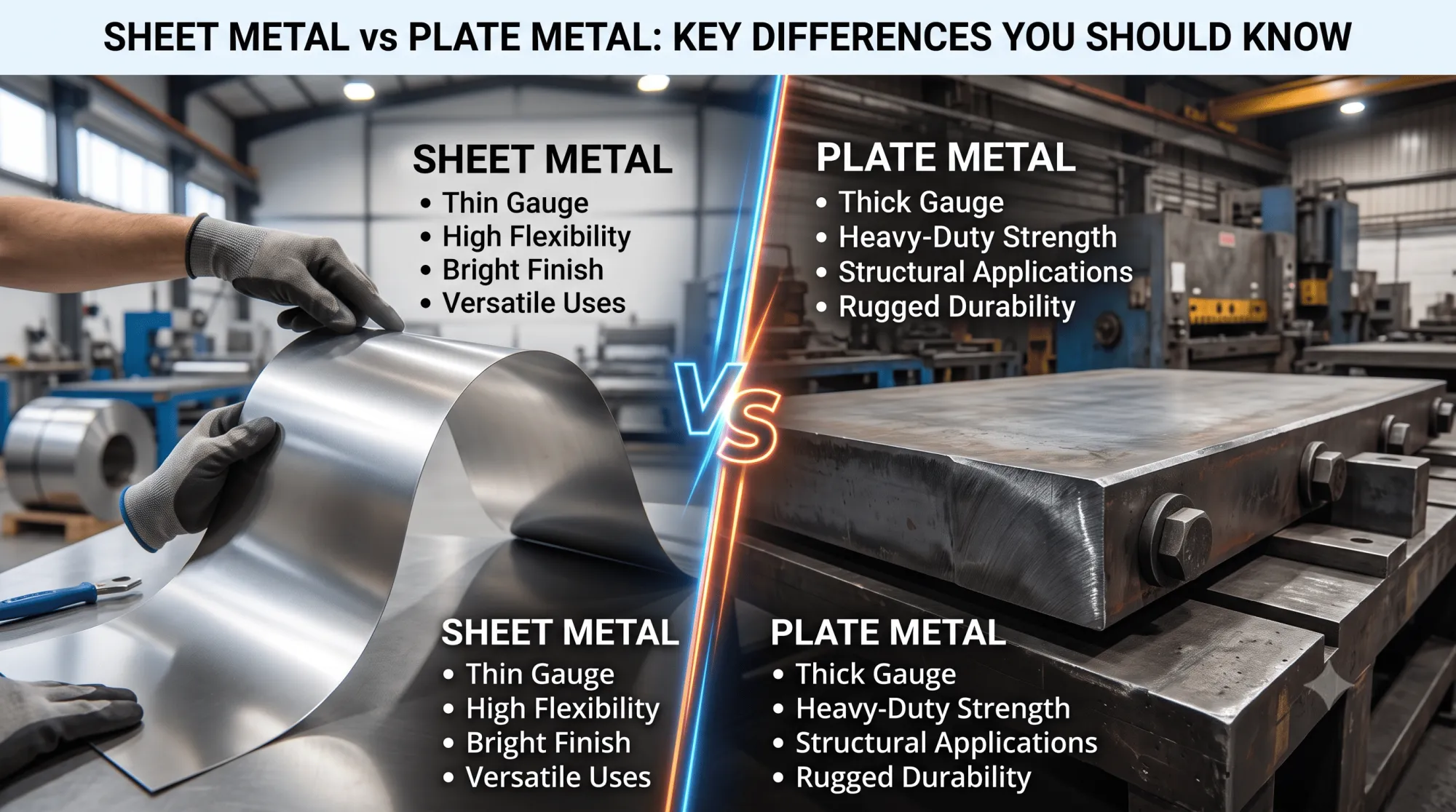
Sheet metal refers to flat metal stock that is thinner than plate, generally under 6 mm (roughly 0.25 inches) thick. In the United States, sheet thickness is usually described by gauge, a numbering system in which a higher gauge number indicates thinner material. Common gauges range from about 7 gauge (around 0.18 inches) down to 30 gauge (well under 0.02 inches).
The most common sheet metal materials are carbon steel, galvanized steel, aluminum, and stainless steel. Galvanized steel sheet is a workhorse for outdoor and moisture-prone applications because its zinc coating resists corrosion. Aluminum sheet is prized for its light weight and workability, while stainless steel sheet is used wherever hygiene or corrosion resistance matters, such as in food service equipment and medical enclosures.
Because it is thin and relatively lightweight, sheet metal is easy to bend, roll, stamp, and form. That formability is exactly why it dominates industries like HVAC ducting, automotive body panels, appliance housings, roofing, and electrical enclosures.
What Is Plate Metal?
Plate metal is flat metal stock 6 mm (0.25 inches) thick or greater, and it is typically measured in inches or millimeters rather than gauge. Plate can run from a quarter inch up to several inches thick for heavy industrial applications.
Common plate materials include structural steel (such as A36, one of the most widely used structural grades), stainless steel, and aluminum plate. Steel plate in particular, is the backbone of structural work.
Where sheet metal is about formability, plate metal is about strength and mass. You will find plates in bridge components, building frames, heavy machinery bases, pressure vessels, shipbuilding, truck beds, and wear-resistant liners for mining and construction equipment. When a component must carry heavy loads or withstand significant wear and impact, a plate is usually the best choice.
Key Differences Between Sheet Metal and Plate Metal
Here is how the two compare across the factors that matter most in real projects:
Thickness.
The sheet is under 6 mm and measured in gauge. Plate is 6 mm and above, measured in fractions of an inch or millimeters.
Weight. Thickness drives weight directly. A 4x8 foot piece of 16 gauge steel sheet weighs a fraction of what the same footprint in half-inch plate weighs, which affects shipping, handling, and the load your structure must support.
Strength. The plate offers far greater load-bearing capacity and impact resistance. Sheet provides adequate strength for enclosures and panels but is not intended for primary structural loads.
Flexibility and formability. Sheet bends, rolls, and stamps easily with standard press brakes and forming tools. Plate resists forming and often requires heavy-capacity equipment, heat, or welding-based assembly instead of bending.
Cost. A sheet is generally cheaper per piece because there is simply less material. Plate costs more per square foot, and a thicker plate also drives up cutting and processing costs.
Fabrication techniques. The sheet is suited to shearing, punching, stamping, and light-duty laser cutting. Plate typically calls for plasma cutting, waterjet cutting, heavy-duty laser systems, and welding.
Common applications. Sheet dominates ducting, enclosures, panels, and trim. Plate dominates frames, bases, structural connections, and heavy equipment.
Which One Should You Choose?
The decision usually answers itself once you define what the part has to do.
Choose sheet metal when the component is a skin, cover, or channel rather than a load-bearing member. HVAC ductwork, electrical enclosures, machine guards, cabinets, signage, and architectural trim all belong in sheet territory. You get lower material cost, easier forming, and lighter assemblies.
Choose plate metal when the component carries structural loads, resists impact, or anchors heavy equipment. Machine bases, structural frames, gussets, brackets under heavy load, counterweights, and industrial equipment components all call for plate. The added cost and weight buy you durability that sheet cannot match.
Many projects use both. A piece of industrial equipment might sit on a plate steel base with sheet metal panels enclosing the working components. If you are unsure which grade or thickness fits your application, talking through the project with a knowledgeable sheet metal supplier in Phoenix or your local metal supplier can save you from over-specifying (wasting money) or under-specifying (risking failure).
Common Fabrication and Cutting Methods for Sheet and Plate
The right cutting method depends heavily on thickness.
Shearing and CNC punching are fast, economical options for sheet metal. Shears make clean, straight cuts, while CNC punching produces holes and cutouts at high speed. Neither is practical for a plate.
Laser cutting delivers excellent precision and edge quality on sheet metal and thin plates. Modern fiber lasers can handle thicker material, but speed drops and cost rises as thickness increases.
Plasma cutting is the go-to for mid-range and thick plates. It cuts fast through structural steel, though the edge quality is rougher than laser.
Waterjet cutting handles nearly any thickness and material without heat, preventing warping and preserving material properties. It is slower and pricier, but ideal for thick plate, aluminum, and heat-sensitive work.
Most shops and suppliers offering professional metal-cutting services will recommend the best method for your material, thickness, tolerance requirements, and budget, which is often more cost-effective than cutting heavy stock in-house with underpowered equipment.
Getting the Material Decision Right
Sheet versus plate is not a matter of one being better than the other. It is a matter of matching material to purpose: formability and economy on one side, strength and durability on the other. Take the time to define your load requirements, fabrication plan, and budget before you order, and lean on the experience of a trusted local supplier and fabricator when the answer is not obvious. The right material choice at the start is the cheapest quality control you will ever get.



























Sign in to leave a comment.