

When men start researching modern treatment options for erectile dysfunction, the comparison between Shockwave vs Acoustic Wave Therapy for ED usually appears early. Both treatments rely on sound-based energy to stimulate blood flow in penile tissue. On the surface they seem almost identical. In reality, they operate differently, produce different biological responses, and may lead to different outcomes depending on the patient.
Over the past few years, these treatments have gained attention because they aim to address the underlying cause of erectile dysfunction rather than simply treating symptoms temporarily. Traditional medications like PDE5 inhibitors improve blood flow for a short period of time. Sound-wave therapies attempt to improve vascular health within penile tissue itself.
Many men considering treatment are unsure which option makes sense. Some clinics use the terms interchangeably, which creates additional confusion. Understanding the real differences between shockwave therapy for ED and acoustic wave therapy for ED helps patients ask better questions before committing to treatment.
Understanding the Root Cause of Erectile Dysfunction
Before comparing treatments, it helps to understand why erectile dysfunction happens in the first place.
A large portion of ED cases are classified as vascular erectile dysfunction. This means the blood vessels responsible for creating and maintaining an erection are not functioning properly. Reduced circulation prevents the penile chambers from filling with enough blood.
Several factors contribute to this problem.
Aging naturally reduces vascular elasticity. Diabetes can damage blood vessels over time. High blood pressure and cholesterol create additional strain on circulation. Smoking and sedentary habits also play a role.
Because the issue often involves blood vessel health, many doctors focus on therapies that encourage penile blood flow improvement and tissue regeneration.
This is where sound-wave therapies enter the conversation.
What Is Shockwave Therapy for Erectile Dysfunction?
Shockwave therapy for ED uses focused low-intensity acoustic pulses that travel through tissue at high velocity. These pulses create controlled micro-stress inside targeted areas of penile tissue.
That stress triggers a biological repair response.
The body reacts by stimulating angiogenesis, the process where new blood vessels develop. Improved vascular networks allow blood to flow more freely during sexual arousal.
This treatment is often referred to as low-intensity shockwave therapy ED or LI-ESWT.
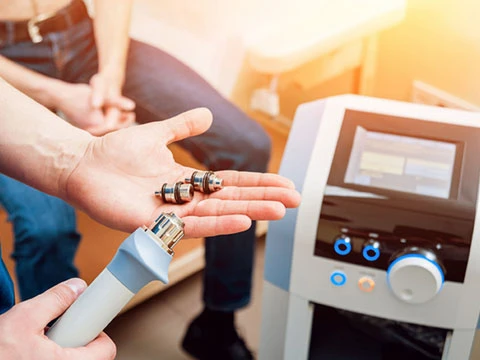
The procedure itself is straightforward. A handheld device delivers pulses to several areas along the shaft and base of the penis. Sessions usually last around 15–20 minutes and are typically performed over multiple visits.
The goal is gradual tissue improvement rather than instant results.
What Is Acoustic Wave Therapy for Erectile Dysfunction?
Acoustic wave therapy for ED also uses sound-based energy but operates at lower intensity levels. Instead of producing focused shockwaves, the technology generates radial pressure waves that spread across a wider surface area.
These waves stimulate tissue mechanically.
The therapy encourages increased circulation, stimulates nerve endings, and may break down small areas of scar tissue within the penile structure.
Some clinics promote this treatment as acoustic wave therapy erectile dysfunction treatment aimed at improving blood flow and sensitivity.
Because the energy is less concentrated, the biological effect tends to be more superficial compared to shockwave therapy.
That difference is one of the key reasons the two treatments should not be considered identical.
Difference #1: Energy Delivery and Wave Type
The first major difference lies in how energy travels through tissue.
Shockwave therapy for ED uses focused linear waves that travel deeper into targeted areas. The energy reaches vascular structures responsible for erectile function.
In contrast, acoustic wave therapy erectile dysfunction treatments use radial waves that spread outward. These waves affect larger surface areas but do not penetrate as deeply.
This technical distinction often determines how strongly the treatment stimulates tissue regeneration.
Doctors who focus on vascular restoration tend to favor shockwave technology for that reason.
Difference #2: Depth of Tissue Penetration
The depth at which the energy travels also matters.
Low-intensity shockwave therapy ED devices are designed to reach deeper penile tissue layers where vascular damage often occurs. This is where new blood vessel formation is most beneficial.
Acoustic wave therapy for ED, on the other hand, primarily affects surface tissues and surrounding connective structures.
While that stimulation may still improve circulation temporarily, it may not trigger the same regenerative response in deeper vascular networks.
This difference partly explains why some clinical studies show stronger long-term improvements with shockwave treatment.
Difference #3: Medical Research and Clinical Evidence
Another important factor involves research.
Several clinical trials have examined shockwave therapy for erectile dysfunction as a treatment for vasculogenic ED. Many of these studies report improved erectile function scores and better response to sexual stimulation after treatment cycles.
Medical researchers continue studying the therapy, but early evidence suggests promising results for certain patient groups.
The scientific literature supporting acoustic wave therapy erectile dysfunction treatment is more limited. While some clinics report positive patient feedback, fewer controlled studies exist examining long-term outcomes.
For patients comparing options, the strength of clinical evidence can influence decision-making.
Difference #4: Treatment Goals
The intended goal of the therapy often differs.
Shockwave therapy ED treatment aims to repair underlying vascular problems by encouraging new blood vessel growth.
Acoustic wave therapy for ED is more commonly positioned as a circulation-stimulating or tissue-loosening treatment.
Both approaches may improve erectile response in certain situations, but they target slightly different physiological mechanisms.
Patients seeking deeper vascular repair may lean toward shockwave treatment, while others may explore acoustic wave therapy for mild circulation improvement.
Difference #5: Expected Treatment Outcomes
Outcomes vary depending on patient health, age, and the cause of erectile dysfunction.
Men with mild to moderate vascular erectile dysfunction sometimes report improved spontaneous erections after completing shockwave therapy for ED sessions.
The improvement often develops gradually over several weeks as new blood vessels form.
With acoustic wave therapy erectile dysfunction treatment, patients may notice increased sensitivity or temporary circulation changes. However, the durability of those improvements may differ depending on the case.
A thorough medical assessment is essential before choosing either option.
Who May Benefit From These Treatments
Not every patient with erectile dysfunction is a suitable candidate for sound-wave therapy.
Men with vasculogenic ED—where blood vessel function is the primary issue—often respond best.
Patients experiencing ED due to nerve damage, severe diabetes complications, or hormonal imbalance may require different treatment approaches.
Clinics offering shockwave therapy for ED typically evaluate medical history, lifestyle factors, and cardiovascular health before recommending treatment.
Someone seeking consultation in Cambridge might undergo a full vascular evaluation to determine whether sound-wave therapy is appropriate.
Similarly, men exploring treatment options in Waterloo often discuss lifestyle changes, medication history, and cardiovascular risk factors before beginning therapy.
Because erectile dysfunction frequently relates to overall vascular health, physicians across Ontario increasingly approach ED treatment as part of broader men's health care.
Questions Patients Should Ask Before Starting Treatment
Men considering sound-wave therapy often focus on cost or convenience first. A more useful approach involves asking practical medical questions.
Patients may want to ask which device is used for treatment. Different technologies produce different energy levels.
They should also ask how many sessions are typically required and how long results might last.
Another important question involves medical evidence supporting the treatment. Clinics should be able to explain the research behind their recommended therapy.
Finally, men should ask whether lifestyle changes such as exercise, weight management, or cardiovascular care could improve treatment outcomes.
These conversations help ensure the therapy aligns with the patient’s health needs rather than simply following marketing claims.
Why ED Treatment Should Address Overall Health
Erectile dysfunction rarely exists in isolation.
Poor circulation, metabolic disorders, and cardiovascular issues frequently contribute to ED symptoms. Addressing these factors often improves sexual health as well.
Men who combine shockwave therapy for ED with improved diet, physical activity, and medical monitoring sometimes experience stronger long-term improvements.
Physicians often describe ED as an early warning sign of vascular disease. Treating it effectively may therefore benefit broader health beyond sexual performance.
Frequently Asked Questions
What is the difference between shockwave therapy and acoustic wave therapy for ED?
The main difference in Shockwave vs Acoustic Wave Therapy for ED lies in energy delivery. Shockwave therapy uses focused waves that penetrate deeper tissue, while acoustic wave therapy uses radial waves affecting surface tissue.
Does shockwave therapy permanently cure erectile dysfunction?
Shockwave therapy for ED does not guarantee a permanent cure, but some patients experience improved erectile function because the treatment stimulates new blood vessel growth.
Is acoustic wave therapy effective for erectile dysfunction?
Acoustic wave therapy erectile dysfunction treatment may improve circulation and sensitivity, particularly in mild ED cases, though clinical evidence remains more limited compared to shockwave therapy.
How many sessions are needed for shockwave therapy?
Most low-intensity shockwave therapy ED protocols involve several treatment sessions spaced across multiple weeks to allow gradual tissue regeneration.
Is sound-wave therapy painful?
Both shockwave therapy for erectile dysfunction and acoustic wave treatments are generally considered non-invasive and typically involve minimal discomfort during sessions.

























Sign in to leave a comment.