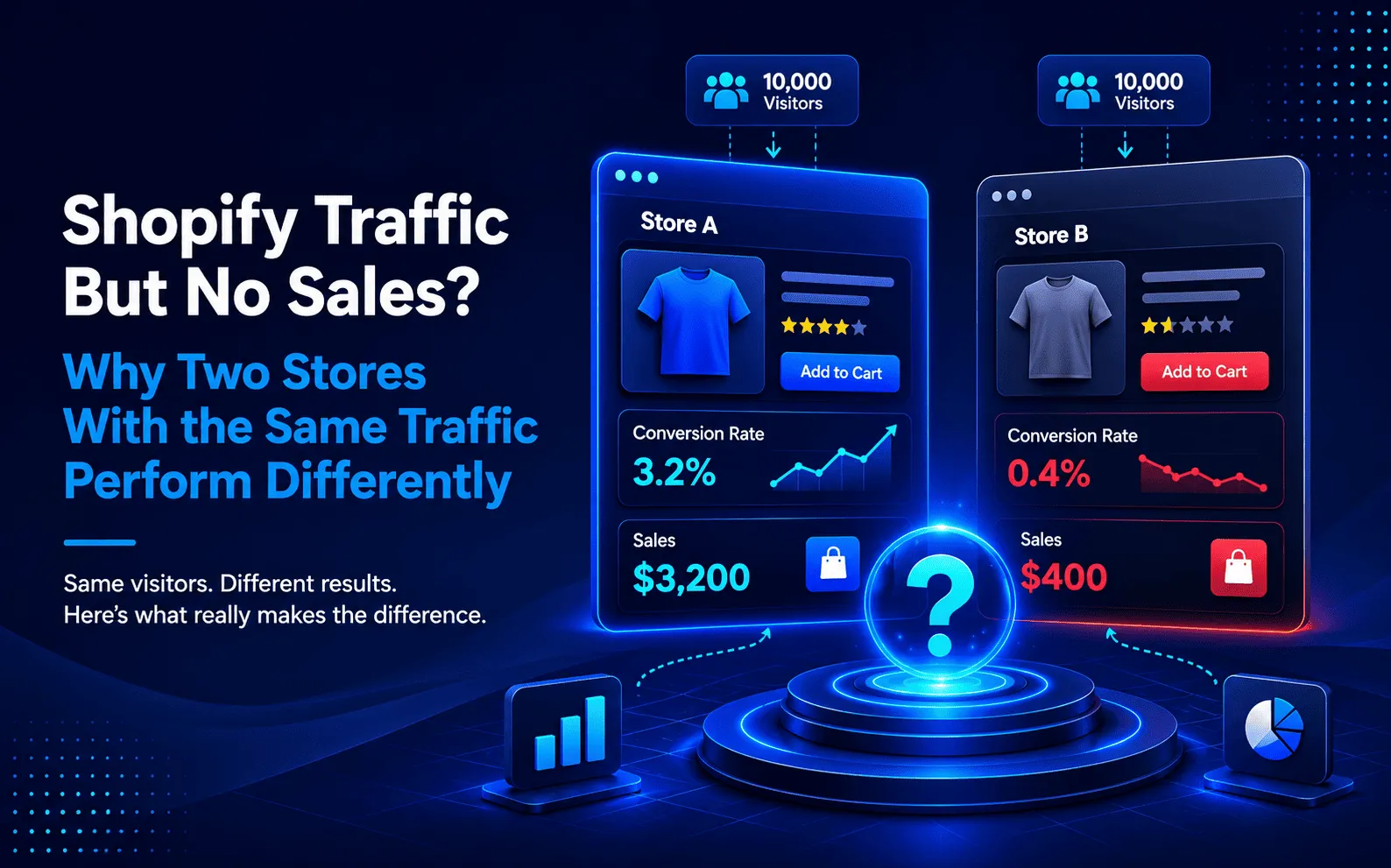

Imagine two Shopify stores getting almost the same number of visitors every month. Both run ads, both attract thousands of sessions, and both have good-looking websites. Yet one store keeps generating sales while the other struggles to get orders.
So, what makes the difference?
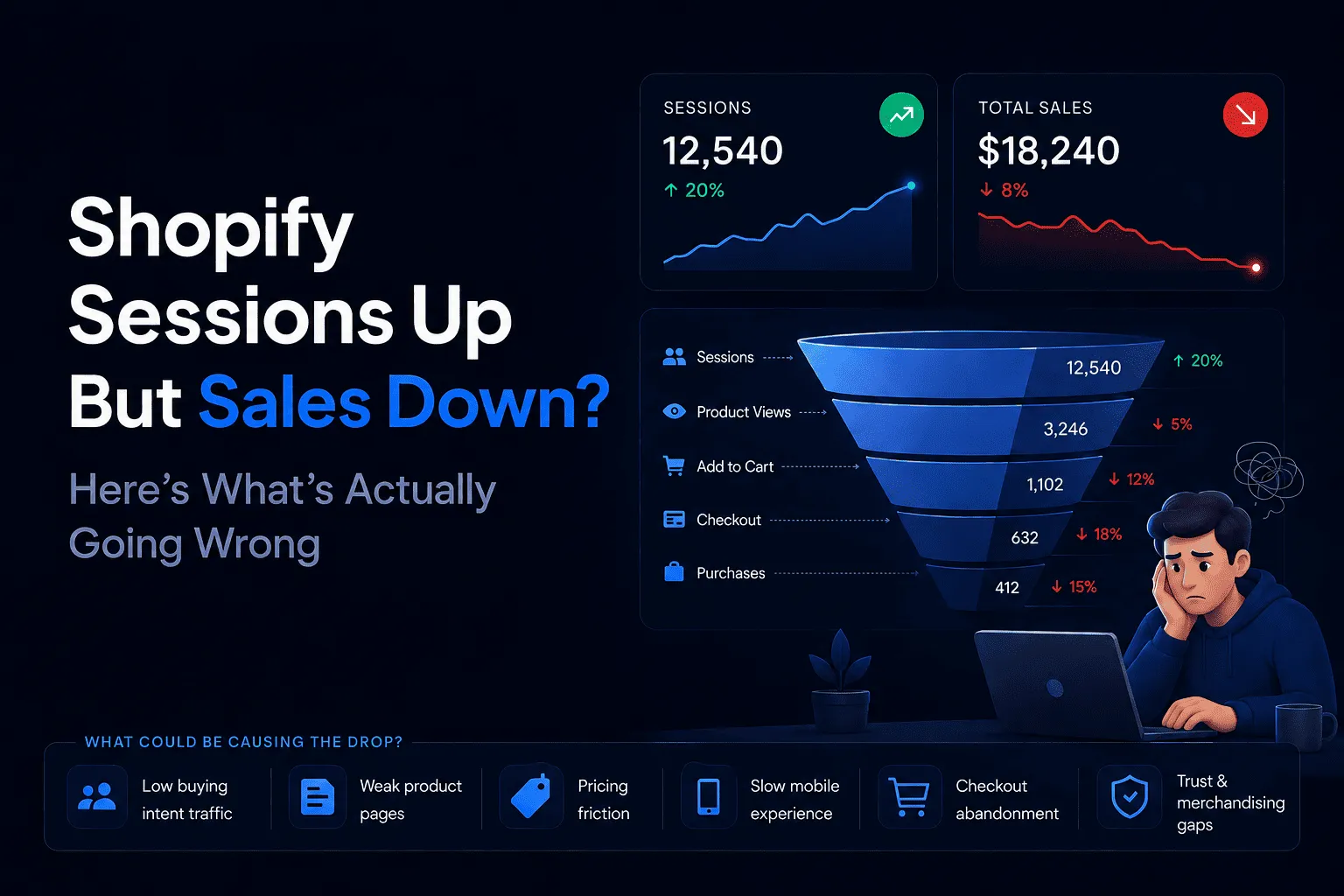
If you are dealing with Shopify Traffic But No Sales, the problem may not be your traffic at all. More visitors do not automatically mean more revenue. Traffic only tells you that people arrived. It does not tell you what they did after landing on your store.
Traffic Is Only the Beginning
It is easy to look at traffic numbers and assume that more visitors will solve a sales problem. When sales are slow, many merchants immediately increase their advertising budget or launch another campaign.
But what if the real problem starts after the click?
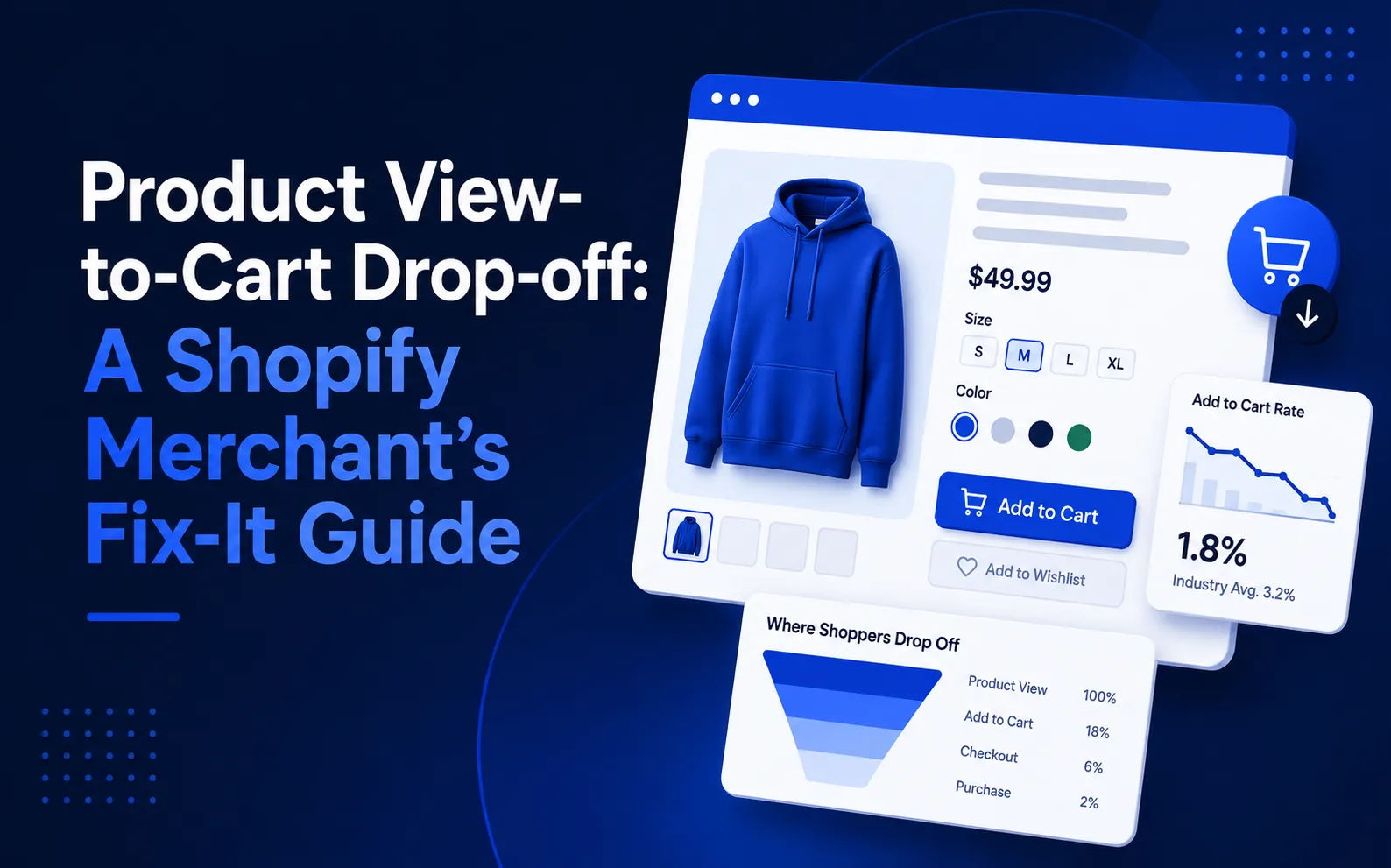
A visitor may land on your product page and leave because the product information is unclear. Another may hesitate because the price does not feel justified. Someone else might add a product to the cart but abandon it because checkout feels complicated.
These problems may not appear in a basic traffic report, but they can have a major impact on revenue.
The Same Traffic Can Produce Very Different Results
Not every visitor has the same buying intention.
Someone searching for a specific product is likely much closer to making a purchase than someone who casually clicks an interest-based advertisement. Both visitors count as a session, but their chances of buying can be completely different.
That is why two stores with similar traffic can have very different conversion rates and revenue.
Conversion rate, average order value, returning customers, product performance, and checkout completion all help explain what is happening after visitors arrive.
Four Areas Can Change the Outcome
A useful way to understand the difference is to look at four areas: People, Product, Price, and Promotion.
People: Who is visiting your store? Are they new visitors, returning customers, or low-intent browsers?
Product: Does your product page answer the questions customers have? Are products easy to find and understand?
Price: Does the price match the value customers see? Is there enough information to help them feel confident about buying?
Promotion: Are your offers, discounts, and campaigns reaching the right audience at the right time?
A weakness in just one of these areas can reduce the number of visitors who become customers.
Stop Guessing. Start Comparing.
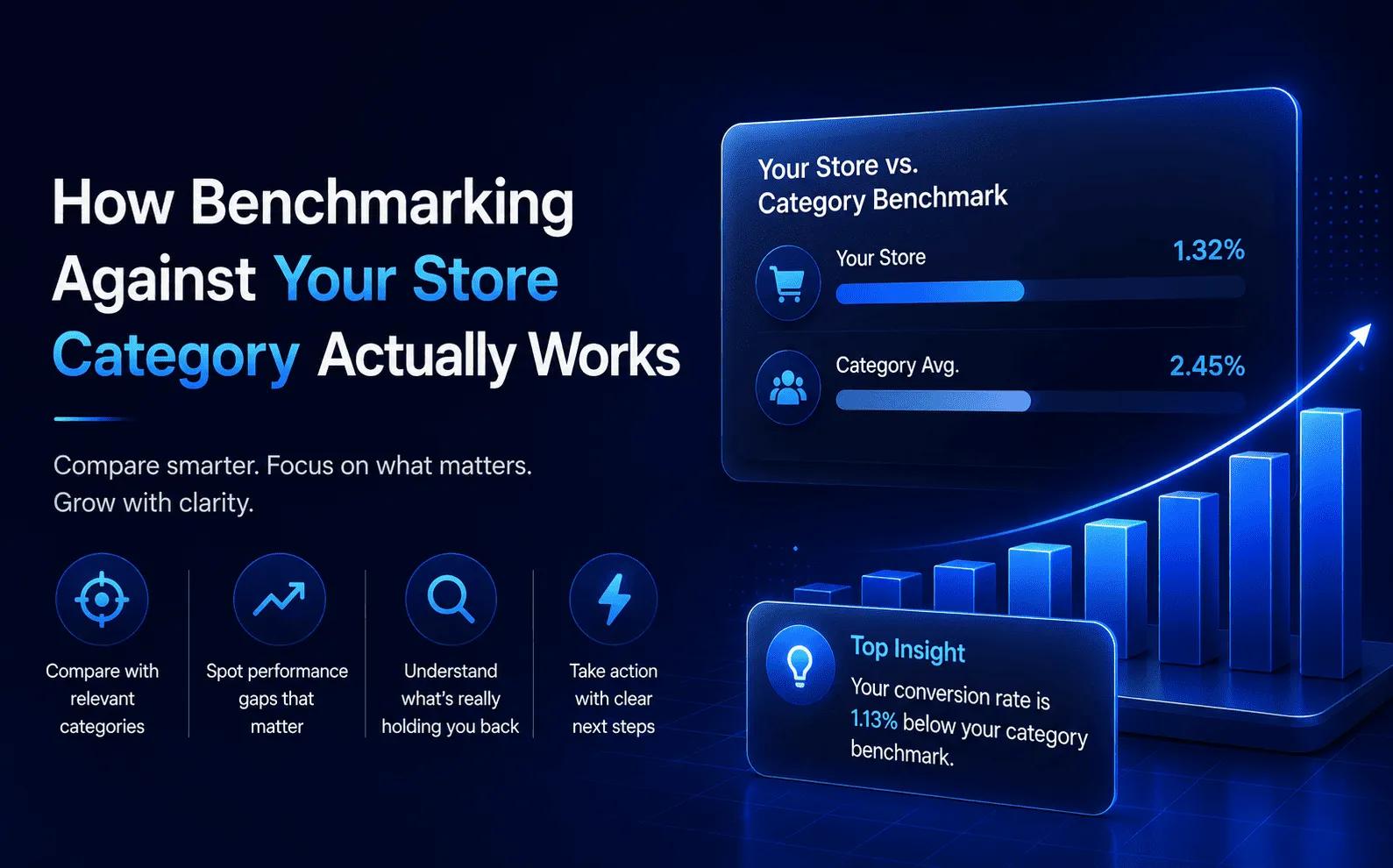
One metric rarely tells the complete story. For example, a conversion rate might look low, but is it actually low for your particular product category and business stage?
This is where benchmarking becomes useful. Comparing your store's performance with similar stores can help reveal whether the problem is related to traffic quality, product presentation, pricing, conversion, or another part of the customer journey.
The bigger question is not simply, “How do I get more visitors?”
It is:
“What is stopping the visitors I already have from becoming customers?”
That question can completely change how you approach Shopify growth.
If you want to understand the reasons behind the performance gap—and how to identify what your store should focus on next, read the full guide on Shopify Traffic But No Sales and discover what may be happening beyond your traffic numbers.
Your next sale may not require more traffic. It may require understanding the traffic you already have.























Sign in to leave a comment.