
Introduction
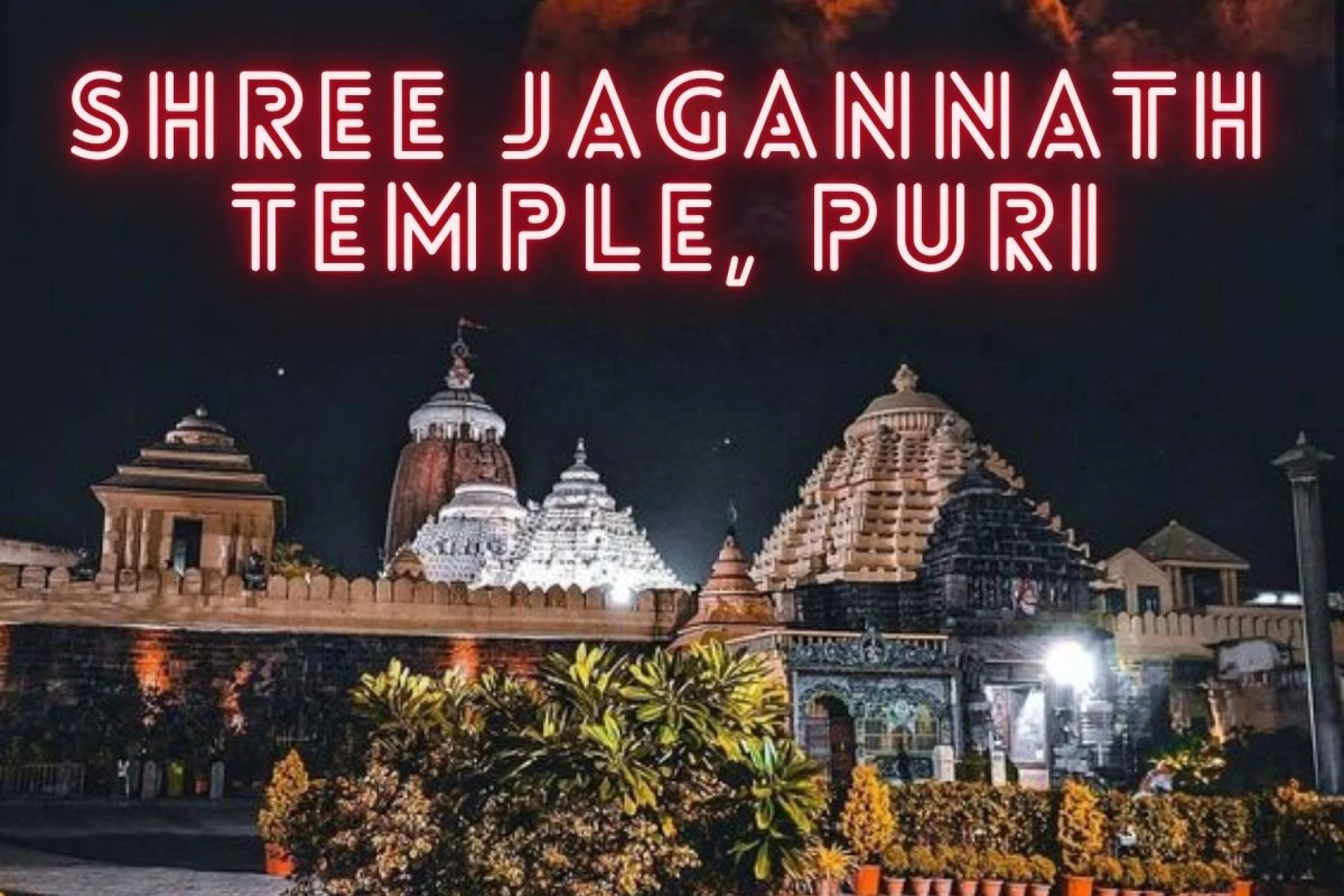
Are you a travel enthusiast looking for your next adventure? Or maybe you're just curious about different cultures and religious sites around the world. Well, you've come to the right place because in this blog section, we will be introducing you to one of the most famous Hindu temples in India, the Shree Jagannath Temple in Puri.
Located in the coastal town of Puri in the state of Odisha, Shree Jagannath Temple is a significant pilgrimage site for Hindus as it is one of the Char Dham destinations (four holy abodes) along with Rameswaram, Dwarka, and Badrinath. The temple is dedicated to Lord Jagannath, a form of Lord Vishnu, along with his siblings Balabhadra and Subhadra.
The history of this temple dates back to thousands of years ago when it was originally built by King Indradyumna. It was later renovated by various rulers throughout history resulting in its impressive architecture that stands today. As you enter the temple premises, you can't help but marvel at its grandeur, intricate carvings, and vibrant colors.
One of the most fascinating aspects of this temple is its annual Rath Yatra or chariot festival. During this festival, huge chariots are pulled by thousands of devotees through the streets as they chant mantras and offer prayers to Lord Jagannath. It is a spectacle that attracts millions of pilgrims from all over India and across the globe.
Apart from its religious significance, Shree Jagannath Temple also holds cultural importance for Odisha state. The famous Rath Yatra has been recognized as an Intangible Cultural Heritage by UNESCO.
History of Shree Jagannath Temple
Welcome to the historical Shree Jagannath Temple in Puri, a sacred destination for Hindus and a must visit for all travelers. If you're someone who loves to explore new cultures and traditions, then this temple should definitely be on your list. In this blog, we'll take you on a journey through the rich history of the Shree Jagannath Temple and why it holds such significance in the hearts of devotees.
The origin of the Shree Jagannath Temple in Puri dates back to ancient times, making it one of the oldest temples in India. Legend has it that King Indradyumna, a devotee of Lord Vishnu, was commanded by the deity in his dream to construct a grand temple for him at Puri. The king then consulted with Vishwakarma, the divine architect, who designed and built the temple along with his sons.
The temple was initially built as a wooden structure around 800 BCE but was later renovated and rebuilt by various Hindu dynasties over time. It is said that Lord Krishna's grandson, Anantavarman Chodaganga Deva shifted his capital from Jajpur to Puri and made it an important religious center. He also rebuilt the current Jagannath Temple around 1161 CE.
The entire complex covers an area of over 400,000 square feet and is bounded by four walls known as Meghanada Prachira (Meghanada is the son of Ravana). The main entrance is called Singhdwara or Lion's gate, which leads to various courtyards and halls inside the temple.
Architecture and Design of the Temple
Welcome to the second part of our series on the Shree Jagannath Temple in Puri, India. In this section, we will be delving into the architecture and design of this magnificent temple. So, put on your traveler hat and let's explore!
Firstly, a brief history lesson the Shree Jagannath Temple is believed to have been built in the 12th century by King Chodaganga Deva of the Eastern Ganga dynasty. It is one of the four great pilgrimage sites (Char Dham) in India for Hindu devotees. The temple is dedicated to Lord Jagannath, an incarnation of Lord Vishnu, along with his siblings Balabhadra and Subhadra.
Now let's talk about its architectural style. The Shree Jagannath Temple follows the Kalinga architecture, which is known for its unique blend of indigenous Odisha style with features borrowed from North Indian temples. This architectural style can also be seen in other famous temples of Odisha like Lingaraj Temple and Konark Sun Temple.
One striking feature of this temple is its towering spire or shikara, reaching a height of 214 feet, making it one of the tallest temples in India. The spire has a distinct curved shape which resembles a conch shell or 'Shankha' , an important symbol in Hinduism. This adds to the magnificence and grandeur of the temple.
Moving on to the entrance you will enter through a massive gate called Simhadwaram or Lion Gate, guarded by two stone lions. The intricate carvings on these gates depict scenes from Hindu mythology and puranic stories.
Religious Significance and Festivals
Religious festivals are an intrinsic part of Indian culture and hold great importance in the lives of the people. Amongst the numerous temples and shrines spread across the country, one of the most significant ones is the Shree Jagannath Temple located in Puri. It is not only a popular religious site but also a major tourist attraction, drawing in travelers from all around the world.
If you are a traveler looking to explore the religious significance and festivals associated with this temple, then you have come to the right place. In this section, we will dive deeper into understanding the essence of this temple and its festivities.
Firstly, let us talk about the location of this grand temple. Puri is a beautiful coastal town situated in Odisha, a state on India’s eastern coast. It is well connected by air, rail, and road networks making it easily accessible for travelers. And once you reach Puri, be prepared to be mesmerized by its natural beauty and rich culture.
The Shree Jagannath Temple is dedicated to Lord Jagannath, who is believed to be an incarnation of Lord Vishnu according to Hindu mythology. The main deity is flanked by Goddess Subhadra (sister) and Lord Balabhadra (brother). The temple reflects remarkable architecture from ancient times with intricate carvings adorning every inch of its walls.
One cannot talk about this temple without mentioning its famous annual festival – Rath Yatra or chariot festival. This festival attracts millions of devotees from all over India and abroad who gather to witness Lord Jagannath’s idols being carried in grand chariots through the streets of Puri. The energy during this festival is palpable as people dance, sing devotional songs
Rituals and Practices at Shree Jagannath Temple
When it comes to religious destinations in India, one cannot miss out on the grandeur and spirituality of Shree Jagannath Temple in Puri. Located in the eastern state of Odisha, this temple is an epitome of devotion and rituals. It is not just a place of worship, but also a cultural hub that attracts travelers from all over the world. If you are planning to visit this holy site, then brace yourself to witness some captivating rituals and practices that have been followed for centuries.
History and Significance:
Shree Jagannath Temple has a rich history dating back to the 12th century. According to legends, the construction of this temple was initiated by King Anantavarman Chodaganga Deva after he had a dream about Lord Jagannath (a form of Lord Vishnu) asking him to build a temple. Since then, the temple has been considered as one of the four major Hindu pilgrimage sites or “Char Dhams”.
Daily Rituals:
Every day, the temple witnesses various rituals performed by priests known as “Pandas”. These rituals are believed to bring harmony and prosperity to one’s life. The day starts with Mangal Aarti at 5:00 am followed by Bhoga Mandapa Puja at 6:00 am where offerings are made to the deities. The main ritual or Darshan (viewing) of Lord Jagannath takes place at 7:00 am called “Gopal Ballabh”. Throughout the day, various Puja ceremonies take place such as Sakal Dhoopa at noon, Sandhya Aarti in the evening and Bada Singhar Puja before bedtime. Each ritual has its own significance and devotees can participate in these rituals
Nearby Attractions to Explore
Are you planning a trip to Puri and looking for nearby attractions to explore? Look no further, as the Shree Jagannath Temple is a must visit location that should definitely be on your list. Located in the coastal city of Puri in Odisha, India, this temple is one of the most famous and sacred sites in the country.
For all you travelers out there, who love to document your adventures through travel vlogs or blogs, visiting this temple will surely add an interesting twist to your content. The vibrant atmosphere and rich cultural heritage surrounding the temple will make for a unique and memorable experience.
But before we dive into what makes this temple so special, let's talk about its location. The Shree Jagannath Temple is situated in the bustling town center of Puri, making it easily accessible for visitors. It stands tall on the eastern coast of India, overlooking the beautiful Bay of Bengal.
As you enter the temple complex, you'll notice its impressive architecture featuring intricate carvings and sculptures depicting stories from Hindu mythology. According to legend, Lord Krishna's older brother Balabhadra along with his siblings Subhadra and Jagannath are worshiped at this temple. Hence, it holds great significance among Hindus and attracts thousands of devotees every year.
Apart from its religious importance, the Shree Jagannath Temple is also renowned for its annual Rath Yatra or chariot festival where thousands gather to witness large chariots being pulled by devotees through the streets of Puri. This festival serves as a testament to the devotion and faith of people towards Lord Jagannath.
Experience of a Traveler/Personal Account
As a traveler, you are always on the lookout for unique and spiritually significant destinations to visit. One such place that should be on every traveler's list is the Shree Jagannath Temple in Puri, India. This ancient temple holds a special place in the hearts of Hindus and welcomes devotees from all over the world.
The Shree Jagannath Temple is considered one of the most sacred pilgrimage sites for Hindus. The temple is dedicated to Lord Jagannath, believed to be an incarnation of Lord Vishnu. Its name literally translates to "Lord of the Universe," signifying its importance in Hindu mythology. The spiritual significance of this temple can be felt as soon as you step inside its premises.
Apart from its spiritual significance, the Shree Jagannath Temple also has a rich history and architectural importance. The temple was built in the 12th century by King Anantavarman Chodaganga Deva and has undergone several renovations since then. The main shrine of the temple is made up of granite stone and stands at a height of 214 feet, making it one of the tallest temples in India.
As you enter the temple, you will witness devotees performing various rituals and customs that have been followed for centuries. One such ritual is offering food to the deities known as Bhog Patra Dana. It is believed that Lord Jagannath comes out of his inner sanctum to partake in this offering before it is distributed among devotees as prasad (blessed food). This unique custom showcases the strong bond between devotees and their deity.
Importance of Preserving Cultural Heritage through Travelers' Experiences
When we think of traveling, we often think of beautiful landscapes, delicious food, and exciting adventures. However, one aspect of travel that is often overlooked is the preservation of cultural heritage. This is especially important when it comes to visiting popular cultural sites like the Shree Jagannath Temple in Puri.
Cultural heritage refers to the customs, traditions, and artifacts that define a particular society or community. It is an important part of a society's identity and plays a significant role in shaping its values and beliefs. Therefore, preserving cultural heritage becomes crucial in maintaining the uniqueness and diversity of different societies.
As travelers, we have the unique opportunity to experience different cultures firsthand through our visits to various places. Whether it be through travel vlogs or blogs, we share our experiences with others and inspire them to explore these cultural sites themselves. In doing so, we also play a crucial role in preserving their cultural heritage.
One such example is the Shree Jagannath Temple in Puri, India. This sacred Hindu temple dates back to the 12th century and holds immense religious significance for millions of people around the world. Its vibrant architecture and intricate carvings are a testament to India's rich cultural history.
By visiting this temple and sharing your experience with others through travel vlogs or blogs, you are not only promoting tourism but also creating awareness about the importance of its preservation. Your storytelling can help educate people about the significance of this site and why it must be protected for future generations.
Moreover, travelers' experiences at cultural sites like Shree Jagannath Temple can also bring economic benefits to local communities. Tourism helps generate revenue that can be used for restoration projects or maintaining these sites' authenticity without compromising their traditional values.
You Can Also Read;
Own Your Dream Holiday Home with HotelYaari
Own Your Own Suite in a Five-Star Hotel l HotelYaari
Scuba Diving in Chennai 2023 | Travel Blogs
Top Places to Visit in Kasauli – A Complete Travel Guide | HotelYaari
Top 20 Hill Stations Near Chennai | Travel Blogs
Top 10 Places to Visit in Gulmarg for Your Next Trip | Travel Blogs



















Sign in to leave a comment.