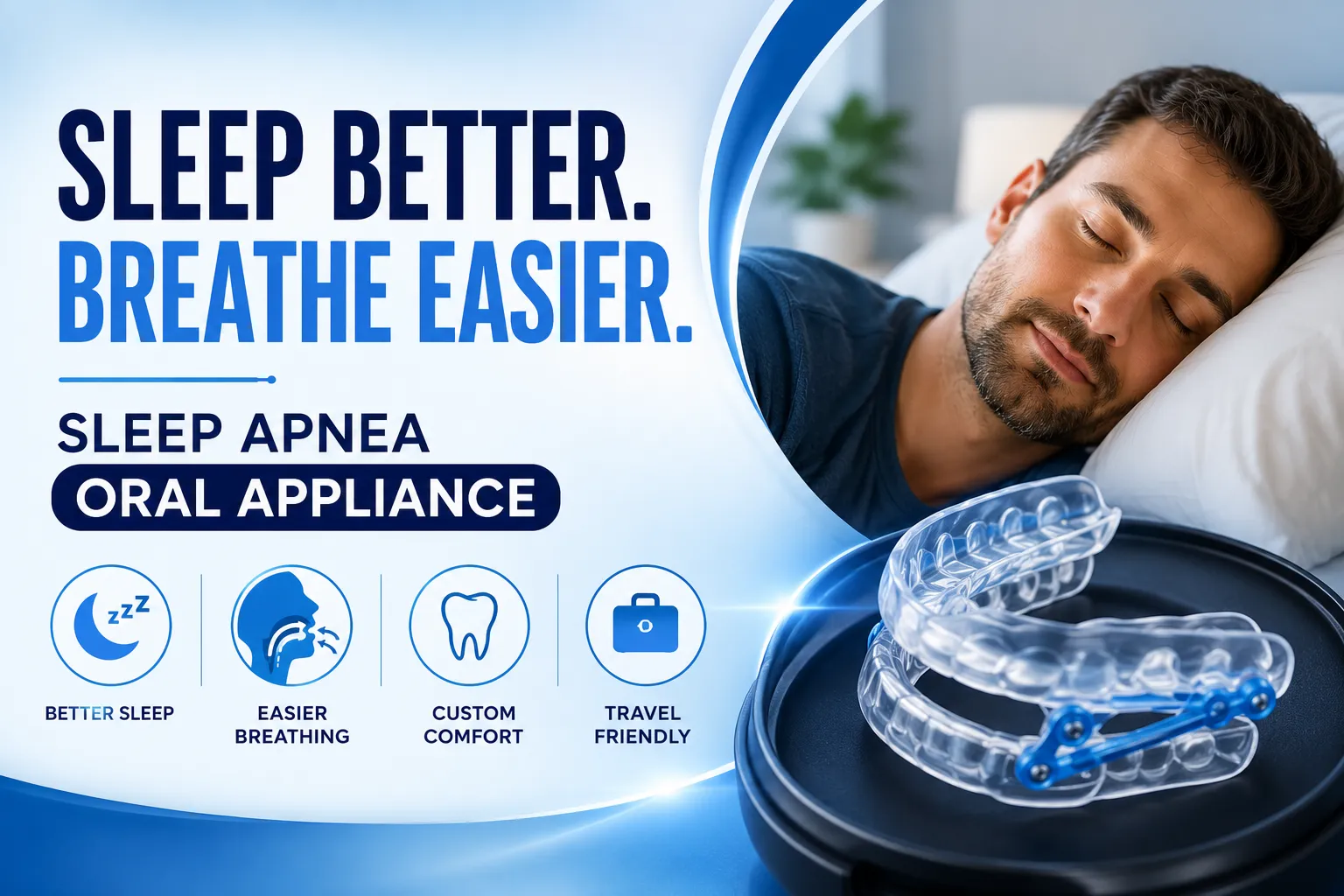

Sleep apnea is more than just loud snoring. It is a common sleep disorder that causes repeated pauses in breathing during sleep, often leading to poor sleep quality, daytime fatigue, and an increased risk of serious health problems when left untreated. While Continuous Positive Airway Pressure (CPAP) therapy is a widely recognized treatment, it is not the only option.
For many people with mild to moderate obstructive sleep apnea (OSA), a sleep apnea oral appliance offers an effective and comfortable alternative.
This guide explains how a sleep apnea oral appliance works, its benefits, the treatment process, and what patients can realistically expect.
Understanding Obstructive Sleep Apnea
Obstructive sleep apnea occurs when the muscles in the back of the throat relax during sleep, causing the airway to become partially or completely blocked. These repeated airway obstructions interrupt normal breathing and often cause brief awakenings throughout the night, even if the person does not remember them.
Common symptoms include:
- Loud, persistent snoring
- Gasping or choking during sleep
- Morning headaches
- Excessive daytime sleepiness
- Difficulty concentrating
- Irritability or mood changes
- Dry mouth upon waking
According to the American Academy of Sleep Medicine, millions of adults experience obstructive sleep apnea, but many cases remain undiagnosed. Proper evaluation by a physician and a sleep study are essential before beginning treatment.
What Is a Sleep Apnea Oral Appliance?
A sleep apnea oral appliance is a custom-made dental device worn while sleeping. It is designed to help keep the upper airway open by gently repositioning the lower jaw (mandible) and supporting the surrounding soft tissues.
Unlike CPAP therapy, which delivers pressurized air through a mask, an oral appliance works mechanically by reducing airway collapse during sleep.
The American Academy of Dental Sleep Medicine recognizes oral appliance therapy as an evidence-based treatment option for adults with mild to moderate obstructive sleep apnea and for individuals with severe OSA who cannot tolerate CPAP therapy.
Because every patient's mouth and bite are different, these appliances are custom fabricated after detailed dental impressions or digital scans rather than being purchased as one-size-fits-all devices.
Benefits of a Sleep Apnea Oral Appliance
Comfortable to Wear
Custom oral appliances are made specifically for the patient's teeth and jaw, allowing for a secure and comfortable fit. Many patients find them easier to adapt to than wearing a CPAP mask.
Easy to Travel With
The appliance is compact, lightweight, and does not require electricity or bulky equipment. This makes it convenient for vacations, business trips, and overnight stays.
Quiet During Sleep
Unlike CPAP machines, oral appliances operate silently. This can create a more peaceful sleeping environment for both the patient and their sleeping partner.
Improved Treatment Compliance
Research has shown that some patients use oral appliances more consistently than CPAP devices because they are easier to wear throughout the night. Consistent use is an important factor in successful sleep apnea treatment.
May Reduce Snoring
By helping maintain an open airway, oral appliances often reduce or eliminate snoring associated with obstructive sleep apnea. While snoring alone is not always a sign of sleep apnea, reducing airway obstruction can lessen both conditions.
The Treatment Process
Step 1: Medical Diagnosis
Treatment begins with a confirmed diagnosis of obstructive sleep apnea by a physician. This typically involves an overnight sleep study conducted either in a sleep laboratory or through an approved home sleep test.
A dentist does not diagnose sleep apnea but works collaboratively with the patient's physician to provide oral appliance therapy when appropriate.
Step 2: Dental Evaluation
Once oral appliance therapy is recommended, the dentist evaluates the patient's oral health, jaw function, bite, and overall dental condition.
Healthy teeth and gums are important because the appliance relies on existing teeth for support.
Step 3: Digital Scan or Dental Impressions
Accurate digital scans or dental impressions are taken to create a customized appliance that fits comfortably and functions correctly.
Customization helps improve both comfort and treatment effectiveness.
Step 4: Appliance Fitting
When the appliance is ready, the dentist ensures it fits properly and provides instructions on insertion, removal, cleaning, and daily use.
Minor adjustments may be made during this appointment to improve comfort.
Step 5: Follow-Up Visits
Follow-up appointments allow the dentist to gradually adjust the appliance if needed and monitor the patient's comfort, bite, and oral health.
In many cases, the treating physician may recommend a follow-up sleep study to confirm that the appliance is effectively reducing sleep apnea events.
What Results Can Patients Expect?
Results vary depending on the severity of obstructive sleep apnea and individual anatomy, but many patients experience noticeable improvements after beginning treatment.
Potential outcomes include:
- Reduced snoring
- Better sleep quality
- Fewer nighttime breathing interruptions
- Improved daytime alertness
- Less morning fatigue
- Better overall sleep satisfaction
The effectiveness of treatment should be confirmed through appropriate follow-up with both the dentist and sleep physician rather than relying solely on symptom improvement.
Who Is a Good Candidate?
A sleep apnea oral appliance is commonly recommended for:
- Adults with mild to moderate obstructive sleep apnea
- Patients who cannot tolerate CPAP therapy
- Individuals who travel frequently
- Patients seeking a quieter and more portable treatment option
The most appropriate treatment depends on the severity of sleep apnea, overall health, and recommendations from the patient's healthcare team.
Caring for Your Oral Appliance
Proper maintenance helps extend the life of the appliance and supports good oral hygiene.
General care includes:
- Cleaning the appliance daily using the manufacturer's instructions.
- Rinsing it before and after use.
- Storing it in a protective case when not in use.
- Bringing it to routine dental appointments for inspection.
- Replacing it if it becomes damaged or no longer fits properly.
Patients should also continue regular dental checkups to monitor both the appliance and overall oral health.
Why Professional Fitting Matters
Over-the-counter mouthguards marketed for snoring are not the same as prescription oral appliances used to treat obstructive sleep apnea.
Professionally fitted appliances are designed using clinical measurements and are adjusted based on the patient's needs. They are prescribed after a confirmed diagnosis and provided as part of coordinated medical and dental care.
This individualized approach helps improve comfort, effectiveness, and long-term treatment success.
Final Thoughts
A sleep apnea oral appliance is an established treatment option for many adults with obstructive sleep apnea. Its custom design, portability, quiet operation, and ease of use make it an effective alternative for patients who qualify for oral appliance therapy.
Because untreated sleep apnea can affect overall health and quality of life, obtaining an accurate diagnosis and discussing treatment options with qualified healthcare professionals is an important first step. If oral appliance therapy is recommended, working with an experienced dentist can help ensure a comfortable fit and successful long-term treatment.
If you're exploring treatment options for obstructive sleep apnea, Fountainville Family Dentistry provides custom oral appliance therapy designed in collaboration with your physician to help you achieve healthier, more restful sleep.
References
- American Academy of Dental Sleep Medicine (AADSM). Oral Appliance Therapy for Obstructive Sleep Apnea. https://aadsm.org
- American Academy of Sleep Medicine (AASM). Clinical Practice Guideline for the Treatment of Obstructive Sleep Apnea and Snoring with Oral Appliance Therapy. https://aasm.org
- National Heart, Lung, and Blood Institute (NHLBI). Sleep Apnea. https://www.nhlbi.nih.gov/health/sleep-apnea
- National Institute of Dental and Craniofacial Research (NIDCR). Sleep Disorders and Oral Health. https://www.nidcr.nih.gov
- Mayo Clinic. Sleep Apnea – Symptoms and Causes. https://www.mayoclinic.org/diseases-conditions/sleep-apnea/symptoms-causes/syc-20377631


























Sign in to leave a comment.