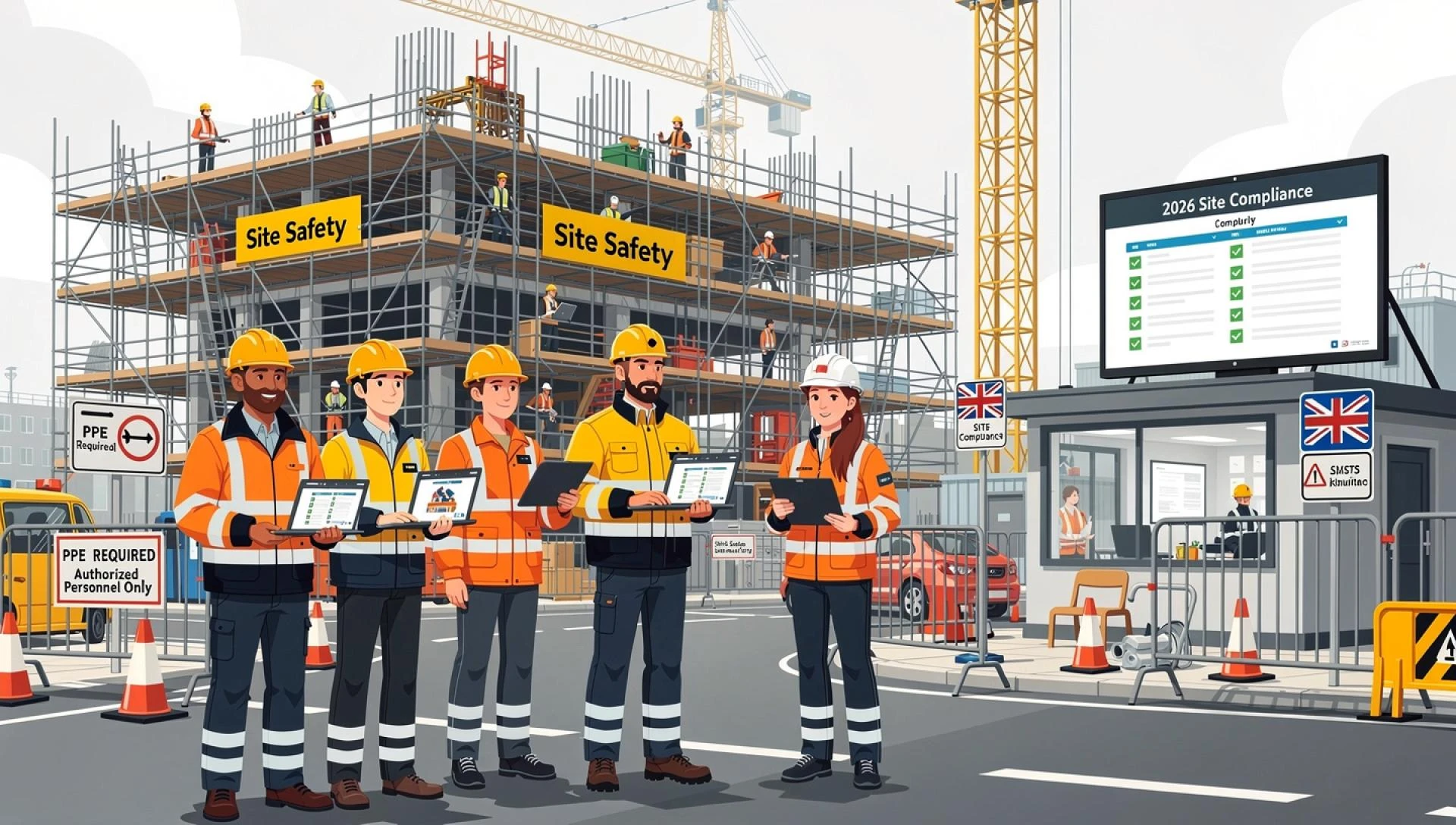

Construction compliance in the UK has never depended only on paperwork. Regulations now focus on competence, accountability, and real-time safety management. Site managers must understand risk, communicate clearly, and maintain documented control of activities. Because projects have become more complex, many professionals complete SMSTS training online to develop a consistent understanding of their legal and operational responsibilities.
The importance of this training continues to grow in 2026 as safety expectations increase across the industry. The role of a site manager now includes leadership, planning, and behavioural oversight rather than only supervising progress.
The Shift From Rules to Responsibility
Earlier compliance systems relied heavily on written procedures. If documents existed, organizations often considered themselves compliant. Modern safety practice works differently. Authorities now evaluate whether supervisors understand and apply procedures correctly.
Through smsts training online, managers learn the reasoning behind legal duties rather than memorizing regulations. They study how decisions affect worker safety, public protection, and project accountability. This approach reduces reliance on generic templates and encourages active judgment.
Compliance, therefore, depends on behaviour. A manager must demonstrate awareness and intervention, not simply possess documentation.
Understanding Legal Duties in Practical Terms
UK construction law assigns responsibility to those controlling work activities. A manager must ensure safe planning, communication, and monitoring. Failure to act can lead to enforcement action even if no accident occurs.
During smsts training online, learners analyze realistic site situations. For example, they review scenarios where schedules conflict with safety measures or where subcontractors misunderstand instructions. The training shows how small oversights create legal exposure.
Managers learn to:
- Confirm competence of workers
- Provide clear briefings
- Monitor ongoing activities
- Stop unsafe operations
These actions form the practical side of compliance.
Managing Increasingly Complex Sites
Modern construction projects involve multiple trades working simultaneously. Mechanical installation, electrical work, and structural tasks often overlap within limited space. Without coordination, hazards multiply.
A major purpose of smsts training online is teaching supervisors to plan work sequences safely. Instead of reacting after problems appear, managers learn to anticipate interactions between teams. They evaluate access routes, lifting operations, and environmental conditions before work begins.
This proactive planning helps prevent incidents and demonstrates effective site control during inspections.
Communication as a Compliance Requirement
Clear communication now plays a direct role in compliance assessment. Workers must understand instructions and risks relevant to their tasks. If confusion exists, responsibility remains with the supervisor.
Through smsts training online, managers practise delivering concise safety briefings and confirming understanding. They learn techniques such as asking workers to repeat key instructions and using simple language rather than technical jargon.
Good communication prevents unsafe assumptions. It also provides evidence that instructions were delivered properly.
Documentation and Evidence of Control
Compliance requires proof that safety systems operate continuously, not only at project start. Records must show monitoring, corrective actions, and regular reviews.
During smsts training online, participants learn how to maintain meaningful records. Instead of completing forms mechanically, they document observations and actions accurately. A short factual note describing a hazard and response often carries more value than extensive unchecked paperwork.
Accurate records demonstrate active management and protect both workers and supervisors.
Behavioural Safety and Workforce Culture
Regulations increasingly recognise human behaviour as a key safety factor. Workers may bypass procedures when under time pressure or when risks appear familiar. Supervisors must address behavior proactively.
A central topic in smsts training online involves recognising unsafe habits early. Managers learn to engage workers respectfully and explain reasons for rules rather than relying only on authority. This improves cooperation and reduces repeated violations.
A positive safety culture supports compliance because workers participate rather than resist.
Adapting to Technological Change
Construction sites now use digital reporting systems, electronic permits, and shared planning platforms. Supervisors must interpret data and respond promptly.
By completing smsts training online, managers gain awareness of how information supports safety management. They understand the importance of updating records in real time and coordinating activities through shared systems.
Technology therefore strengthens compliance when used correctly. It allows quicker detection of hazards and clearer communication across teams.
Preparing for Inspections and Audits
Inspections evaluate practical site conditions, not just documentation. Inspectors observe behaviour, communication, and control of activities.
The structured learning in smsts training online prepares supervisors to demonstrate competence confidently. They can explain risk assessments, justify decisions, and show evidence of monitoring. This transparency reduces misunderstanding during inspections.
Prepared managers also identify issues before inspectors do, which prevents enforcement action.
Supporting Worker Wellbeing
Modern compliance includes worker well-being as well as immediate safety. Fatigue, stress, and poor organisation increase accident risk. Supervisors must manage workload and environment appropriately.
Within SMSTS online training, learners discuss scheduling, breaks, and realistic expectations. They understand how pressure affects decision-making and why reasonable planning forms part of compliance responsibilities.
Protecting well-being reduces incidents and strengthens legal compliance simultaneously.
Continuous Professional Awareness
Regulations and industry practices evolve regularly. Managers must update their knowledge rather than rely on experience alone.
Completing SMSTS training online encourages continuous learning habits. Participants review case studies, discuss changes in guidance, and understand how expectations shift over time. This awareness helps them adapt quickly to new requirements.
Compliance, therefore, becomes an ongoing process rather than a one-time achievement.
Conclusion
Construction compliance in 2026 depends on active supervision, communication, and informed decision-making. SMSTS training online equips site managers with the understanding required to control risks and demonstrate responsibility. The training connects legal duties to daily behavior, helping supervisors plan work safely, manage people effectively, and maintain accurate records.
As construction environments grow more complex, knowledge alone is insufficient. Competence requires awareness, judgment, and consistent action. Managers who apply these principles contribute to safer sites and clearer compliance across the industry.






























Sign in to leave a comment.