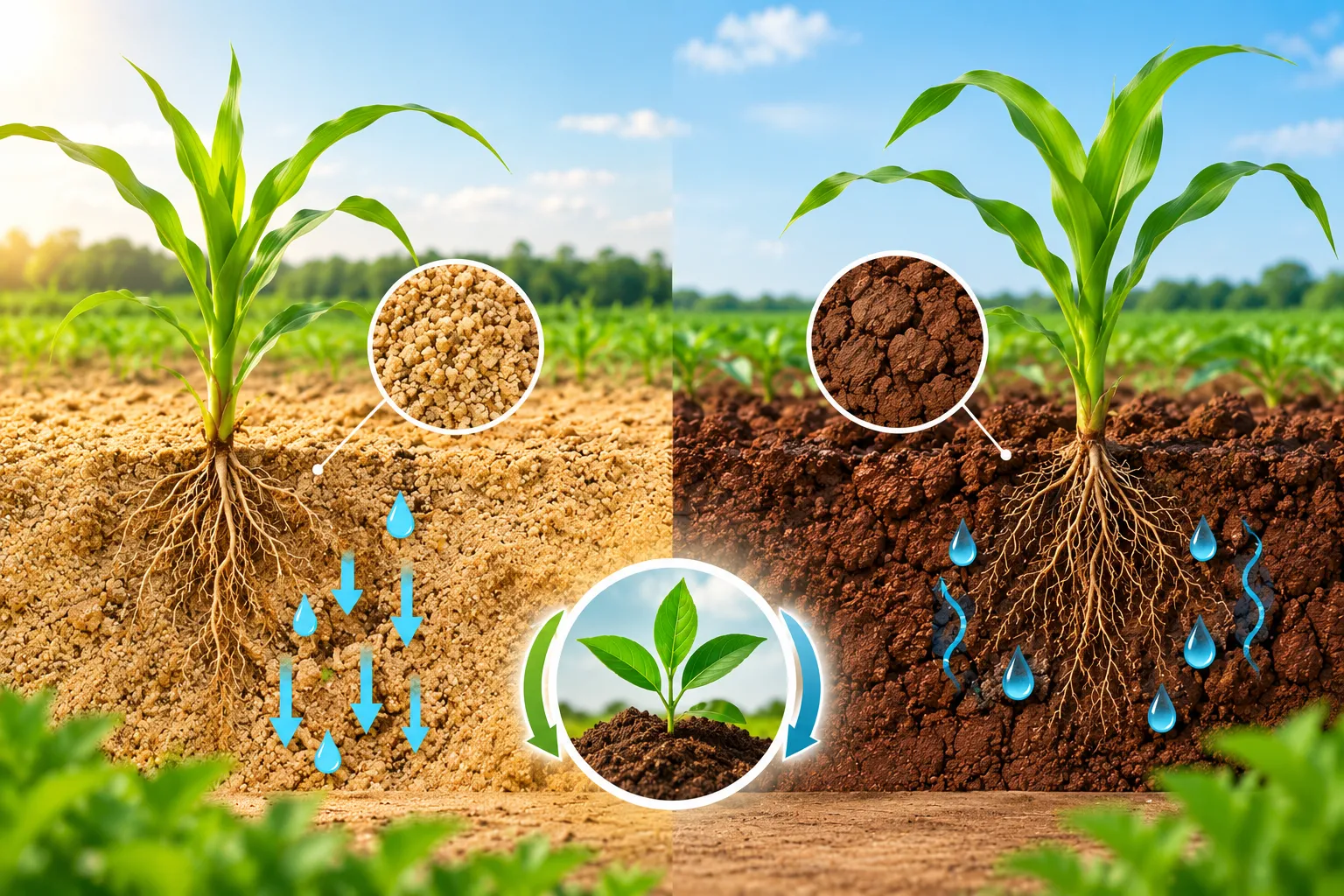

Soil health plays an important role in crop growth, nutrient supply, and farm productivity. However, not all soils behave in the same way. Sandy soil drains water quickly, while clay soil holds more water and can become compacted. Because of these differences, farmers need to choose and apply Soil Fertilizers according to their soil type.
Using the right fertilizer approach helps crops receive the nutrients they need while reducing nutrient loss and improving soil conditions. Understanding how sandy and clay soils respond to fertilizers can help farmers make better decisions for healthy plant growth.
Understanding Sandy and Clay Soils
Sandy and clay soils have different physical properties that affect water movement, nutrient storage, and root development.
Sandy soil contains large particles with more space between them. Water moves through these spaces quickly, which can wash away nutrients before plant roots absorb them. Sandy soil also usually has a lower ability to hold nutrients, especially when organic matter levels are low.
Clay soil contains very fine particles that fit closely together. It can hold water and nutrients for longer, but poor drainage and compaction may limit the air available to roots. Some nutrients may also become less available to plants depending on soil pH and other conditions.
These differences explain why one fertilizer plan may not work equally well for both soil types.
Why Sandy Soil Needs a Different Fertilizer Approach
Sandy soil often needs careful nutrient management because water and soluble nutrients can move below the root zone. Applying large amounts of fertilizer at once may lead to nutrient loss and poor fertilizer use.
Farmers can manage sandy soil more effectively by following these practices:
- Apply nutrients in smaller amounts: Splitting fertilizer applications can help match nutrient supply with crop needs and reduce leaching.
- Improve organic matter: Organic materials can increase water retention and improve the soil's ability to hold nutrients.
- Manage irrigation carefully: Avoid excessive watering, as it can carry nutrients away from plant roots.
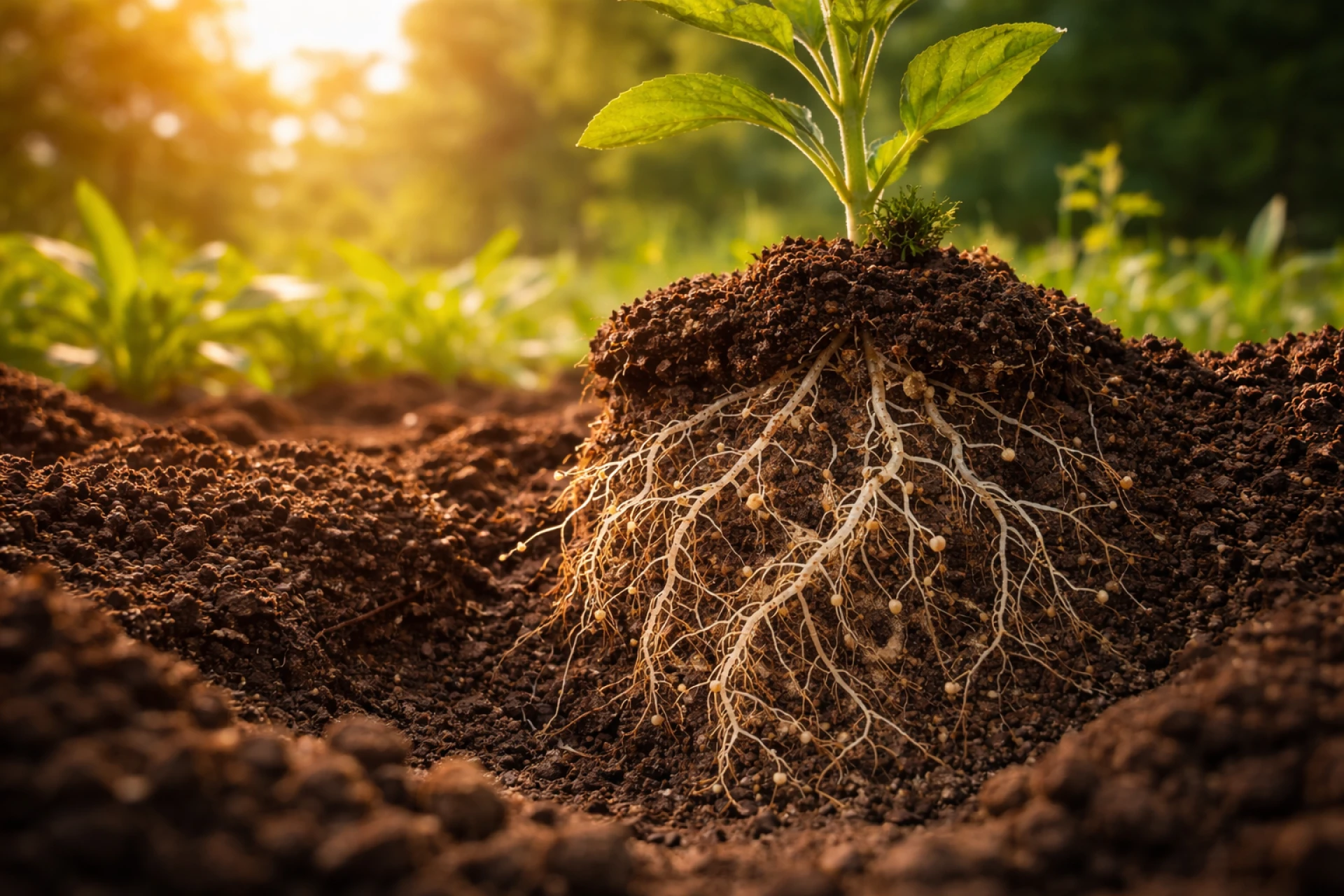
- Support soil biology: Suitable biofertilizers can help improve nutrient cycling and make certain nutrients more available to crops.
The goal is to maintain a steady supply of nutrients while improving the soil's ability to retain moisture and support healthy roots.
Why Clay Soil Needs a Different Fertilizer Approach
Clay soil can hold nutrients well, but its structure and drainage may create challenges for plant growth. When the soil becomes waterlogged or compacted, roots may struggle to get enough oxygen.
Farmers should focus on improving soil structure and applying nutrients according to actual crop requirements.
- Improve soil aeration: Suitable organic materials can help improve soil structure over time.
- Avoid overwatering: Good water management reduces the risk of waterlogging and root stress.
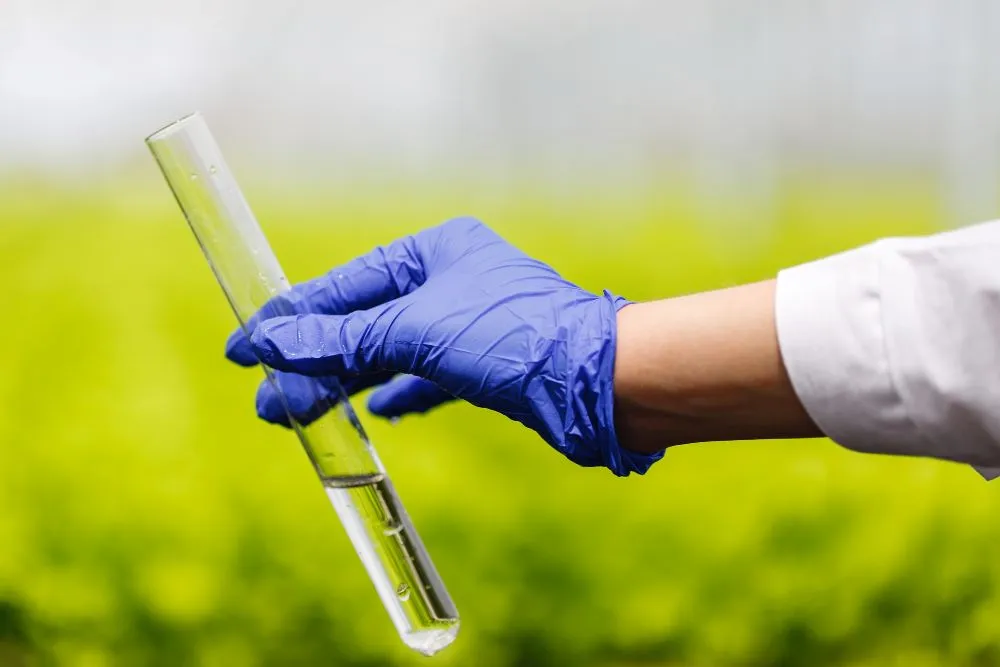
- Test soil before fertilizing: Soil testing helps identify nutrient deficiencies, pH problems, and unnecessary fertilizer applications.
- Encourage biological activity: Appropriate biofertilizers can support nutrient cycling and root development when used under suitable conditions.
Clay soil does not always require less fertilizer than sandy soil. The correct amount depends on crop needs, soil test results, nutrient availability, and growing conditions.
Choosing Suitable Soil Fertilizers for Sandy and Clay Soils
Different soil conditions require different ways of managing nutrients and improving soil health. IndoGulf BioAg offers five soil fertilizer products that support plant nutrition and soil improvement. The most suitable choice depends on the soil's condition, crop requirements, and the results of soil testing.
1. Bio-Manna

Bio-Manna is organic manure containing beneficial bacteria that support nitrogen and phosphorus availability. It can be considered for both sandy and clay soils as part of a balanced nutrient plan, particularly when crops need support for root and shoot growth.
2. Bio-Manure

Bio-Manure is an all-purpose organic plant feed made with a molasses-based formulation. It supplies nutrients that support plant health and crop development. In sandy soils, careful irrigation helps limit nutrient loss, while in clay soils, avoiding waterlogging supports better root conditions.
3. Fermogreen

Fermogreen combines plant-extracted nutrients with soil bacteria. It supports soil texture, aeration, root health, and nutrient uptake. Its soil-improvement benefits make it worth considering where compaction or poor root-zone conditions are a concern, provided the product suits the crop and soil.
4. Neem Powder

Neem Powder comes from crushed neem seed kernels left after oil extraction. It contains nutrients and organic material that can help improve soil fertility. It may be useful in sandy soils with low organic matter and as part of soil preparation in clay soils.
5. Revive Bio

Revive Bio is a biofertilizer containing nitrogen-fixing bacteria. It supports nitrogen availability and plant growth. It can be included in fertilizer plans for sandy or clay soils where additional biological nutrient support is suitable for the crop.
Product: Revive Bio
These products serve different purposes, so farmers should follow product instructions and avoid assuming that every product or combination is suitable for every field.
Best Practices for Managing Soil Fertility
Regardless of soil type, a few simple practices can help farmers get better results from Soil Fertilizers.
- Test the soil regularly: Check nutrient levels and soil pH before choosing fertilizer products.
- Add suitable organic matter: Organic materials can improve water retention in sandy soils and support better structure in clay soils.
- Apply fertilizers at the right time: Match applications with crop growth stages and nutrient requirements.
- Use water wisely: Sandy soils may need more frequent, controlled irrigation, while clay soils often need careful drainage management.
- Monitor crop growth: Watch for signs of nutrient deficiency, poor root growth, or excess fertilizer and adjust the plan accordingly.
A soil-specific approach helps farmers manage fertilizer use more efficiently while supporting long-term soil health.
Conclusion: Choose the Right Soil Fertilizers with IndoGulf BioAg
Sandy and clay soils have different needs, making it important to adjust fertilizer application, irrigation, and soil improvement practices. Sandy soils generally need better nutrient retention, while clay soils often benefit from improved drainage and aeration. Soil testing and crop requirements should guide every fertilizer decision.
IndoGulf BioAg offers Bio-Manna, Bio-Manure, Fermogreen, Neem Powder, and Revive Bio to support different soil fertility and plant nutrition needs. By selecting suitable products and following proper application practices, farmers can work toward healthier soil, stronger crop growth, and more sustainable farming.

























Sign in to leave a comment.