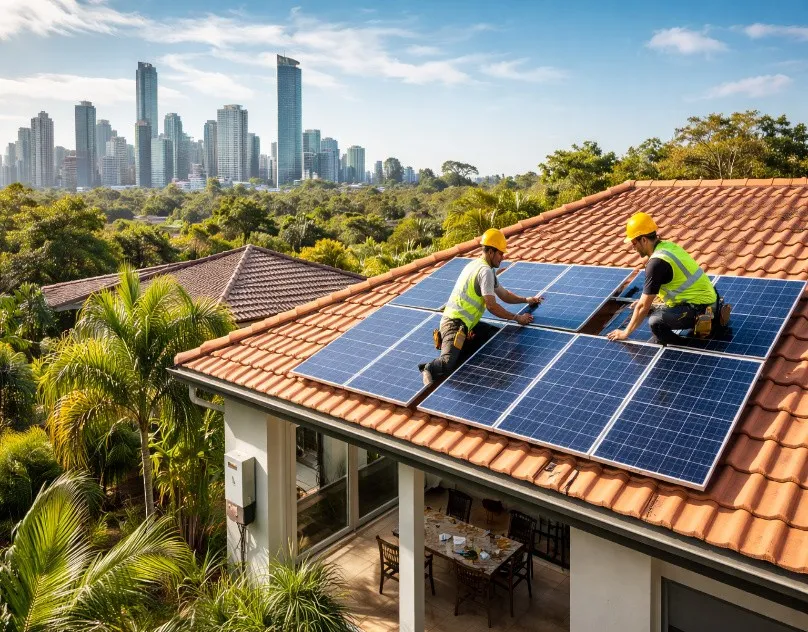

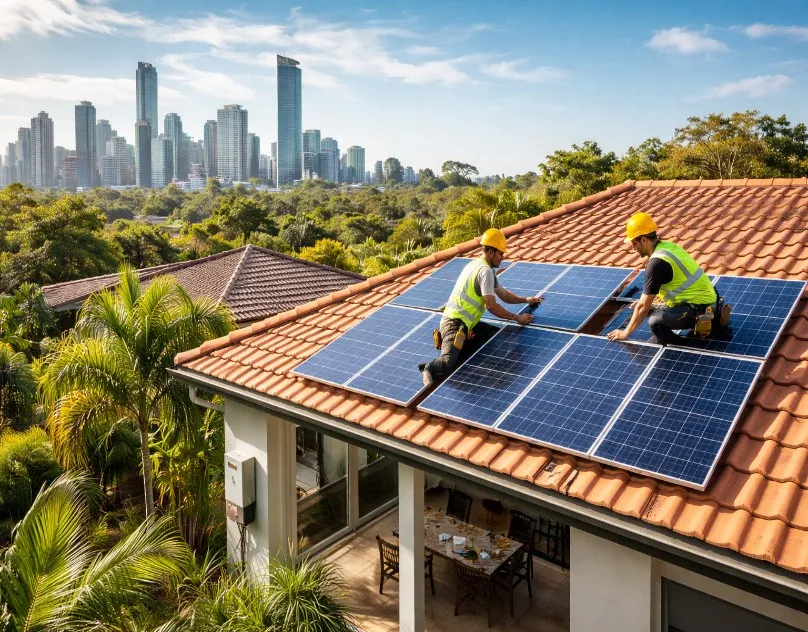
Installing solar panels is one of the most significant home improvement decisions a Brisbane homeowner can make, and the sheer volume of competing advice, conflicting quotes, and varying quality levels makes it genuinely difficult to navigate alone. This guide cuts through the noise. It covers how to assess your home's solar potential, which products to trust, what local Brisbane solar specialists actually cost, and what the process involves from first quote to first kilowatt-hour.
Key Takeaways
- Home solar systems in Brisbane are sized based on your daily electricity consumption and available roof space
- Not all panels and inverters perform equally in Brisbane's subtropical climate conditions
- The installation process from quote to grid connection typically takes three to six weeks for residential systems
- Monitoring your system's output after installation is as important as choosing the right equipment
- A single, well-structured installation by a quality Brisbane installer outperforms multiple cheap upgrades over time
How Do Brisbane Solar Experts Assess Your Home's Solar Potential?
The first step any quality Brisbane installer should take before quoting is a proper assessment of your home's solar potential, not just a postcode check and a panel count.
A genuine assessment starts with your electricity bills. Twelve months of bills show your total consumption, seasonal variation, and whether your household's main load is daytime or evening. Good Brisbane solar experts will ask for your bills or access your consumption data through your retailer before making a system recommendation. A Brisbane household using 20kWh per day with most consumption occurring during business hours benefits from a different system than a household whose adults and children are home in the evenings.
Roof assessment follows. The ideal roof for Brisbane solar is north-facing, pitched at 20 to 30 degrees, and free from shading between 9am and 3pm. Few Brisbane homes tick every box. Experienced local installers know how to work with east-west split systems, low-pitch roofs, and partial shading using optimiser technology. A legitimate assessment includes actual shade mapping using satellite imagery or a physical site visit, not just a Google Maps check from the office.
"The difference between a good solar assessment and a bad one is whether the installer actually understands your specific home's characteristics. Generic recommendations based on postcode averages miss the site-specific factors that determine whether a system actually performs as expected." Dr. Alistair Sproul, Professor of Photovoltaics, University of New South Wales
Meter and grid connection details also affect the assessment. Whether your Brisbane home has a single-phase or three-phase connection affects inverter selection and system sizing. Three-phase properties can support larger inverters, which matters for homes planning to add EV charging or significant battery storage in future years.
What Solar Panel and Inverter Brands Are Best for Brisbane Homes?
Product selection is where Brisbane homeowners often get misled, either by companies pushing cheap unknown brands or by salespeople overstating the differences between similar-tier products.
Canadian Solar is the most widely installed Tier 1 panel brand across Brisbane residential installations. Canadian Solar's HiKu7 and TOPCon series panels carry a 25-year product warranty and a 30-year linear performance warranty, and the brand has an established warranty support operation in Australia. Jinko Solar and LONGi Solar are also Tier 1 manufacturers with strong performance records in Queensland conditions. All three brands perform reliably in Brisbane's heat and UV environment.
Inverter selection matters more than many homeowners realise. SolarEdge inverters with power optimisers are the premium choice for Brisbane homes with any shading, complex roof layouts, or multiple orientations. The panel-level monitoring allows fault identification to the individual panel, which is valuable over a 25-year system life. Sungrow is the most installed string inverter brand in Brisbane residential installations and offers excellent reliability at a lower price point. Fronius and Enphase are strong alternatives, particularly for homeowners who prioritise remote monitoring and detailed reporting.
What Does Solar Panel Installation Brisbane Homeowners Request Actually Cost?
Solar panel installation Brisbane homeowners consider spans a range based on system size, roof complexity, and equipment specification. Understanding the pricing landscape helps you calibrate your expectations.
A standard 6.6kW residential system suitable for most Brisbane homes costs between $5,000 and $8,000 fully installed after applying the federal STC rebate in 2026. A 10kW system ranges from $7,500 to $12,000. The wide range reflects differences in panel brand, inverter choice, roof complexity, and installer quality. The lowest quotes in the market often use off-brand panels or less experienced installers that create problems within three to five years of installation.
Adding battery storage is increasingly popular among Brisbane homeowners in 2026. A 10kWh battery adds approximately $8,000 to $11,000 to the project before Queensland's battery rebate of up to $3,000 for eligible households. Installing solar and battery together in a single project saves on labour and avoids the cost of a second installation visit. Brisbrane solar installers who have completed combined solar and battery projects will help you navigate both the STC rebate and the state battery rebate simultaneously.
"2026 is an excellent window for Brisbane homeowners to invest in solar panel installation. Equipment costs have fallen, rebates remain substantial, and electricity prices have risen enough to make the financial case compelling for households across a wide range of consumption profiles." Sarah McNamara, Chief Executive, Australian Energy Council
What Does the Brisbane Solar Installation Process Actually Involve?
Many Brisbane homeowners are surprised by how much happens between signing a contract and having a working solar system. Understanding the process helps you manage expectations across what can be a four to six week timeline.
The contract signing triggers the designer's formal system layout, which confirms panel placement, inverter location, wiring runs, and meter configuration. This design is submitted to Energex for grid connection approval along with the relevant forms and equipment specifications. For standard residential systems under 10kW with pre-approved inverters, Energex's approval typically takes two to five business days. Larger systems or those in constrained network zones may take longer to process.
Once Energex approval is received, your installer books the installation date. A standard 6.6kW residential system in Brisbane takes one day to install for a two or three-person crew. The panels are mounted, the inverter is connected, the wiring is run to your switchboard, and the system's communication and monitoring settings are configured. A meter upgrade from your retailer may be required if your home doesn't already have a smart meter. This is arranged separately from the installation and can take an additional one to two weeks.
How Should You Monitor and Maintain a Brisbane Home Solar System?
Post-installation monitoring and maintenance are the aspects of home solar ownership that Brisbane homeowners receive the least preparation for, and neglect in this area costs real money over time.
Every quality inverter installed by reputable Brisbane solar experts includes a monitoring platform accessible via a smartphone app. SolarEdge, Sungrow, and Fronius all have well-regarded monitoring systems that show daily, monthly, and annual generation in kilowatt-hours. Check your daily generation figure regularly and compare it to the same period in previous months. A consistent unexplained drop in output usually indicates a fault that needs attention.
Cleaning your solar panels is the most straightforward maintenance task, and it's more important in Brisbane than in many other cities. The subtropical dust, pollen, and bird activity in Brisbane can reduce panel output by 10 to 20% on heavily soiled panels. Annual cleaning by a professional with appropriate safety equipment restores output and protects the panel surface over the long term.
Conclusion
Choosing the right home solar system and Brisbane solar installers to install it sets the foundation for 25-plus years of reliable, cost-saving energy generation. The decisions you make at the beginning, from system size and product selection to installer accreditation and workmanship warranty terms, determine whether your investment performs as promised. Brisbane's exceptional solar resource means a well-designed, properly installed system is among the highest-return home investments available to Queensland homeowners today. Halcol Energy has been completing residential solar panel installation Brisbane families rely on since 2010, with over 9,000 satisfied customers and a Top 10 Queensland installer ranking based on government data. To get a personalised assessment of your home's solar potential, contact Halcol Energy for a free, no-obligation consultation.
FAQ
What size solar system do most Brisbane homes need?
Most Brisbane households with quarterly electricity bills between $400 and $800 are well served by a 6.6kW to 10kW solar system. Larger bills and higher daytime consumption benefit from 10kW to 13kW systems. The right size depends on your actual daily consumption, the portion of that consumption occurring during daylight hours, your roof space, and whether you plan to add battery storage or an EV charger. An accurate assessment requires twelve months of electricity billing data and a proper roof analysis, not a generic postcode-based recommendation.
How long do home solar systems last in Brisbane?
A quality home solar system installed by a reputable Brisbane installer should last 25 to 30 years with proper maintenance. Solar panels from Tier 1 manufacturers carry 25-year product warranties and performance guarantees that panels will still produce at least 80% to 85% of their original output after 25 years. Inverters typically last 10 to 15 years and may need replacement during the system's life. Mounting systems and wiring, if installed correctly, should last the full system life with regular professional inspection.
What should I do after my Brisbane solar system is installed?
After your Brisbane solar system is activated, download your inverter's monitoring app and record your baseline daily generation figure. Compare this to the estimated daily output provided in your quote, which should be based on Brisbane's solar irradiance data. Check your monitoring data weekly in the first month and monthly thereafter. Review your electricity bills after the first billing cycle to confirm the expected bill reduction. Schedule a professional clean and inspection after the first year and annually thereafter.
Is east-west panel orientation worth it for Brisbane homes?
East-west panel orientation is genuinely valuable for many Brisbane homes, particularly those whose roof cannot accommodate north-facing panels or whose occupants have significant morning and evening electricity consumption. An east-west split generates slightly less total energy than an optimal north-facing installation, but it spreads generation across a longer daily window, producing power in the morning when occupants are getting ready and in the afternoon when appliances are active. An experienced Brisbane installer will model the output difference for your specific roof and consumption profile.
How do I know if my Brisbane solar system is underperforming?
Your inverter's monitoring app is your primary tool for detecting underperformance. If your daily generation is consistently 10% or more below your expected baseline for the same season and weather conditions, investigate promptly. Check the monitoring platform for any fault codes or communication errors. Look at the generation breakdown by panel if you have an optimiser-equipped system, as this will identify any single panel that's significantly underperforming. Contact your installer if the monitoring data doesn't reveal an obvious cause, as many Brisbane solar installers can access your system's data remotely.
#SolarEnergy #SolarPanels #SolarPower #RenewableEnergy #HomeImprovement

























Sign in to leave a comment.