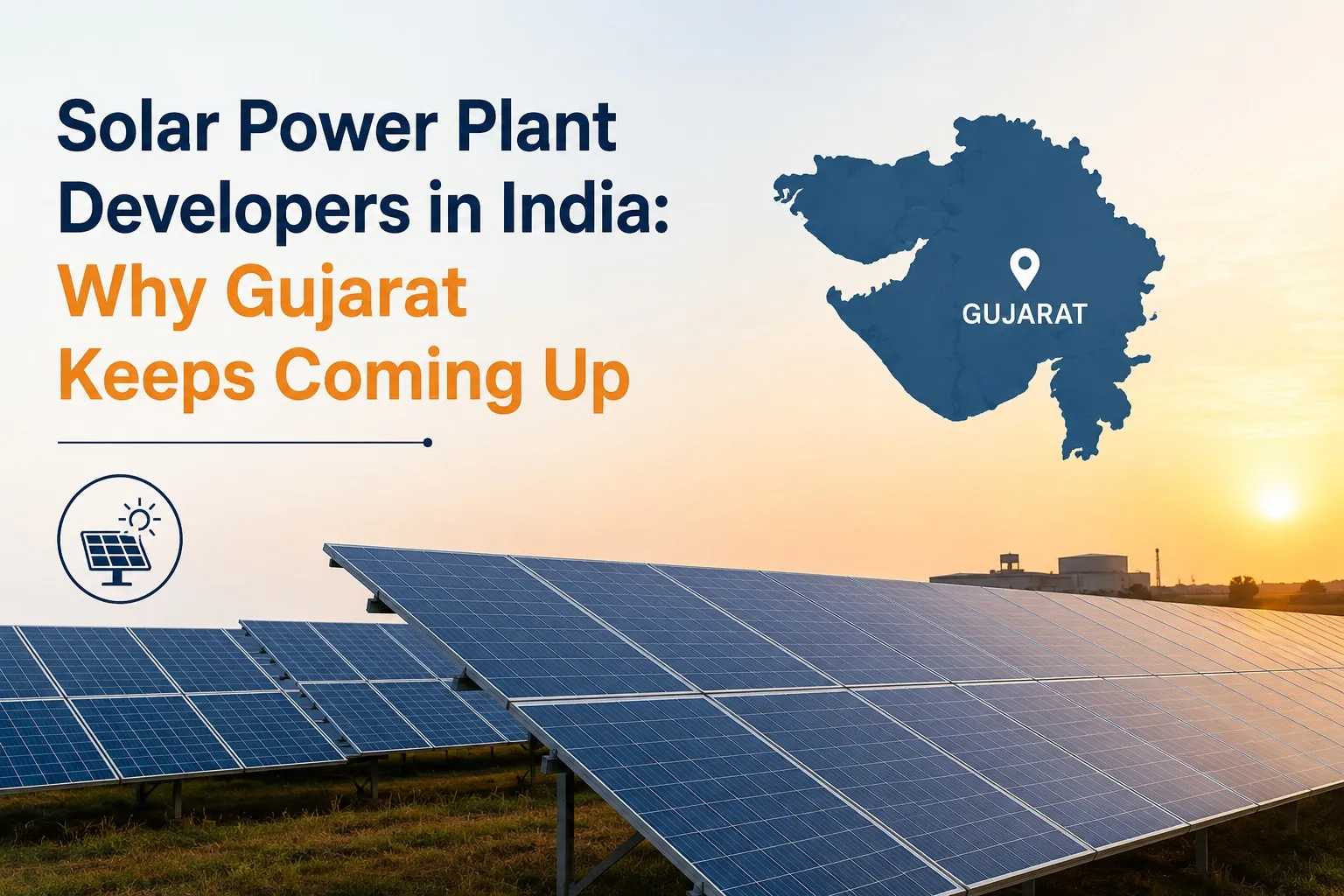

Ask anyone tracking India's solar sector where the real activity is happening, and the same state keeps coming up. Gujarat has roughly 25.5 GW of solar capacity on the ground already. It holds about 5% of India's population but accounts for something like two-thirds of the country's residential solar systems. Sit with that for a second, because it's a strange gap. One state, doing that much of the heavy lifting.
That's the kind of environment a Solar Power Energy Company operates in now, whether it's based in Gujarat or not. The bar keeps moving up. Stand still for even a year or two, and competitors who didn't will noticeably pull ahead.
What's Actually Going On There
A handful of things worth knowing, especially if Gujarat is anywhere near your radar.
By the end of 2025, the state had crossed half a million solar installations, adding up to close to 1,879 MW from alone. That's not a number most other states are anywhere near matching yet. There's also a broader renewable energy policy running through 2028, aiming for 100 GW of total renewable capacity by 2030, backed by an investment push north of ₹5 lakh crore.
Then there's Khavda, over in Kutch district, quietly becoming what's shaping up to be the largest hybrid renewable park on the planet. It's already past 9 GW commissioned, working toward a planned 30 GW combining solar and wind. Numbers like that are genuinely hard to picture. The short version: Gujarat stopped experimenting with renewable energy a while ago. It's building infrastructure meant to outlast most of the people reading this.
Why Any of This Matters If You're Not Building a Mega-Project
Most people reading an article like this aren't planning a 500 MW solar park, obviously. You're probably thinking about a system for your house, or maybe something mid-sized for a business. So why should any of the above matter to you?
Because scale changes what's available locally. When development happens at this size, manufacturing follows it. Gujarat has picked up a wave of new solar cell and module facilities recently, including a 1.2 GW domestic solar cell plant announced for Surat. More local manufacturing generally means shorter supply chains, steadier component pricing, and quicker access to newer panel tech, benefits that reach residential and commercial buyers even if they never come close to a utility-scale project themselves.
It also means there's simply a bigger pool of experienced Solar Power Plant Developers In India to actually choose from, companies that have built things at real scale rather than ones still figuring out their first handful of installations.
Telling the Serious Developers From the Rest
With so many companies now claiming solar expertise, sorting them out takes some digging. A few questions usually get you there faster than reading reviews.
Have they actually handled projects across different scales, residential, commercial, maybe industrial too? Do they buy directly from manufacturers, especially the newer domestic module suppliers, or does everything pass through resellers who add cost and slow things down? Can someone there give you real subsidy timelines with actual numbers instead of vague reassurance? And is there a genuine performance guarantee beyond whatever warranty came printed on the box?
Solar Power Project Developers who've kept pace with where the market's moved will answer all of that without much hesitation. If someone starts hedging the second you bring up long-term support, take note.
Why Working With a Local Gujarat Developer Actually Helps
Location matters more here than people assume going in. A Solar Project Developer Gujarat teams have worked with tends to understand local subsidy structures, DISCOM procedures, and net-metering rules that genuinely differ from state to state. That local familiarity usually means fewer delays, since paperwork moves faster when the developer already knows which forms go where and which offices actually respond in a reasonable time.
It helps on the technical side too. Solar irradiation, seasonal weather, even how fast dust builds up on panels, all of it varies by region. A developer with real local project history factors that into system design instead of applying a generic template built somewhere else entirely.
Where Kundan Green Energy Fits
Given how fast this market has grown, and how much local knowledge actually matters, working with a team that's built genuine experience across Gujarat and beyond tends to show up directly in project outcomes. Kundan Green Energy's solar power division handles everything from initial site assessment through design, procurement, and installation, carrying the kind of local know-how that only comes from actually working this market rather than showing up new to it.
Final Thoughts
Solar in India stopped being a niche investment a while back, and Gujarat is the clearest evidence of that shift, holding a disproportionate share of the country's residential installations alongside some of the largest renewable infrastructure being built anywhere right now. Whether you're planning a small system or something considerably bigger, the developer matters more than whatever brochure they hand you. Look for real project history, current technology, and someone who genuinely understands your local market instead of applying the same national pitch everywhere.
Frequently Asked Questions
1. Why does Gujarat keep coming up as one of the top states for solar power?
Mostly a combination of sunlight and timing. The state gets steady, strong solar irradiation across most of the year, and its policies have been actively encouraging renewable adoption for more than ten years now. That head start shows up in the numbers, Gujarat carries a residential solar share far bigger than its population would suggest.
2. Is there any real benefit to going with a developer who's actually local?
In most cases, yes. Someone already working within Gujarat's subsidy system, DISCOM procedures, and net-metering process tends to get things moving faster than a company running the exact same playbook it uses in every other state.
3. How much subsidy can a homeowner in Gujarat actually get for rooftop solar right now?
It can go up under the national rooftop scheme, plus whatever net-metering benefits apply. The final number shifts based on system size and current guidelines, so it's best to get a direct confirmation from a developer rather than relying on a general figure.
4. Is all this solar growth just about the big utility-scale parks?
No, that's actually a common misread. Projects like Khavda draw most of the attention because of their sheer size, but rooftop adoption on the residential side has kept pace right alongside them, crossing over 500,000 installed systems by the end of 2025.





















Sign in to leave a comment.