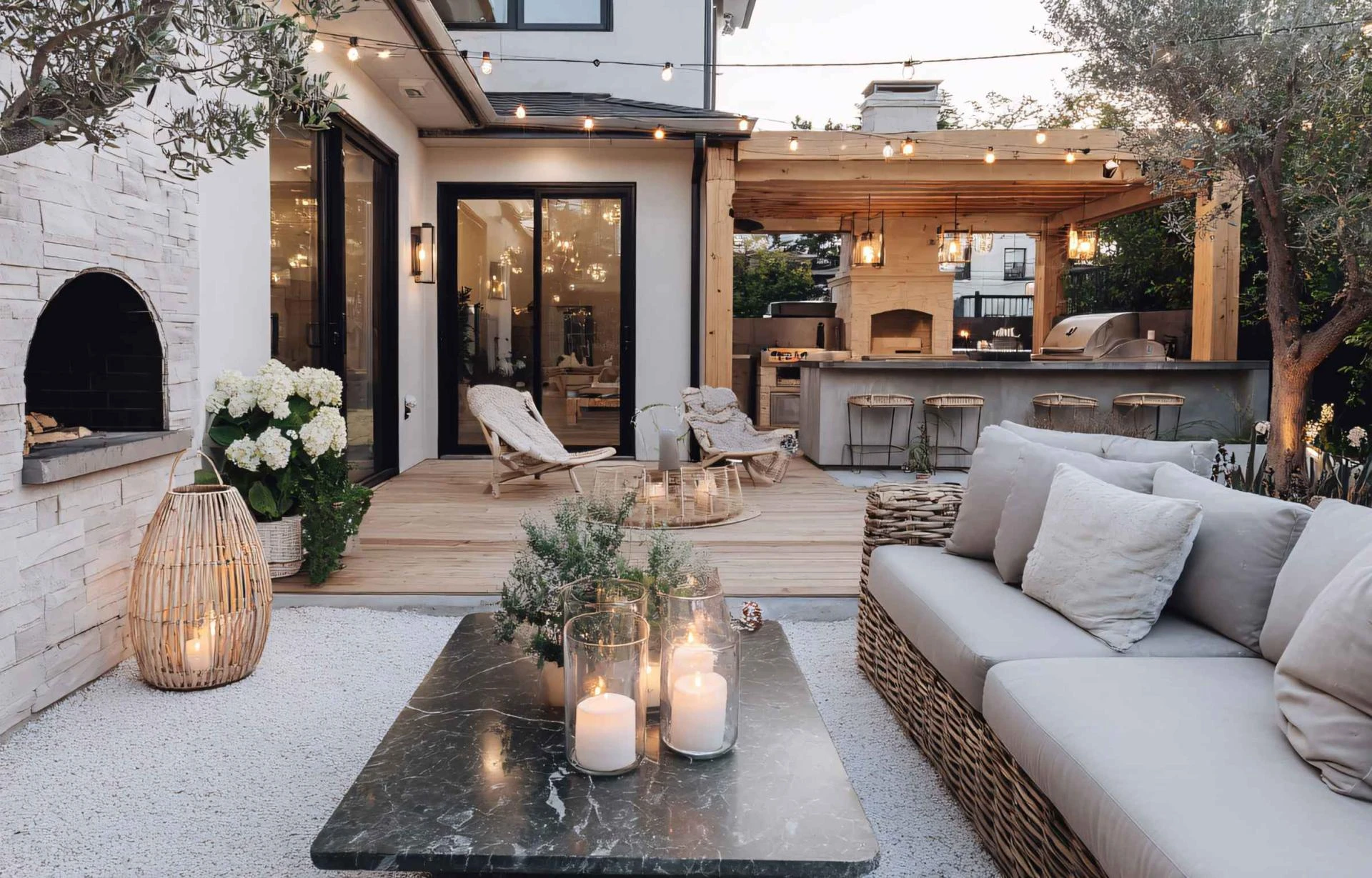

Outdoor furniture exists in a state of constant exposure. Sun presses against surfaces day after day. Humidity settles into joints and grain. Dust arrives quietly and stays. Daily use marks furniture quietly, through pressure, exposure, and repetition. Material choice shapes how each piece settles into its role after one season, beyond its first impression.
Solid wood carries weight, surface depth, and visible character, while responding to moisture and heat through gradual, natural movement.
Engineered materials pursue consistency and limited care, though their aging tends to arrive without warning.
The guide opens with solid wood, follows with engineered materials, and closes with the key questions.
What Counts as Solid Wood in Outdoor Furniture?
Solid wood furniture starts with natural timber. Direct joinery replaces bonded layers. Teak, eucalyptus, acacia, and cedar suit outdoor use. Their density supports exposure.
Grain patterns shift across each surface. Knots appear without symmetry. Color varies slightly from board to board. These traits reflect origin and growth, not defect.
Solid wood furniture carries physical presence. Weight anchors it in place. Surfaces hold warmth rather than reflecting it. Time leaves its trace openly, which some appreciate as character while others regard as wear that requires attention.
Why Do People Choose Solid Wood for Outdoor Furniture?
Solid wood signals honesty and permanence in luxurious outdoor furniture. A well-made, solid wood chair or table continues to serve through years of repeated use while maintaining structural strength and balance.
Surfaces allow sanding without loss of integrity. Finishes accept renewal. Repairs remain possible, supporting long-term ownership rather than short cycles of replacement.
Solid wood also suits outdoor spaces shaped by natural materials. Stone, greenery, and restrained textiles align easily with its tone. The result feels composed and deliberate, grounded rather than styled, refined without appearing manufactured.
How Does Solid Wood Perform in Sun and Rain?
Solid wood responds to outdoor exposure through slow, natural movement. Changes in temperature and humidity guide this process.
These movements remain natural. Continuous exposure without care can introduce fine cracks or surface checking. Sunlight alters pigment slowly. Many hardwoods shift toward softer, muted tones over time.
Appropriate wood choice and careful construction keep these changes limited to appearance.
What Maintenance Does Solid Wood Outdoor Furniture Need?
Maintenance depends largely on visual preference. Cleaning removes dust and moisture buildup. Oils or sealants limit absorption and color change. Frequency varies with exposure.
Some owners accept weathering as part of the material’s life. Others maintain finishes to preserve a consistent appearance. Both approaches reflect intention rather than neglect.
How Long Can Solid Wood Outdoor Furniture Last?
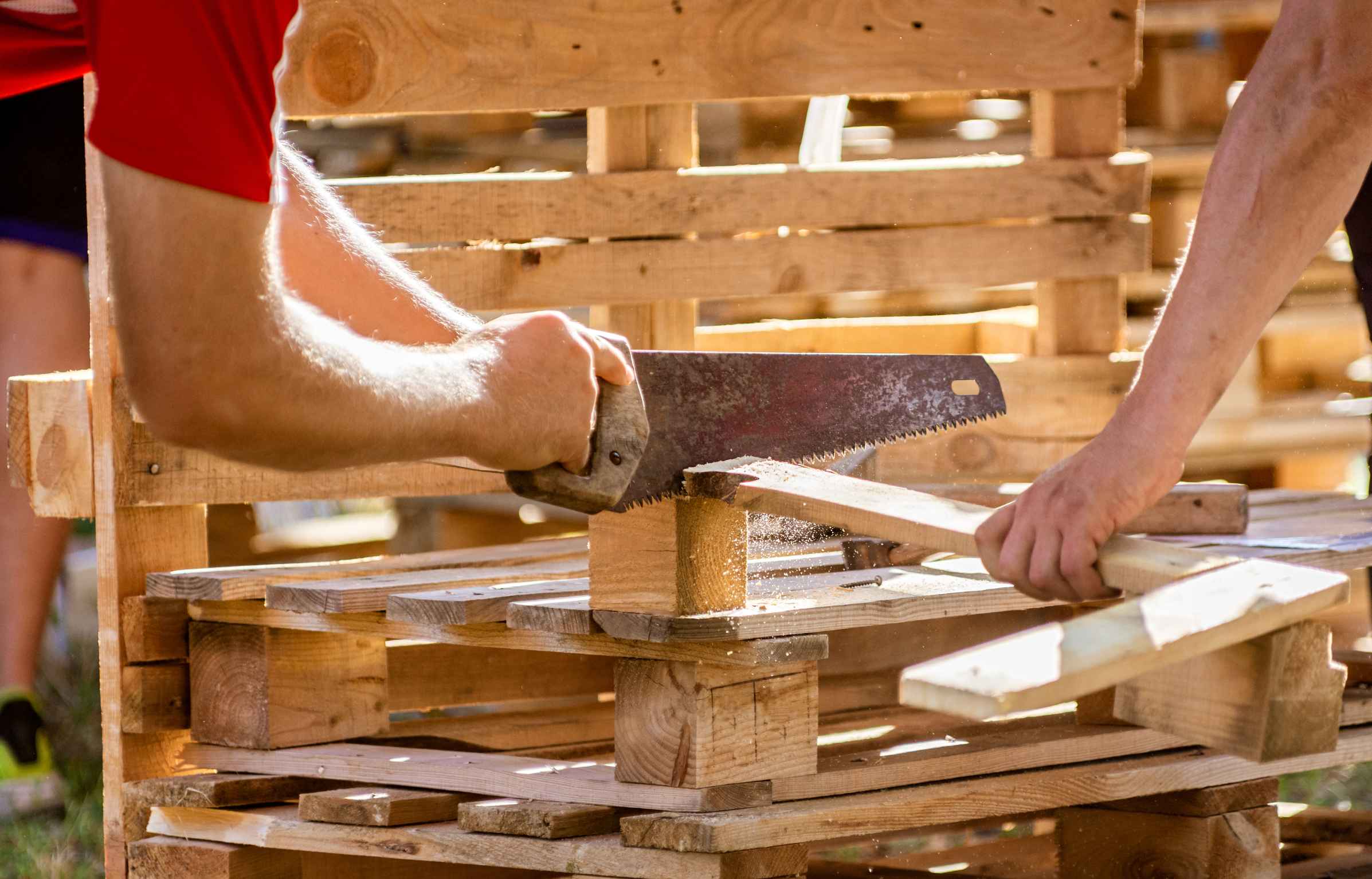
Solid wood furniture constructed with care can remain in use for decades. Repairability defines its value. Scratches disappear through sanding. Surfaces regain depth through refinishing. Individual components often allow replacement without compromising the whole.
Durability depends on joinery, drainage, and proportion. Wood species alone never ensure longevity.
What Are Engineered Materials in Outdoor Furniture?
Engineered materials rely on controlled composition. Wood fibers combine with resins. Plastics shape structural form. Synthetic wicker and molded surfaces appear frequently in outdoor collections. Uniformity guides their design and production.
These materials aim to behave predictably under exposure, limiting movement and surface change.
Why Are Engineered Materials Popular for Outdoor Use?
Engineered materials appeal to buyers who value consistency with limited involvement. Finishes remain stable across seasons. Appearance stays aligned with the original intent. Commercial environments benefit from this reliability, reducing maintenance labor.
Modern silhouettes appear more easily through engineered construction. Thinner profiles become possible as a result.
How Do Engineered Materials Handle Moisture and Humidity?
Engineered materials resist moisture by design. Absorption remains low. Swelling and cracking occur less often. In humid regions, this stability supports performance.
Extended sun exposure can introduce heat retention or surface brittleness, influenced by material quality and UV protection.
What Maintenance Do Engineered Outdoor Materials Require?
Maintenance remains minimal. Routine cleaning with mild soap and water usually suffices. No sanding. No sealing. No oiling. This simplicity suits rental properties, hospitality settings, and busy households.
Damage presents limits. Repair options remain few once the internal structure weakens.
How Long Do Engineered Materials Typically Last?
Lifespan varies across product categories. High-grade composites and resins endure for many years under protection. Lower-quality options degrade sooner through fading or cracking.
Replacement often follows failure, since repair rarely restores integrity.
Which Material Looks Better in Outdoor Spaces Over Time?
Solid wood develops patina gradually. Texture deepens. Surfaces record use quietly. Engineered materials aim for consistency, though fading or chalking may appear with exposure.
Preference shapes judgment. Some value evolution. Others value steadiness.
Which Option Feels Better for Seating and Touch Points?
Solid wood feels warmer and grounded, especially along arms and edges. Engineered surfaces feel smooth and uniform, though heat buildup occurs under direct sunlight.
Comfort depends on design, cushioning, and climate.
Which Material Offers Better Value for the Money?
Solid wood carries a higher initial cost yet supports long ownership through repair. Engineered materials reduce upfront expense and maintenance effort, though replacement cycles may shorten lifespan.
Value aligns with use, not price alone.
Which Material Makes More Sense for High-Traffic Use?
Engineered materials suit high-traffic environments where consistency matters. Solid wood performs well with care, though visible marks accumulate through frequent use.
Hospitality settings often favor engineered solutions for control and predictability.
How Should You Choose Between Solid Wood and Engineered Materials?
Climate, usage, and maintenance tolerance guide selection. Those seeking warmth, repair potential, and natural presence often choose solid wood. Those seeking consistency and ease lean toward engineered materials.
The right choice supports daily life without resistance.
Wrapping Up!
Solid wood and engineered materials both belong in outdoor furniture. Solid wood offers longevity, repairability, and evolving character. Engineered materials offer stability, reduced care, and visual control. Selection depends on environment, traffic, and involvement.
When material aligns with real-life use, outdoor furniture remains steady, comfortable, and dependable over time.






















Sign in to leave a comment.