Why Parents Struggle with Finding the Right Toys
Every parent wants to give their child the best start in life. But when it comes to choosing toys that actually support development, the options can be overwhelming. Many toys today are flashy and noisy but offer little educational value. Others might promise learning benefits but fail to hold your child’s attention for more than a few minutes.
If you’ve ever found yourself asking:
“Why won’t my child stay interested in their toys?”
“How do I help my child learn while playing?”
“Are screen-free toys that actually teach even a thing anymore?”
You’re not alone. The truth is—most toys don’t check all the boxes. That’s where educational puzzles for kids come in.
The Solution: How Educational Puzzles Help Kids Learn
Unlike ordinary toys, educational puzzles combine fun with focus. They quietly teach important skills like problem-solving, patience, coordination, and critical thinking—all while keeping kids engaged.
These puzzles are designed to:
Encourage concentration and attention span
Support visual-spatial understanding
Improve hand-eye coordination and motor skills
Promote independence and perseverance
Offer screen-free, meaningful playtime
Whether you’re looking for the best preschool learning toys or activities to spark your child’s interest in science or numbers, puzzles fit in beautifully.
Real-World Examples of Smart Puzzle Toys
To help you understand how puzzles can become problem-solvers in your parenting journey, here are a few real examples from our collection:
🔹 Multiple Gameplay Magnet Pen Puzzle
Tired of toys that get boring fast? This innovative puzzle turns a stylish pen into a creative challenge with magnetic components that can be rearranged for hours of fun. Great for kids who like fidgeting with their hands while learning to focus.
🔹 Magnetic Board Game Puzzles for Kids
If your child struggles with staying engaged, this magnetic puzzle game offers hands-on interaction that keeps things fresh and exciting. A great way to practice patience and logic.
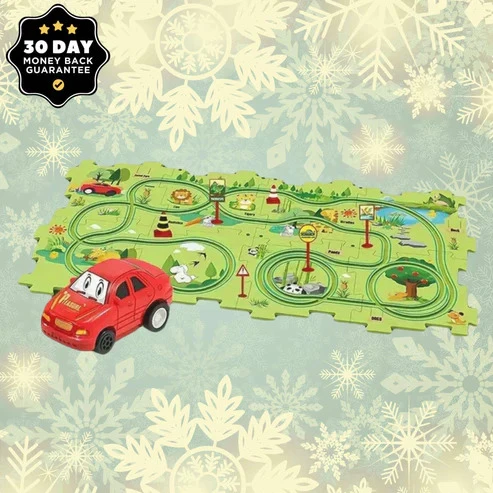
🔹 Rail Car Puzzle Toy
A perfect blend of movement and problem-solving. Kids learn basic sequencing and mechanical thinking while assembling and playing.
🔹 Wooden Montessori Math Puzzle
Got a little one who finds numbers confusing? This puzzle introduces math the Montessori way—tactile, simple, and visual.
🔹 Train Model 3D Wooden Puzzle
More than a toy—it’s an entire project. For older kids, this 3D puzzle improves spatial understanding and teaches patience and planning.
🔹 Wooden Four Rabbits Dressing Puzzle
This interactive set helps kids express creativity while learning about routines and dress-up. It’s great for storytelling and language skills too.
🔹 Wooden Montessori Puzzle Toy
A back-to-basics learning toy that aligns perfectly with Montessori principles—natural materials, independent learning, and simplicity.
How Educational Puzzles Fix the “Short Attention Span” Problem
One of the biggest concerns parents share is that their kids don’t focus. Screens, overstimulation, and too many choices make it tough for kids to sit still and think.
Puzzles naturally fix this by:
Offering one clear goal (completing the puzzle)
Encouraging trial and error
Giving immediate satisfaction when a piece fits
Promoting self-correction and patience
This is why puzzles are some of the best learning toys for kids who need help staying focused without the pressure of structured learning.
How to Choose the Right Puzzle for Your Child
Choosing a puzzle isn’t one-size-fits-all. The best puzzle depends on your child’s age, interests, and learning needs.
Here’s how to match your child with the right kind of puzzle:
Toddlers (1–3 years): Go for large-piece puzzles with shapes, animals, or colors. Prioritize safety and simplicity.
Preschoolers (3–5 years): Try number and alphabet puzzles, or introduce logic-based puzzles that support early reading and math.
Early school-age (5–8 years): Choose puzzles with science, space, or mechanical themes. Science toys for kids like 3D puzzles or magnetic mazes add an educational layer.
Combining Puzzles with Other Learning Tools
To boost the learning experience even more, you can pair puzzles with:
Picture books on related themes
Matching flashcards or shape sorters
Pretend play kits that expand on puzzle themes
For example, a space-themed puzzle pairs perfectly with an astronaut dress-up set or science toys. This kind of combo encourages your child to connect different types of learning in a natural, play-based way.
Benefits That Last Beyond Playtime
The skills kids learn from puzzles don’t stay on the playroom floor—they grow with them. Whether your child is preparing for preschool, learning to count, or simply trying to stay away from screens, puzzles can be a long-term solution that delivers real results.
✔ Builds pre-academic skills for school readiness
✔ Encourages independent play and decision-making
✔ Supports emotional development through patience and persistence
✔ Enhances memory, problem-solving, and attention
These are the same foundational skills that help children thrive in classroom settings and everyday life.
Final Thoughts
Finding a toy that both entertains and educates doesn’t have to be hard. Educational puzzles for kids offer a timeless solution for parents who want more than just noise and lights. They bring back purposeful play, encourage brain development, and provide hours of screen-free fun.
Whether you're shopping for a preschooler just beginning their learning journey or a curious school-age kid who loves to be challenged, puzzles are your best bet. Combine them with other best preschool learning toys and science toys for kids, and you’re well on your way to creating an at-home learning space that’s both fun and functional.
























Sign in to leave a comment.