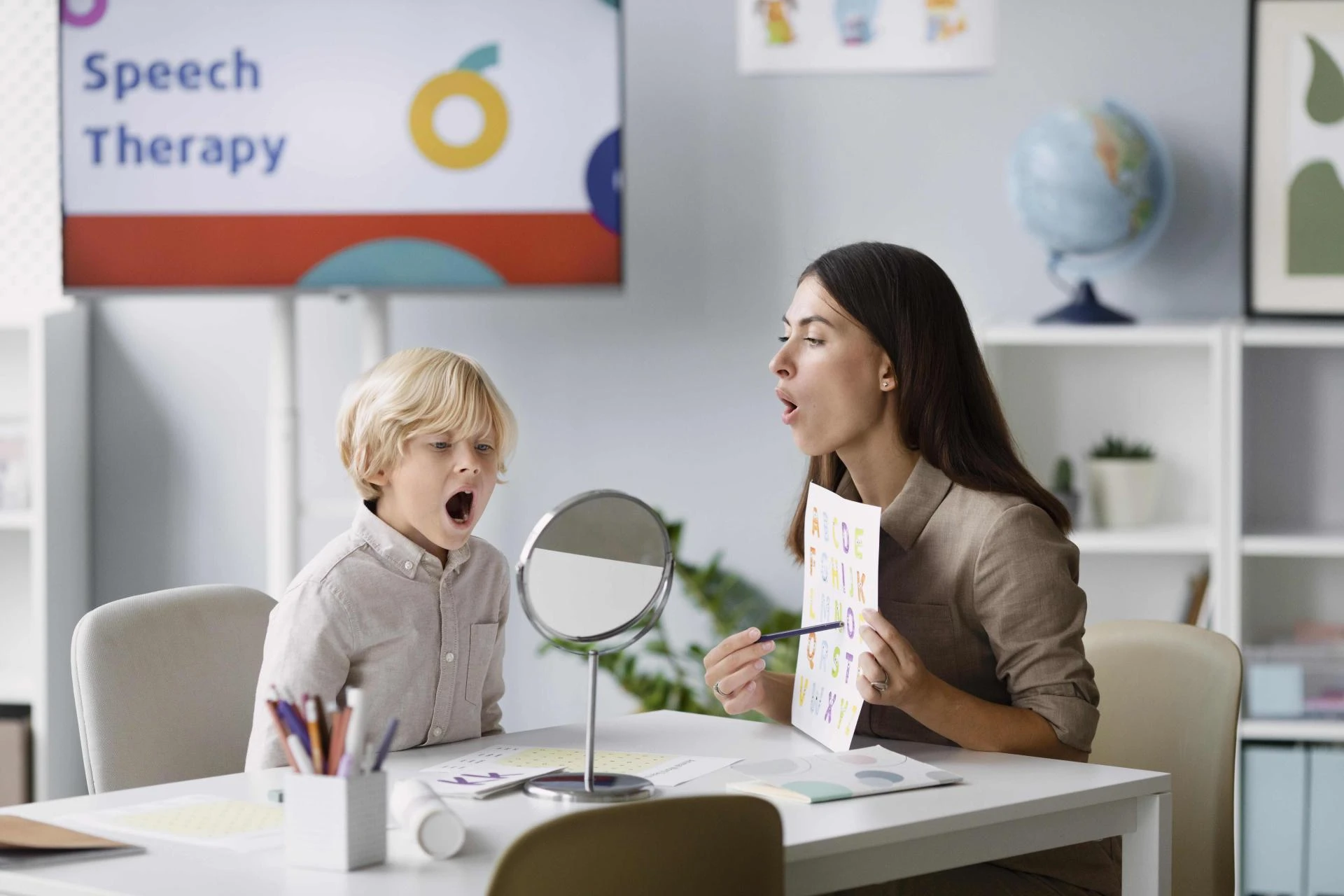

Parents know when something sounds 'off' with their child's speech. But then you walk into a therapist's office, and they start using words like speech delay and language delay, what's the difference?
Both terms involve communication challenges, but they focus on different areas. By learning the basics, parents can approach evaluation with less fear and more understanding. Let's review the distinctions and how they might appear in your child.
What speech means vs what language means
Speech deals with the production of sound. This includes pronunciation, word clarity, volume, and the physical ability to move the lips, tongue, and jaw.
So, if your child has a speech delay, they may understand what they want to say, but have trouble physically producing the words clearly.
Language involves the comprehension and use of words to relay meaning. Language includes the words we know, how we put those words together, and how we understand others.
Language delay affects comprehension and a child's ability to express their thoughts through speech.
Speech delay examples
Children who experience a speech delay usually have no problem following directions and getting their point across with gestures or short sentences. The difference is noticeable in how their words sound. Family members may understand them better than strangers or friends.
A 4-year-old child may say 'tar' for car or 'wabbit' for rabbit. They know exactly what they are trying to say, but the sounds aren't quite right yet.
Children with a speech delay may even get frustrated when people don't understand them, even though they're trying so hard to say sounds clearly.
Speech delays may include substitutions of sounds (cat for kite), omitting syllables, or physical difficulty coordinating the mouth to form words. This can occur even when a child's language skills are age-appropriate.
Language delay examples
Language delay describes difficulty understanding others or putting words together to form thoughts. This can look like a small vocabulary or difficulty combining words into sentences.
A child with a language delay may only use 5 words at age 3. They may rely more on pointing and gestures to communicate needs. When asked questions, they may have trouble answering or only use 1 or 2 words in response.
Sometimes children have difficulty understanding language but can use words they know. Others may struggle with both understanding language and putting words together to communicate. As they get older, language delay can impact their ability to interact with peers, play creatively, or learn in school.
Why do parents get confused?
Often, children who struggle with speech sound development also have difficulties with language, and vice versa. It can be hard to distinguish where one starts and the other begins without professional evaluation. It is common for a child to have delays in both speech AND language.
Parents also sometimes fear that 'delayed' means their child is not bright or not trying hard enough. Communication delays exist at all developmental ages and levels. Many children just need a little bit of help practising specific skills.
We also understand how scary assessments can be. Parents often fear the label or feel like they are being told their child will struggle forever. Keep in mind that therapists are gathering information to discover strengths and target areas of support. It does NOT mean your child will never catch up.
What to expect during an evaluation
Speech and language evaluations typically involve observing a child as they play, follow directions, talk and interact. Therapists may play educational games and talk with parents about what they see at home. Formal testing may be used, but it is often not necessary and many tests are game-based for this reason. Parents are often invited to share their perceptions of communication strengths and challenges.
Many families feel relieved after an assessment. They finally have concrete information and can stop guessing. Speech therapy for children can provide families with strategies that can be implemented during daily routines. Speech therapists know there is no one way to learn and they take things at each child's pace.
You know your child best
A speech or language delay does not mean your child will be delayed forever. Countless children receive speech therapy throughout their school years and go on to excel academically and socially. The goal is to help individuals communicate effectively with others.
Ask questions and stay engaged with what your therapist tells you. As children grow, you may find you need to ask the therapist to adjust strategies to meet your child's changing needs. That's OK too!
Children can face speech or language challenges for various reasons. Remember, communication disorders are common and can be addressed at any age. Not only do children thrive with early support, remember that speech therapy for adults is also available. We use communication every day throughout our lives, so ignoring issues is not a responsible plan.































Sign in to leave a comment.