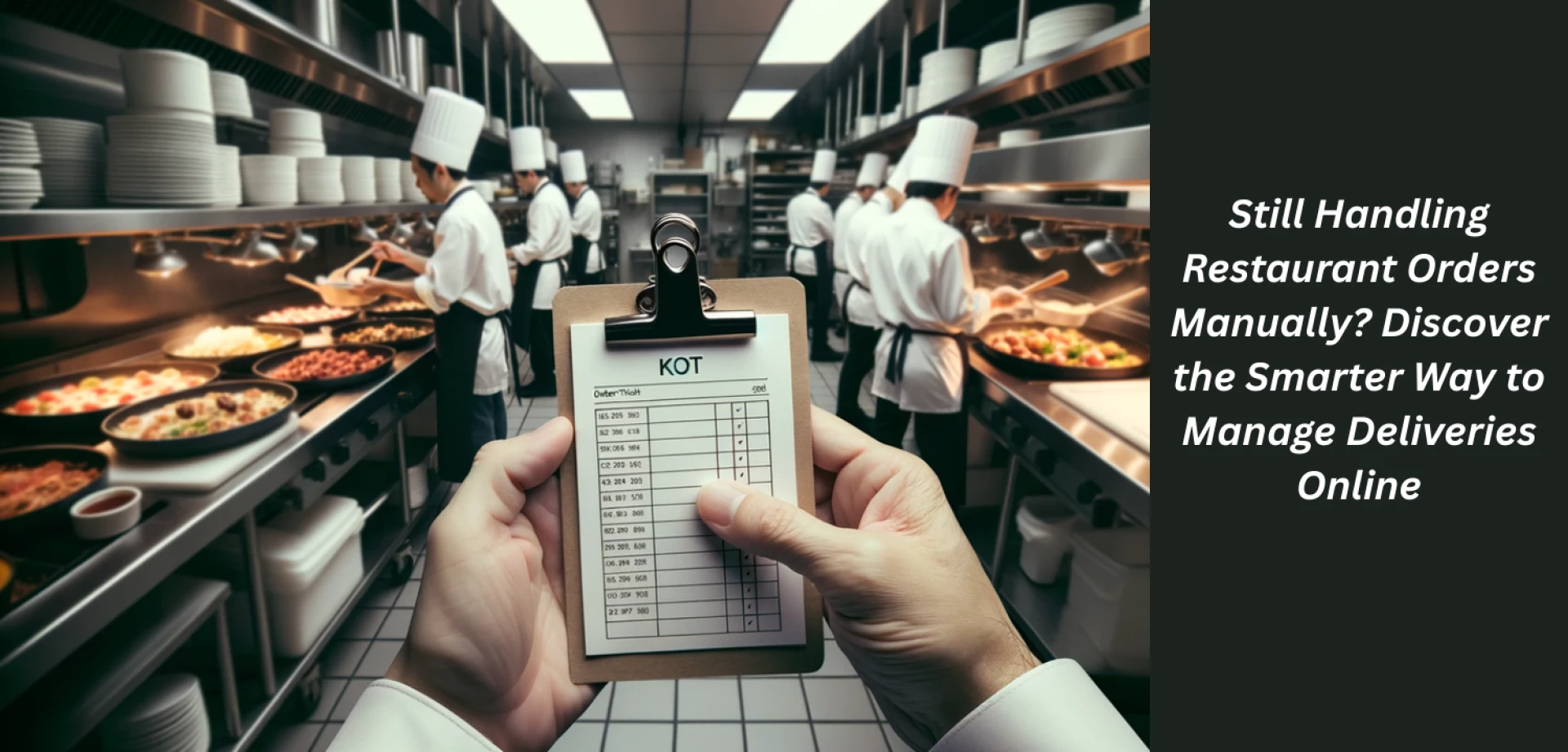

You know the drill. Orders come in from multiple platforms—Talabat, Jahez, Careem, Deliveroo—and your staff rushes to copy them down, relay them to the kitchen, update the status, and somehow keep track of delivery logistics. Mistakes happen. Customers complain. Your team burns out. And you’re stuck in the middle, juggling the chaos.
But what if you could change all of that?
Let’s talk about the smarter way to manage restaurant deliveries—with an online delivery management system that automates the madness and frees you to focus on what matters: food, customers, and growth.
The Problem with Manual Order Handling
At first, managing orders manually seems simple. A customer calls in, places an order, and you note it down. Maybe you also accept orders via WhatsApp, aggregators, or your own app. But as your restaurant grows—or as peak hours hit—manual handling becomes a bottleneck.
Here’s what you’re really dealing with:
- Orders come in from different sources, but there’s no central system
- Staff handwrite or re-enter orders, increasing error risk
- Delays in relaying orders to the kitchen cause longer prep times
- You rely on memory or paper slips to track the delivery status
- Real-time order visibility? Non-existent.
And if you’re running more than one outlet? Multiply that mess by two, three, or ten.
That’s where an order management system steps in and takes control.
What Is an Order Management System for Restaurants?
An order management system is your central nervous system. It receives online orders from all sources—aggregators, your website, mobile app—and organizes them in one place. From there, it automatically sends instructions to your kitchen, updates order status, and syncs with your online delivery management software to dispatch orders efficiently.
You stop being the middleman. The system does the coordination while you keep serving.
The Online Delivery Management System: Your Operational Backbone
Imagine this: every order—regardless of where it comes from—appears on a unified dashboard. You can track order time, prep progress, driver assignment, and delivery route, all in real time. The delivery system intelligently dispatches drivers based on location, traffic, and delivery urgency.
That’s the power of online delivery management systems built for restaurants like yours.
It also integrates with your POS, kitchen display systems, and even your ERP—if you use one. No more double entry, no more missed tickets, no more shouting over kitchen counters.
Why Manual Handling Hurts More Than You Think
You may already know manual processing is inefficient. But let’s go deeper. What is it really costing you?
1. It Slows Down Your Team
Your staff wastes time writing orders, checking them again, relaying them to the kitchen, and updating the customer. This manual loop eats up hours every day—hours that could be spent serving more customers or improving quality.
2. It Causes Mistakes and Refunds
One wrong digit, one missed item, and you’re dealing with angry customers and refund requests. These mistakes damage your reputation and reduce trust, especially with delivery customers who can’t be easily won back.
3. It Disrupts Delivery Efficiency
Drivers wait around while your staff figures out what’s ready. Orders go out late. Customers get cold food or incomplete orders. And guess what? They don’t complain—they just stop coming back.
4. It Blocks Growth
You can’t scale a business that depends on chaos. If every new outlet or sales channel increases your workload, you’re not growing—you’re drowning.
Manual systems are okay—until they’re not. That tipping point arrives sooner than you think.
Why an Online Order Management System Changes the Game
With a restaurant order management system, you shift from reactive to proactive.
You stop juggling, and you start streamlining.
Here’s how:
Centralized Orders from Every Channel
Whether a customer orders via Talabat, Deliveroo, or your branded app, the order lands in one place. You get a unified view without logging into multiple systems or manually noting orders down.
Instant Kitchen Updates
Orders are sent straight to the kitchen with full item breakdowns. If you use a kitchen display system (KDS), staff can view and mark progress in real time. That means faster prep, less miscommunication, and fewer errors.
Integrated Delivery Dispatch
As soon as food is ready, your online delivery management software kicks in. It assigns the best available driver, suggests optimized routes, and tracks every delivery on a live map. Both you and the customer stay informed with real-time status.
Live Tracking and Status Alerts
Customers expect updates. “Order received,” “In the kitchen,” “Out for delivery,” “Delivered.” You can automate all of these with real-time push notifications or SMS. That means fewer “Where’s my order?” calls and happier customers.
Smart Reporting and Performance Insights
You get reports on order volume, delivery times, peak hours, customer feedback, and more. These insights help you tweak your menu, prep staff for rush times, and make smart decisions across locations.
Real Results: What You Can Expect
You’re not just adding software—you’re transforming your operation. When you switch from manual order handling to an online system, here’s what typically improves:
- Order accuracy increases by up to 70%
- Delivery time drops by 30% on average
- Customer satisfaction improves through better communication
- Refund requests reduce drastically
- Operational costs go down by automating repetitive tasks
- Staff turnover drops because the environment is less chaotic
And most importantly: You free yourself to focus on strategy instead of daily firefighting.
But What If You’re Worried About the Switch?
It’s normal. Maybe you’re thinking:
- “I don’t want to train my staff on a new system.”
- “What if the software messes up during peak hours?”
- “It sounds expensive.”
- “Our current method is working okay—do we really need to change?”
Here’s the thing: If you wait until things break, you’ve already lost revenue and reputation. Switching to an online delivery management system now means you prevent problems before they cost you more.
And with a system built specifically for restaurants in the Middle East—designed to integrate with Talabat, Jahez, Careem, HungerStation, etc.—you don’t have to reinvent the wheel. You just plug in and go.
Why Localized Solutions Work Better
Not every order management system works for your region. You need:
- Arabic language support
- Integration with regional aggregators
- Support for split orders, cash on delivery, and local VAT rules
- Compliance with local data laws and payment systems
That’s why platforms like YelowXpress are built with local restaurant operations in mind. You get full control, custom branding, and seamless aggregator integrations—all without managing your own delivery fleet.
Ready to Ditch Manual Handling?
The question isn’t “Can I afford to switch?” It’s “How much longer can I afford to delay?”
Your customers expect speed, accuracy, and convenience. Your staff needs support, not stress. And your business deserves tools that work for you, not against you.
When you embrace an online order management system, you turn your restaurant into a well-oiled machine—ready to scale, ready to compete, and ready to deliver.
So go ahead—say goodbye to the clipboard, the missed tickets, and the chaos.
Say hello to smarter, faster, and smoother restaurant operations.





















Sign in to leave a comment.