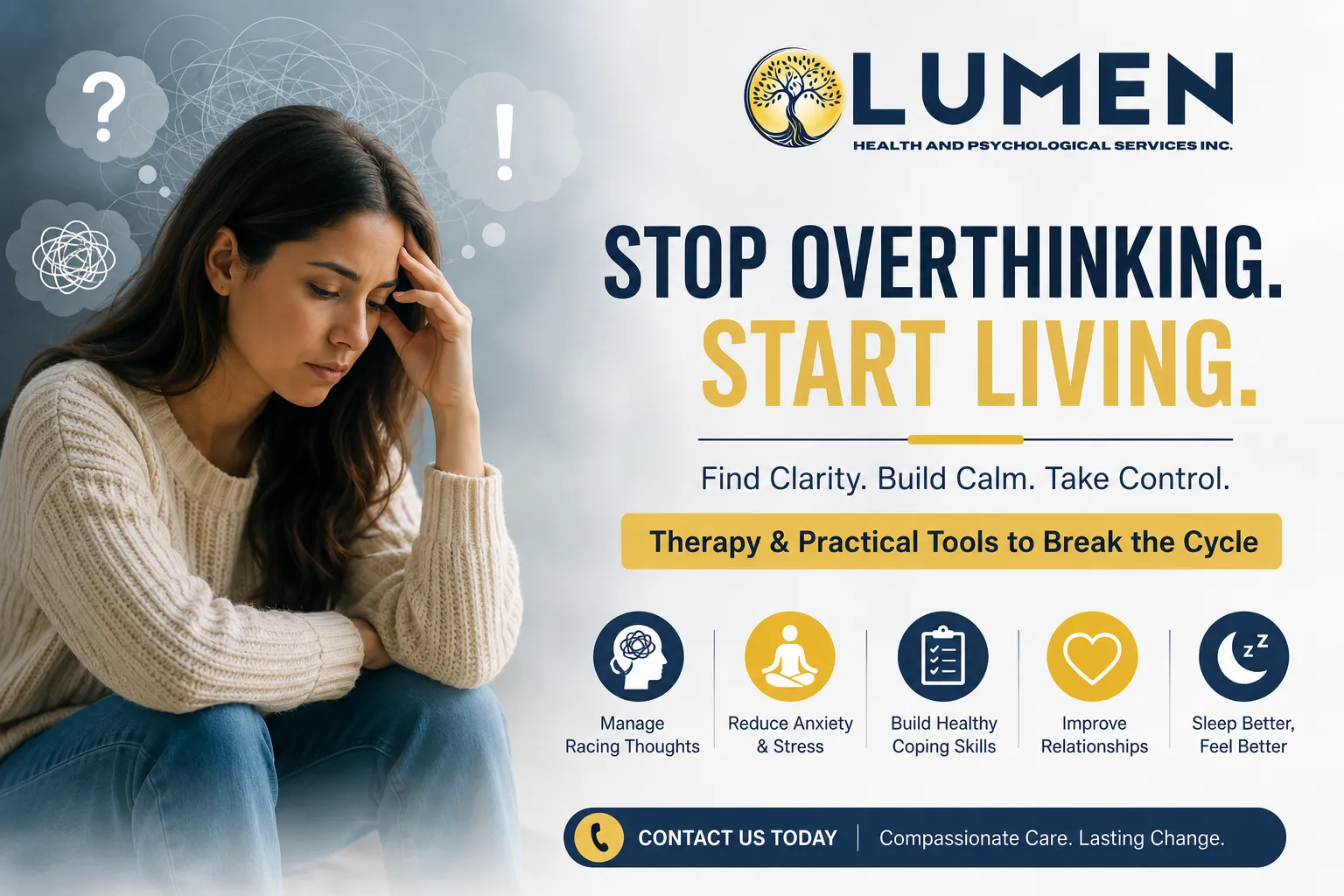

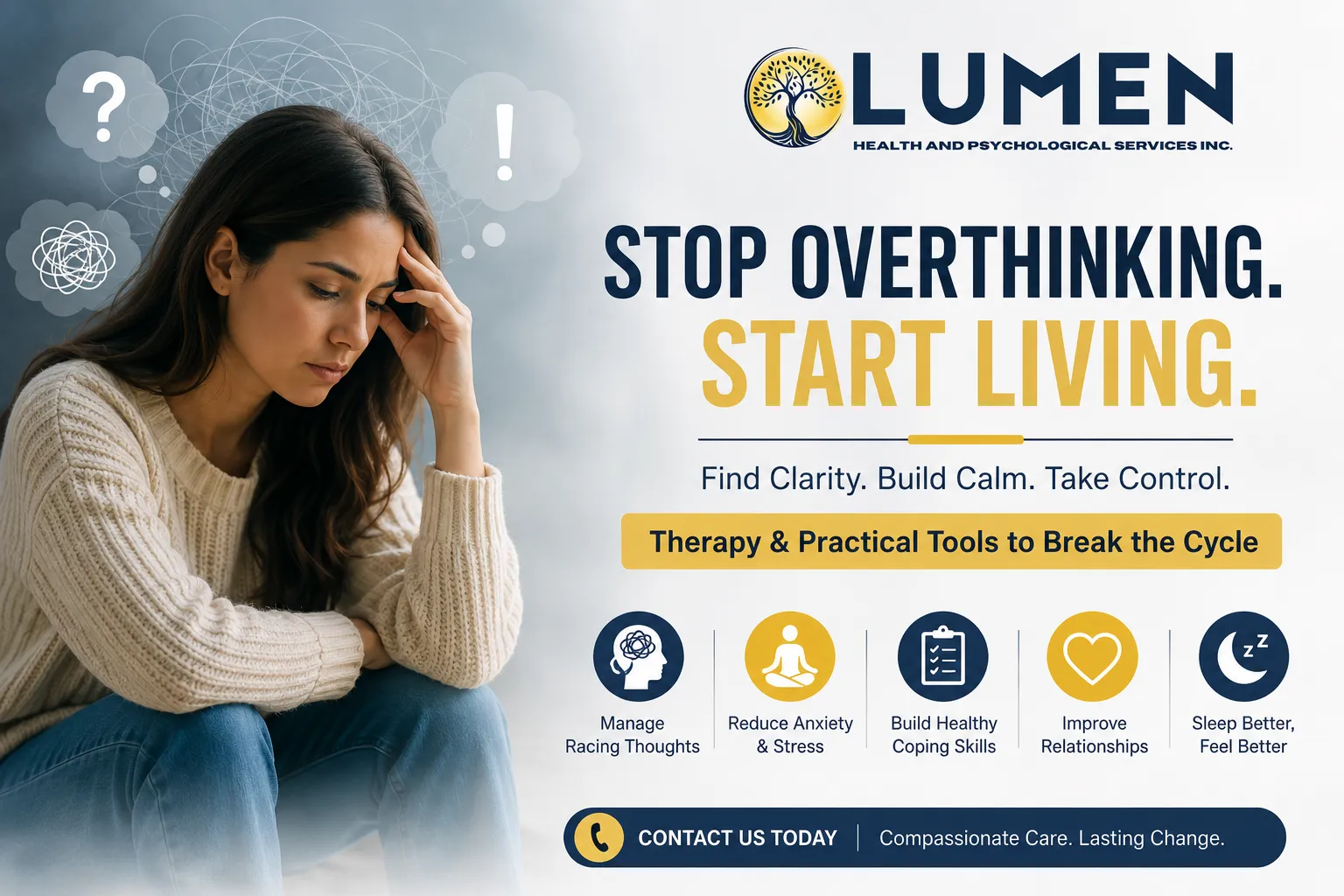
Overthinking is a pattern of repetitive thoughts that can leave you feeling mentally exhausted, increase anxiety, and make even simple decisions feel overwhelming. If overthinking is interfering with your daily life, working with a stop overthinking therapist can help you identify unhelpful thought patterns and develop healthier ways to respond. While everyone overthinks occasionally, persistent rumination often requires practical coping strategies and, in some cases, professional support.
What Is Overthinking?
Overthinking involves repeatedly analyzing situations, conversations, or future events without reaching a productive conclusion. It often includes replaying past experiences, worrying about possible outcomes, and imagining worst-case scenarios. Although overthinking itself is not considered a mental illness, it is closely associated with anxiety disorders, depression, obsessive-compulsive disorder (OCD), and chronic stress.
Common overthinking symptoms include:
- Constant worry about future events
- Difficulty making decisions
- Racing thoughts
- Trouble concentrating
- Sleep problems caused by repetitive thinking
- Increased stress and muscle tension
- Seeking constant reassurance
Recognizing these symptoms early can help prevent them from affecting your emotional well-being, relationships, and overall quality of life.
What Causes Overthinking?
Many factors contribute to chronic overthinking. Some people develop it after stressful life events, while others experience it alongside anxiety or perfectionism.
Common causes include:
- Generalized anxiety disorder
- Fear of failure or rejection
- Low self-esteem
- Perfectionistic thinking
- Traumatic experiences
- Chronic stress
- Relationship conflicts
- Major life transitions
Understanding what causes overthinking is important because treatment should address the underlying reason rather than only the thoughts themselves.
Eight Ways to Stop Overthinking
Many people search for the best way to stop overthinking, but lasting improvement usually comes from combining several evidence-based techniques.
1. Identify Thought Triggers
Notice situations, people, or emotions that trigger repetitive thinking. Awareness is the first step toward changing your response.
2. Challenge Unhelpful Thoughts
Ask yourself whether your thoughts are based on facts or assumptions. Cognitive restructuring, commonly used in Cognitive Behavioral Therapy (CBT), helps replace distorted thinking with more balanced perspectives.
3. Practice Mindfulness
Mindfulness teaches you to observe thoughts without becoming overwhelmed by them. Regular breathing exercises and stop overthinking meditation can reduce mental clutter and improve emotional regulation.
4. Set a Worry Time
Instead of worrying throughout the day, schedule 15–20 minutes to process concerns. This simple technique often reduces repetitive thinking.
5. Focus on Action
When possible, take one small step instead of repeatedly analyzing a problem. Action often decreases anxiety more effectively than continued thinking.
6. Limit Reassurance Seeking
Repeatedly asking others for reassurance may provide temporary relief but often strengthens overthinking over time.
7. Improve Sleep Habits
If you're wondering how to stop overthinking at night, establish a consistent bedtime routine, reduce screen time before bed, and avoid caffeine late in the day.
8. Seek Professional Support
Persistent overthinking may respond best to structured therapy sessions for overthinking, particularly when anxiety significantly affects work, relationships, or daily functioning.
Six Therapy Skills to Stop Overthinking Everything
Mental health professionals use evidence-based approaches to help individuals manage persistent rumination.
Cognitive Behavioral Therapy (CBT)
CBT helps identify automatic negative thoughts and replace them with realistic alternatives. It remains one of the best therapy for overthinking and anxiety options supported by research.
Acceptance and Commitment Therapy (ACT)
ACT teaches people to accept uncomfortable thoughts without allowing them to control behavior. Instead of eliminating thoughts, individuals learn psychological flexibility.
Mindfulness-Based Cognitive Therapy (MBCT)
MBCT combines mindfulness practices with cognitive strategies to reduce rumination and emotional distress.
Emotional Regulation Skills
Learning to identify and regulate emotions reduces the tendency to analyze every situation repeatedly.
Behavioral Activation
Taking meaningful action helps interrupt cycles of worry and promotes healthier coping patterns.
Problem-Solving Therapy
Rather than dwelling on every possibility, structured problem-solving encourages practical decision-making and reduces mental overload.
How to Stop Overthinking in a Relationship
Relationship anxiety often leads people to question conversations, intentions, or future outcomes repeatedly.
Helpful strategies include:
- Communicate openly instead of making assumptions.
- Avoid reading hidden meanings into every message.
- Focus on current facts rather than imagined scenarios.
- Set healthy personal boundaries.
- Work with a therapist if relationship anxiety becomes persistent.
Learning how to stop overthinking in a relationship often improves trust, communication, and emotional connection.
What Is the Best Type of Therapy for Overthinking?
There is no single treatment that works for everyone. The best type of therapy for overthinking depends on the underlying cause.
Research consistently supports:
- Cognitive Behavioral Therapy (CBT)
- Acceptance and Commitment Therapy (ACT)
- Mindfulness-Based Cognitive Therapy (MBCT)
- Dialectical Behavior Therapy (DBT) for emotional regulation
- Compassion-Focused Therapy for self-critical thinking
A licensed mental health professional can recommend the most appropriate treatment after a comprehensive assessment.
Can Online Therapy Help?
Yes. Online therapy for overthinking has become an effective option for many individuals. Virtual therapy offers access to licensed professionals, flexible scheduling, and evidence-based interventions comparable to in-person care for many anxiety-related concerns.
When Should You Seek Professional Help?
Professional support may be appropriate if:
- Overthinking interferes with daily life.
- Anxiety affects work or school performance.
- Sleep problems continue for several weeks.
- Relationships are suffering.
- Self-help strategies provide little improvement.
- You experience panic attacks or persistent emotional distress.
Finding a qualified therapist for overthinking can help address both the thinking patterns and any underlying mental health conditions contributing to them.
Conclusion
Overthinking is more than simply thinking too much—it can significantly affect emotional health, relationships, sleep, and overall well-being. Fortunately, evidence-based approaches such as CBT, ACT, mindfulness, and behavioral strategies can help break the cycle of repetitive thinking. Small, consistent changes often lead to meaningful improvements over time.
If you'd like to explore additional expert guidance, practical exercises, and therapy-informed techniques, the comprehensive resource from Lumen Health & Psychological Services Inc provides valuable information to help you better understand and manage persistent overthinking.
For personalized support and guidance tailored to your mental health needs, connect with our experienced team and explore available therapy options designed to help you develop healthier thought patterns and coping strategies.





























Sign in to leave a comment.