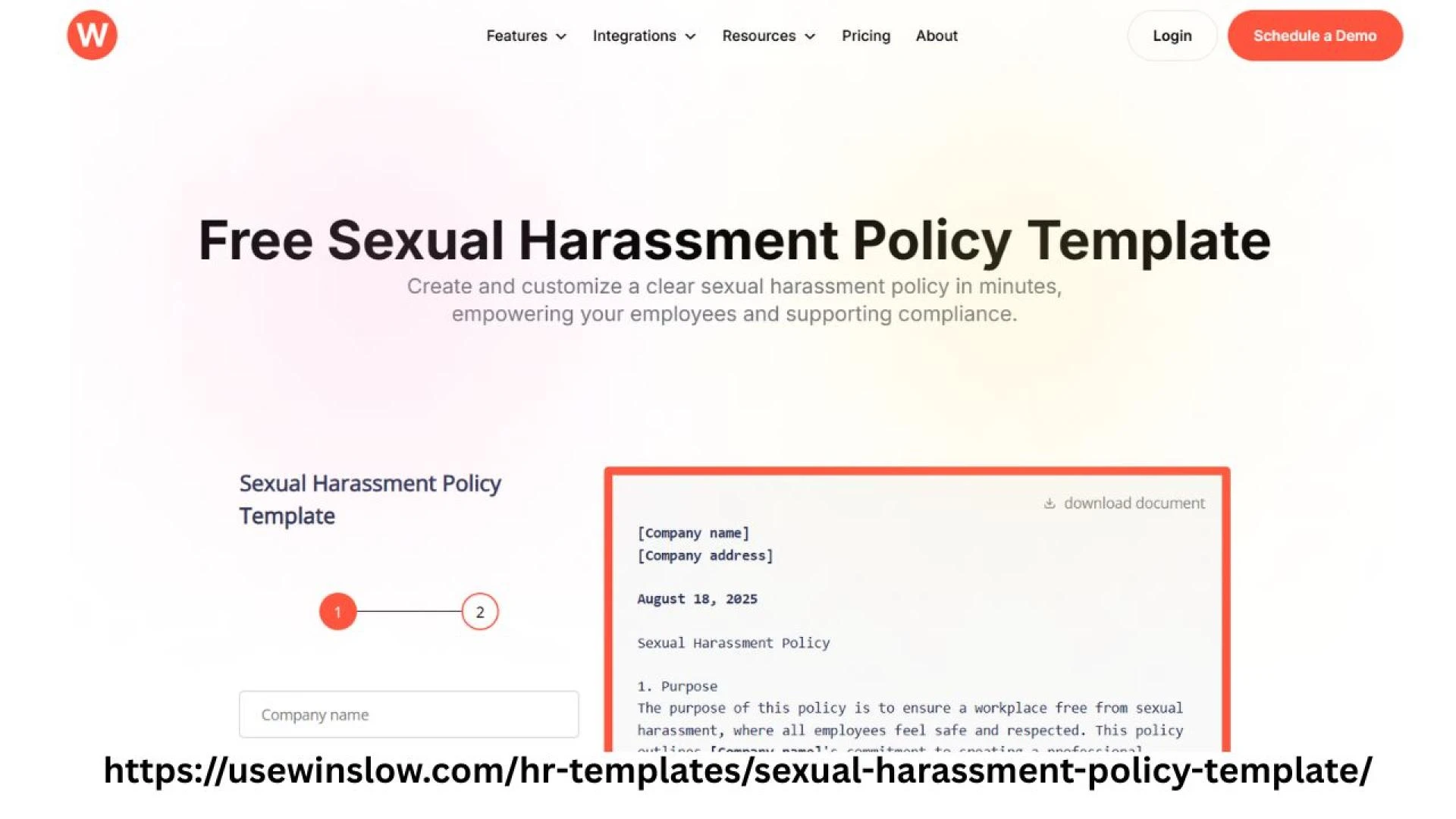

Creating a safe workplace is not just about following rules; it is about building an environment where employees feel respected and protected. A sexual harassment policy template is one of the most important tools an organization can use to achieve this. For HR teams, company leaders, and managers, such a template provides a clear structure that defines what harassment is, how employees can report it, and how the company will respond. Without this guidance, both employees and businesses face unnecessary risks, confusion, and possible harm to workplace culture.
A sexual harassment policy is more than just a legal requirement. It is a statement of values and a commitment to fairness. Employees want to know that their employer will support them if a problem arises. A sexual harassment policy template makes this possible by outlining expectations in simple terms. Winslow, which supports HR teams across different industries, encourages organizations to adopt these templates early so that safety becomes a built-in part of workplace culture, not an afterthought when something goes wrong.
At the heart of the policy is a clear explanation of harassment. Employees should understand exactly what behavior is unacceptable. Harassment can take many forms: inappropriate jokes, offensive comments, repeated unwanted advances, or physical contact that makes someone uncomfortable. Today, digital harassment is also a concern, as inappropriate messages can be sent over emails, chats, or workplace platforms like Slack and Teams. A sexual harassment policy template should address all of these possibilities to ensure employees know that harassment, in any form, will not be tolerated.
Reporting is another critical part of the policy. Employees must have confidence that they can raise concerns without fear of being ignored or punished. A sexual harassment policy template should include several reporting options so employees can choose what feels safest for them. Some may want to talk directly to HR, while others may prefer to go through a supervisor or an anonymous system such as a hotline or email address. Providing flexibility in reporting ensures that no one feels trapped or silenced. HR teams also benefit because they know exactly how complaints should be submitted, tracked, and managed.
Once a complaint is made, the organization’s response is what builds or destroys trust. A strong sexual harassment policy template will describe the investigation process in detail. This should include who will handle the case, how confidentiality will be maintained, and the expected timelines for resolution. Employees want reassurance that their complaint will not be dismissed or delayed. At the same time, fairness to all parties is important. The accused also deserves a fair process. By following consistent procedures, organizations show that they are serious about justice and respect.
Many employees are afraid to report harassment because they fear retaliation. They worry about losing opportunities, damaging relationships, or even losing their jobs. This fear must be addressed directly in the policy. A sexual harassment policy template should clearly state that retaliation of any kind is not allowed and will be treated as a serious violation. HR teams should be trained to watch for retaliation, which can sometimes be subtle, such as exclusion from meetings or sudden changes in responsibilities. Protecting employees against retaliation is one of the strongest ways to show that the company truly supports its people.
Communicating the policy is just as important as writing it. A policy hidden in a handbook will not make much difference. Employees should be introduced to the policy during onboarding, reminded of it in regular training sessions, and given easy access to it whenever needed. Using tools like Slack, Teams, Gmail, or Outlook, HR can share updates, answer questions, and keep the conversation alive. When employees see leadership consistently promoting and supporting the policy, it builds confidence that the rules will be enforced.
Workplaces are constantly changing, and policies must adapt too. A sexual harassment policy template should be treated as a living document that is reviewed regularly. Laws may change, workplace culture may shift, and new communication methods may create new challenges. Remote and hybrid work environments, for example, have introduced new ways for harassment to occur, such as video calls or direct messages. By updating the policy regularly, organizations ensure that it continues to meet modern needs. Winslow advises that HR teams revisit their sexual harassment policy at least once a year to keep it fresh and effective.
Training is another essential piece of the puzzle. A policy alone is not enough unless employees understand it and know how to apply it. Regular training sessions help employees recognize harassment, learn reporting options, and feel more comfortable taking action. Managers and supervisors, in particular, should receive special training because they are often the first people employees approach when problems occur. Training creates awareness, builds accountability, and reinforces the message that harassment has no place in the workplace.
Having a strong sexual harassment policy also strengthens a company’s reputation. Today, job seekers and clients look at workplace culture when choosing where to work or do business. A company that shows commitment to safety and respect stands out as a professional and ethical place. Employees are more likely to remain loyal when they feel supported, and new candidates are more interested in joining organizations with strong values. For small businesses, where every employee plays a vital role, this trust can directly impact productivity and success.
A sexual harassment policy is also a reminder that behind every rule and process are real people. Each incident represents someone who deserves respect, protection, and dignity. HR teams, managers, and leaders must apply the policy with empathy and fairness. While the sexual harassment policy template provides the structure, the human approach is what makes it effective. Winslow emphasizes that a policy should never feel like a formality but rather a promise to employees that their voices will be heard and their safety prioritized.
In conclusion, a sexual harassment policy template is an essential tool for any organization that wants to create a safe and respectful workplace. It defines what harassment is, explains how employees can report it, outlines the investigation process, and protects against retaliation. Communication, updates, and training make the policy stronger and more effective. By implementing and maintaining such a template, organizations reduce risks, build trust, and promote a culture of fairness. More importantly, they show employees that respect and protection are not optional but fundamental to the way the workplace operates. A sexual harassment policy template is not only a legal safeguard but also a foundation for a healthier, stronger, and more positive workplace.

























Sign in to leave a comment.