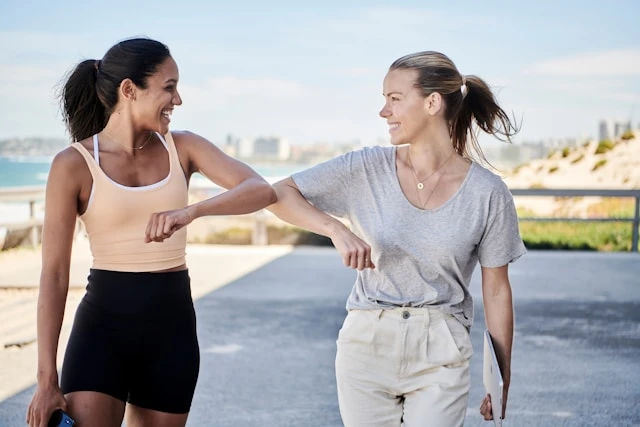

There’s a special kind of confidence that comes from moving your body outside: wind on your face, mud on your calves, a horizon you earned. For women, the benefits aren’t just feel-good—they’re profoundly physiological, mental, and social. Whether you’re stepping onto a paddleboard for the first time or plotting your first ridge walk, the outdoors can be a laboratory for wellbeing: building bone density, balancing stress, strengthening pelvic floors, and forging communities that last.
Below is your smart, health-savvy guide to getting started (or levelling up) in outdoor sport—designed for real life, real bodies, and real schedules.
Why the outdoors is different (in a good way)
Mind + mood: Natural light and green/blue spaces reduce stress reactivity, while rhythmic, steady-state efforts (walking, hiking, paddling) can lower baseline anxiety and improve sleep quality. Social movement—doing the thing with a friend or group—adds accountability and the oxytocin boost of shared challenge.
Metabolic magic: Low-to-moderate intensity sessions (the bulk of hiking and easy paddling) train your aerobic engine and support insulin sensitivity. Sprinkle in short, playful bursts (a hill push, a faster paddle interval) to keep VO₂ improving without wrecking recovery.
Musculoskeletal wins: Uneven terrain is a free balance board. Trails challenge foot and hip stabilisers; paddling recruits deep core and shoulder girdle without impact. For women across the life course—adolescence, pregnancy, postpartum, perimenopause—this variety is gold for joint health and coordination.
Training that respects your physiology
Cycle-aware planning (if you menstruate):
- Late follicular/ovulatory (energy often higher): Great window for harder hikes, steeper ascents, or learning a new skill on the water.
- Late luteal (when sleep and mood can dip): Favour steady efforts, mobility, and technique (e.g., foot placement on rocky paths, paddle stroke efficiency).
- During menstruation: Many feel fine at low–moderate intensity; others benefit from shorter, lower-impact sessions. Track your response and adjust.
Pelvic floor first: Breath-led core activation (exhale on effort), glute strength (bridges, step-ups), and progressive loading protect against leakage and back niggles. Postpartum? Start with gentle walking, diaphragmatic breathing, and short paddle or flat trail sessions—work up gradually, and consult a women’s health physio if you’re unsure.
Perimenopause & beyond: The trifecta is cardio + strength + impact. Hiking already gives you impact and cardio; add 2x weekly strength (squats, hinges, pushes, pulls) to support bone density, muscle mass, and hot-flush resilience. Cooler dawn or dusk sessions, hydration, and electrolytes help symptoms on warmer days.
Fuel, iron, and the “just eat later” trap
Women are disproportionately affected by iron deficiency, and low energy availability (not eating enough for your training load) can disrupt hormones and bone health.
- Before: Small carb + protein snack (banana + yoghurt; toast + nut butter) 30–90 minutes pre-session.
- During (60–90+ minutes): Water, plus simple carbs (dried fruit, chews) as sessions lengthen.
- After: Protein (20–30 g) within a couple of hours, plus carbs to replenish.
- Iron smart: Pair iron-rich foods with vitamin C; space coffee/tea away from iron-dense meals.
If your periods are heavy or you’re fatigued, dizziness-prone, or recovering slowly, ask your GP about checking ferritin and Hb.
Injury-smart by design
Feet & ankles: Start on mixed terrain; use lacing to tune fit; build calf and foot strength (calf raises, single-leg balance). Knees & hips: Glute med work (side steps, step-downs) supports alignment on descents. Trekking poles reduce knee load on big downhills. Shoulders (paddlers): Technique > brute force. A vertical paddle shaft, stacked hands, and torso rotation save shoulders and wrists.
Warm up with a five-minute “mobility snack”: ankle circles, hip CARs, thoracic rotations, and a few body-weight squats.
Start lines we love (and why)
If you’re new, pick sports with a gentle learning curve and a high joy-to-faff ratio.
- Stand-Up Paddleboarding (SUP): Calm-water SUP is low-impact, core-centric, and surprisingly meditative—ideal for all fitness levels and mixed groups. Explore beginner sessions and group days via adventuro’s paddleboarding hub. Look for sheltered venues, beginner-friendly boards (wider = more stable), and buoyancy aids provided.
- Hiking: From coastal paths to mountain ridges, hiking scales from easy to epic with minimal kit. Guided options add route-finding, safety, and skills (nav, pacing), especially if you’re new to UK terrain. Start browsing routes and guided days at adventuro’s hiking page.
Other brilliant entry points: gentle trail running, intro bouldering, coasteering in calm conditions, or kayaking on lakes and estuaries.
Safety, comfort, and kit (without buying the whole shop)
- Footwear: Trail shoes are fine for most low-level hikes; switch to hiking boots for rocky, wet, or multi-day routes.
- Clothing: Layer system (base/mid/shell). Avoid cotton; carry a light insulated layer even in summer.
- Essentials: Water, snacks, charged phone + offline map, small first-aid kit, sun protection, and a light waterproof. For SUP: leash, buoyancy aid, and venue/weather check.
- Buddy up: Tell someone your plan, or join a guided group—this adds skills, confidence, and community.
Community is your superpower
Women’s groups change the game: inclusive pacing, safer vibes, and a culture of cheering each other on. If you’re nervous about going alone, a women-led guided day removes the biggest hurdles—route choice, conditions, and “what if” anxiety—so you can focus on the experience. Many providers now offer women-only dates, postpartum-friendly options, and skills clinics designed around confidence and technique.
A seasonal playbook
- Spring: Skill up—navigation basics, footwork, paddle technique. Build volume gradually.
- Summer: Go longer: sunrise ridges, blue-hour paddles, multi-hour hikes. Manage heat with early starts, shade breaks, and electrolytes.
- Autumn: Strength phase begins; keep one longer outdoor day each week.
- Winter: Short, bright sessions; invest in waterproofs and a headtorch. Consider guided winter hiking if you’re mountain-curious.
When life happens
Periods, childcare, workloads, perimenopause… the calendar won’t always cooperate. Think modular training: 20–30-minute “movement blocks” (stairs + band work + brisk walk) on busy days, then a bigger outdoor session at the weekend. Consistency beats perfection—and the outdoors will be there when you need a reset.
Outdoor sport is not a personality you have to put on—it’s a relationship with your body and your landscape. It can be gentle or gritty, solo or social, meditative or ambitious. Start with something approachable like SUP or hiking, honour your physiology, fuel like you mean it, and choose communities that lift you up. The horizon will do the rest.
Ready when you are: discover beginner-friendly sessions near you on adventuro’s paddleboarding page and plan your next path with adventuro’s hiking hub.


























Sign in to leave a comment.