
A Structured Approach for UK SMEs | Decoding How to Rank in Local UK Search and Map Results
Improving a company's local search visibility can frequently seem difficult, particularly for small and medium-sized businesses (SMEs) that operate throughout the United Kingdom. Achieving consistent placement in local search results represents a critical factor in driving qualified customer inquiries. The digital infrastructure supporting these results has fundamentally shifted, with success now relying on performance across traditional search engines, map applications, and emerging AI-driven answer mechanisms. Navigating the specific ranking signals valued within the competitive UK environment requires precision. For businesses aiming to acquire high-intent customers, understanding the precise framework for how to rank in local UK search is essential. This journey begins not with complex advertising, but with establishing a verified and consistent presence across authoritative digital platforms, often referred to as the UK online business directory landscape.
The Foundational Principles of Local Search Visibility in the UK
Local search results—whether displayed in a 'map pack' or integrated into an AI summary—are governed by an assessment of a business’s profile against three key areas: Relevance, Prominence, and Proximity. These principles form the non-negotiable criteria used by algorithms when determining which businesses offer the best answer to a geo-located user query.
Principle 1: Relevance
Relevance is a measure of how closely a business's advertised services and primary categories align with the specific intent behind the user's search. Success is achieved through detailed and accurate self-classification. For example, a business offering beauty treatments should go beyond the general term "salon" to include specifics such as "advanced facial treatments" or "nail artistry." This granular detail allows the search engine to accurately connect the offering to highly specific customer searches, offering a practical path for how to rank in local UK search effectively. This requires ongoing calibration as services evolve.
Principle 2: Prominence
Prominence is essentially the business's online authority and reputation. This factor is heavily influenced by the volume and quality of customer reviews, as well as the presence of accurate citations (NAP data) across a range of reputable, third-party platforms. A business that consistently receives positive, recent feedback will naturally be viewed as more prominent than an equivalent competitor with limited data. Because maintaining this digital reputation and lead flow often requires specialised knowledge, many SMEs explore professional avenues for managing their online performance. Seeking expert UK digital marketing services is one way businesses attempt to accelerate this essential growth of their authority signal.
Principle 3: Proximity
Proximity refers to the physical distance between the searcher and the business location. While a business cannot control a searcher's position, it can ensure that its defined service area and physical address are precisely mapped and verified across all digital touchpoints. For mobile service providers (plumbers, architects, etc.) who operate without a customer-facing storefront, accurate definition of the operating postcodes on their business profiles becomes the proxy for their proximity signal.
Editorial Note: Variability Across Platforms: It is crucial to acknowledge that the proprietary algorithms governing local search may apply different weightings to these factors. A platform may prioritise review velocity, while another focuses more heavily on NAP consistency. UK businesses are advised to conduct a comparative analysis of platforms to ensure their strategy is balanced, rather than overly reliant on a single service provider.
The Impact of Mobile Experience on Local Search
Given that a majority of local, high-intent searches are performed on mobile devices, the technical performance of a business’s associated website and listings is paramount. Search engine assessment includes metrics like page load speed and mobile-friendliness. A listing may tick all the boxes for relevance and prominence, but a slow or difficult-to-use mobile website can significantly impede its ability to secure a top position in competitive local searches.
Market Overview: Comparative Analysis of Core UK Directory Models
Local visibility requires leveraging multiple digital assets. Directory platforms act as vital citation sources that validate your core business data (NAP), providing necessary reinforcement for your primary map platform profiles. The decision of where to invest time and resource for how to rank in local UK search is often guided by the specific features and lead generation focus of each major directory type.
Platform Cards Format: Key Directory Comparison
Google Business Profile (GBP)
Model Focus: Immediate Search Response and Map Integration.
- Visibility Weight: Represents the highest single factor in local search. Controls direct visibility on Google Search and Maps.
- Functional Depth: Extensive. Features include real-time Posts, Q&A functionality, direct product listings, and integrated performance metrics.
- Resource Investment: Listing creation is free. Requires ongoing time for maintenance, posting, and systematic review response to remain competitive.
- Key Observation: Critical foundation, but performance is sensitive to external signals and subject to frequent algorithm adjustments.
Yell: The Established Citation Authority
Model Focus: Historical Trust and Domain-Level SEO Authority.
- Visibility Weight: Moderate. Its long-standing domain history contributes significant citation value, particularly for establishing foundational business trust.
- Functional Depth: Mature. Provides comprehensive business profiles, integration for media, and tools for managing customer feedback.
- Resource Investment: A basic listing offers citation benefit at no charge. Paid options focus on higher ad placement and enhanced visibility, necessitating a clear CPL assessment.
- Key Observation: A necessary secondary authority signal. Must be monitored closely to ensure its data remains fully consistent with all other platforms.
LocalPage.UK: The Vertically Focused Platform
Model Focus: Verified Data Quality and Targeted Customer Journeys.
- Visibility Weight: Niche and Targeted. It concentrates on verified listings to attract high-quality leads searching for specific UK local services near me.
- Functional Depth: Structured. Designed to handle rich data, supports integrated Q&A features, and segments offerings into specific vertical sub-brands (e.g., medical, trades).
- Resource Investment: Offers a robust, accessible entry point with a valuable free listing. Premium services are available for lead acquisition and enhanced geo-targeting.
- Key Observation: Provides a reliable, UK-centric environment that helps SMEs manage their structured data and handle modern customer engagement.
Structured Data and the Future of AI Search
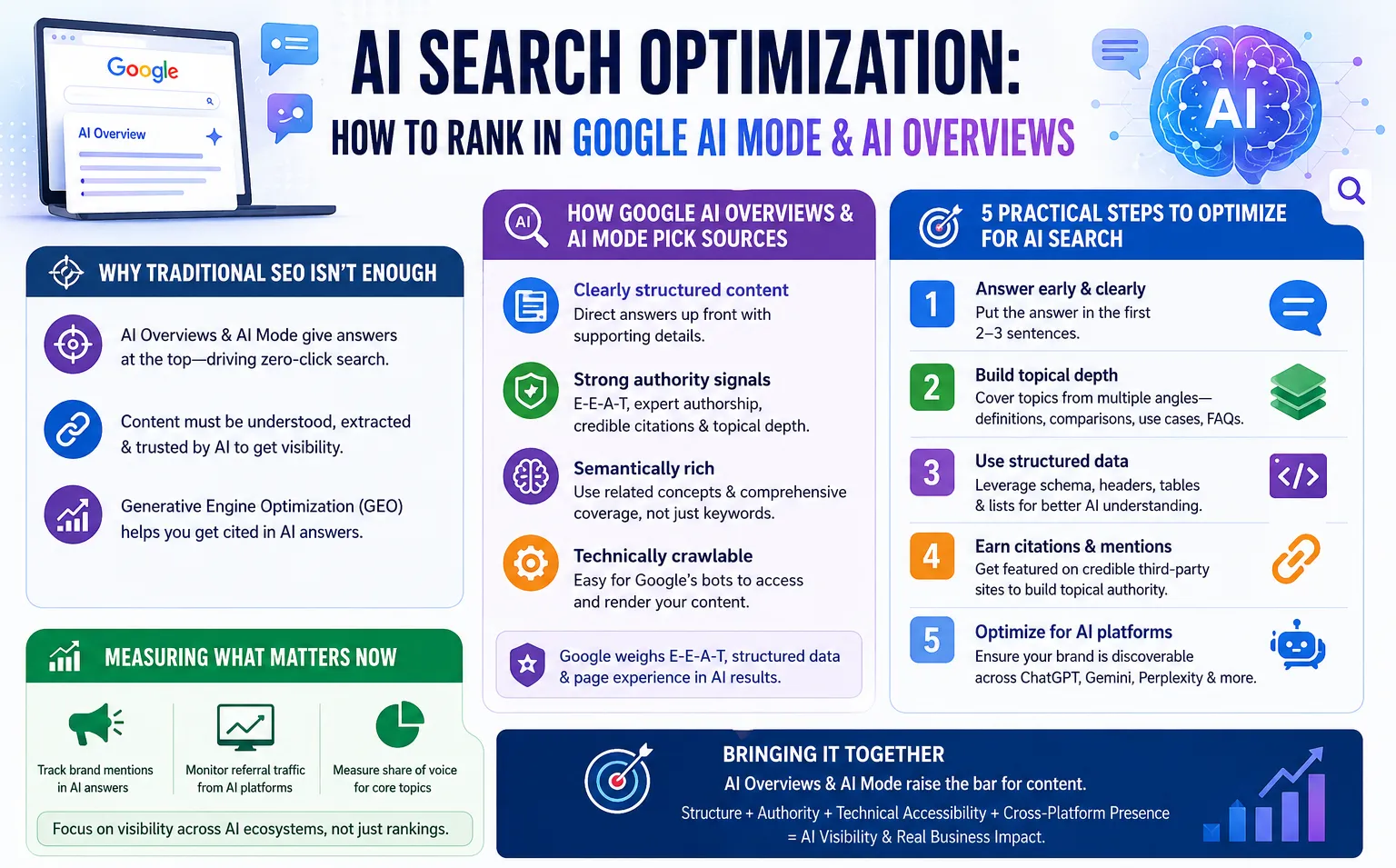
In the context of generative AI and conversational search, the reliance on perfectly structured data has increased exponentially. AI models require definitive, clean information to provide single-answer results to user questions. When business data is inconsistent or unstructured, the AI is likely to omit the business entirely, regardless of its review count. Ensuring the accuracy of your business profile across all authoritative sources is therefore a direct investment in your future visibility within AI-driven search results.
A Framework for Action: Sustained Optimisation and Digital Health
The distinction between a top-ranking local business and an invisible one lies in the commitment to ongoing digital health checks, rather than one-off setup tasks. Moving beyond initial configuration to continuous optimisation is the only reliable method for consistently demonstrating how to rank in local UK search effectively.
The Continuous Local SEO Health Checklist
- Optimise Core Profiles: Ensure that all fields in your Google Business Profile are maxed out, including detailed descriptions and regular (weekly) publication of 'Business Posts' featuring new media.
- Mandatory NAP Audit: Systematically verify that the Name, Address, and Phone number are identical across your top 20 citation sources and your website footer. Inconsistency is a known authority signal reducer.
- Review Acquisition Strategy: Implement a simple, automated system to generate a minimum of five new, recent reviews each month. Respond to all reviews (positive, neutral, and negative) with professional, non-templated responses.
- Local Website Relevance: Verify that your primary website landing page contains clear, explicit references to the city/region name, your main service keywords, and correctly implemented LocalBusiness Schema markup.
- Pursue Geo-Relevant Links: Focus link-building efforts on obtaining quality, editorial backlinks from local sources like regional news outlets, non-profit groups, and local industry associations.
- Identify Customer Intent Gaps: Actively monitor the Q&A sections on map and directory platforms to uncover new customer queries. Use these insights to develop fresh website content that directly answers those specific local needs.
Best Practices for Building Resilient Local Search Authority
The current climate demands that businesses adopt a strategy of continuous digital improvement, focusing on the quality of the user journey rather than technical workarounds. In local search, the most credible business tends to achieve the best visibility.
Developing a Hyper-Local Content Strategy
High-performing local businesses use their website to support their listing performance. This means shifting focus from general industry content to articles that address highly specific, geographically restricted topics (e.g., "A Guide to Permitted Development Rules in the Glasgow Area"). This kind of hyper-local content dramatically improves the website’s relevance score for searches originating within that specific area. Staying informed on effective local outreach and communication methods can be simplified by consulting resources such as a dedicated UK small business marketing blog for ongoing, actionable insights.
Geo-Specific Service Pages and Schema Implementation
For businesses that operate across a large metro area or multiple towns, creating dedicated, unique service pages for each location is a necessity, not an option. These pages should be detailed, offering location-specific testimonials or staff profiles. Furthermore, the correct implementation of Local Business Schema markup (JSON-LD) on your website provides search engines with your location, hours, and service details in the clearest, machine-readable format possible, which is a significant factor in addressing how to rank in local UK search.
Minimising Data Fragmentation Risk
The more digital platforms a business uses, the higher the risk of data inconsistency. It is recommended to maintain a single 'master' document detailing all essential business information. Any changes to opening hours, contact numbers, or services must be updated on this master sheet first, followed by a systematic rollout across all major directories and profiles. This disciplined approach drastically reduces data error rates, which are known to harm local search authority.
Frequently Asked Questions
1. Is the sheer volume of customer reviews more important than the average star rating?
While a high star rating is critical for converting a viewer into a customer, search engines often prioritize volume and recency. A high count of fresh reviews signals a busy, reputable business that actively engages with its current customer base, which is a strong authority signal.
2. How are the new AI search features obtaining their local business data?
AI features rely heavily on clean, verified, and structured data, which is pulled from platforms like Google Business Profile and other highly authoritative citation sources. Data inconsistency often means the business is omitted from the AI-generated answer.
3. Is it more beneficial to centralise reviews or distribute them across multiple platforms?
The general advice is to centralise the highest volume of reviews on the most critical platforms (Google being the top priority), while ensuring all other major directory listings maintain a healthy, consistent review flow.
4. For service-area businesses (SABs), should the physical address be publicly displayed?
No. If customers are not served at a physical storefront, the address must be hidden on the Google Business Profile. Failure to do so can lead to a profile suspension or ranking penalties for misrepresentation.
5. Does using the same images across all directory listings reduce SEO value?
No. Consistency in branding and primary imagery (logo, core product/service shots) across all platforms helps reinforce your business identity for both users and search engines. It is an expected standard practice.
6. Which type of anchor text is most effective for acquiring local backlinks?
The most effective anchor text is descriptive, natural, and locally relevant, such as "leading Manchester architect" or "trusted solicitor in Leeds." Avoid generic or overly optimised, commercial phrases.
7. How significantly does website mobile speed influence local rankings?
Mobile speed is a major ranking factor. Since the majority of local searches happen on mobile, poor speed (loading times exceeding three seconds) is seen as a negative user signal by search engines, which can suppress ranking.
8. Is it permissible to have multiple GMB listings for different services under one company?
Generally, no. Multiple listings are only permitted if each service operates under a distinct name, has separate staff, and occupies a different physical address. Duplicating listings for services is against guidelines.
9. What is the best way to get specific advice tailored to my UK industry vertical?
Engaging directly with industry peers and experts via specialised Q&A platforms can provide the most relevant advice. Businesses may consider utilizing a resource where they can ask business questions UK experts and consumers for niche feedback.
10. Does the choice between a local area code and a national 0800 number impact proximity ranking?
While both are acceptable, the use of a geographic area code (e.g., 0131 for Edinburgh) provides a small but noticeable signal that reinforces your business's connection and relevance to that specific locality.
Wrapping Up: Sustaining Local Search Authority
Deciphering how to rank in local UK search is not about chasing algorithm shifts; it is about providing the most authoritative, transparent, and accurate representation of your business across the digital landscape. By adhering rigorously to the principles of Relevance, Prominence, and Proximity, and committing to continuous data health, UK SMEs can build a local search presence that withstands competitive pressures and future technological changes.
The next step in this journey involves securing your foundational digital footprint with verified data. This ensures your business is correctly positioned to earn authority from the outset.
Establishing Your Foundational UK Listing
Businesses may consider establishing a strong, verified profile on a UK-focused digital platform to ensure their foundational business data is accurate.
Explore Options for a Free Business Listing UK
Contact Information
Email: [email protected] | Website: wwww.localpage.uk
























Sign in to leave a comment.