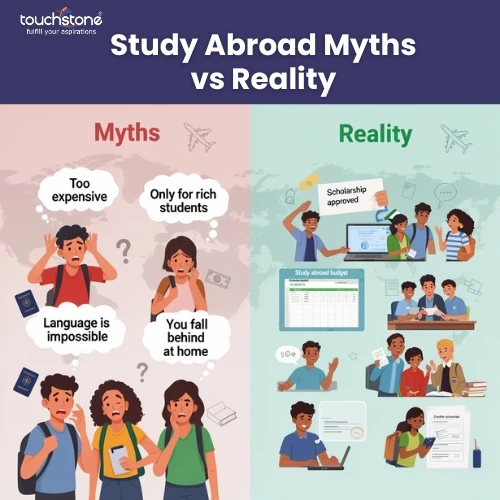

Dreaming of studying abroad? You're not alone. Thousands of students search "is studying abroad worth it" every month, but many hesitate because of widespread misconceptions. The truth about studying abroad is often buried under layers of myths that can either discourage genuine aspirants or create unrealistic expectations.
Let's separate fact from fiction and explore what international students actually experience when they pursue overseas education.
Myth 1: "Study Abroad is Only for the Rich"
Reality: This is one of the most common myths about studying abroad, especially among students from middle-income backgrounds. While studying abroad does require financial planning, it's far from being exclusively for the wealthy.
The reality of studying abroad for Indian students includes numerous scholarships for international students, financial aid programs, and education loans specifically designed for overseas education. Countries like Germany offer nearly free education at public universities, while nations like Canada and Australia provide generous scholarships that can cover up to 100% of tuition fees.
Additionally, part-time jobs for international students can significantly offset the cost of living abroad. Most countries allow international students to work 20 hours per week during semesters, which can cover rent and daily expenses.
Myth 2: "Language Barrier Will Make Everything Impossible"
Reality: Language barrier myths in study abroad situations are greatly exaggerated. Yes, English language requirements exist for most programs, but they're designed to ensure you can succeed academically—not to create impossible hurdles.
If you can read this article, you already have a foundation. Most universities offer language support programs, and many students improve their language skills within the first semester through immersion. The international students' experience typically includes language workshops, conversation clubs, and peer support systems.
For non-English speaking countries, many universities now offer programs entirely in English, particularly at the postgraduate level.
Myth 3: "You Need Perfect Grades to Study Abroad"
Reality: While good academic performance helps, study abroad facts reveal that universities evaluate holistic profiles. Your statement of purpose, work experience, extracurricular activities, and potential matter just as much as your GPA.
Many universities have pathways and foundation programs specifically designed for students who may not have stellar grades but show promise and determination. The studying abroad pros and cons aren't just measured in percentages—your passion, clarity of goals, and adaptability count significantly.
Myth 4: "Getting a Student Visa is Nearly Impossible"
Reality: Study abroad visa myths create unnecessary panic. Yes, student visa requirements can seem complex, but they're structured processes, not lottery systems.
The key is proper documentation and genuine intent. If you have an admission letter, proof of finances, and clear educational goals, visa approval rates are actually quite high for most countries. Many nations are actively welcoming international students and have streamlined their visa processes.
Working with experienced education consultants can demystify the process and significantly improve your application quality.
Myth 5: "Everyone Gets Lonely and Homesick"
Reality: Cultural adjustment abroad is real, but the study abroad expectations vs reality here is more nuanced. Yes, initial homesickness is common, but universities provide extensive support for student life abroad.
Most campuses have active international student communities, cultural organizations, mental health resources, and buddy programs. Today's technology means you're just a video call away from family. Many students find that the international students experience helps them develop independence, resilience, and lifelong global friendships.
Myth 6: "You Won't Get a Job After Graduation"
Reality: One of the biggest study abroad misconceptions students believe is that a foreign degree doesn't guarantee employment. The truth? Post-study work opportunities have expanded significantly.
Countries like Canada, Australia, the UK, and Germany offer post-study work visas ranging from 1-3 years. The ROI of studying abroad includes not just employment rates but also higher starting salaries, global networking, and enhanced career prospects.
Do students get jobs after studying abroad? Absolutely—but success depends on being proactive with internships, networking, and skill development during your studies, not just collecting a degree.
Myth 7: "You're Alone in a Foreign Country"
Reality: This is perhaps the most emotionally charged of the hidden challenges of studying abroad myths. The reality of part-time work while studying abroad, campus communities, and international student networks means you're never truly alone.
Universities offer accommodation for international students with built-in support systems. From orientation programs to student advisors, from alumni networks to cultural associations, there's an entire ecosystem designed to help you succeed.
The Real Hidden Challenges (That Nobody Talks About)
While debunking myths, let's address genuine challenges: managing study abroad expenses and budgeting, adapting to different teaching styles, handling time zone differences when calling home, and navigating bureaucratic processes. These are real but manageable with proper preparation and the right guidance.
Making Informed Decisions About Global Education Opportunities
Understanding study abroad myths and facts empowers you to make informed decisions. The truth about studying abroad is that it's challenging but achievable, expensive but manageable with planning, and life-changing when approached with realistic expectations.
Whether you're from a metro city or a tier 2-3 town, whether your parents support you or need convincing, whether you're a fresh graduate or a career switcher—international education is more accessible than ever.
Your Next Step Toward Overseas Education
Ready to separate myths from reality in your own study abroad journey? Touchstone Educationals has been helping students navigate the complexities of international education with honest counseling, comprehensive test preparation, and end-to-end support. We believe in setting realistic expectations while empowering you to achieve your global education dreams.
Remember: studying abroad isn't about escaping reality—it's about expanding it. Make your decision based on facts, not fears, and myths, not misconceptions.
Your global education journey starts with asking the right questions. What's yours?






















Sign in to leave a comment.