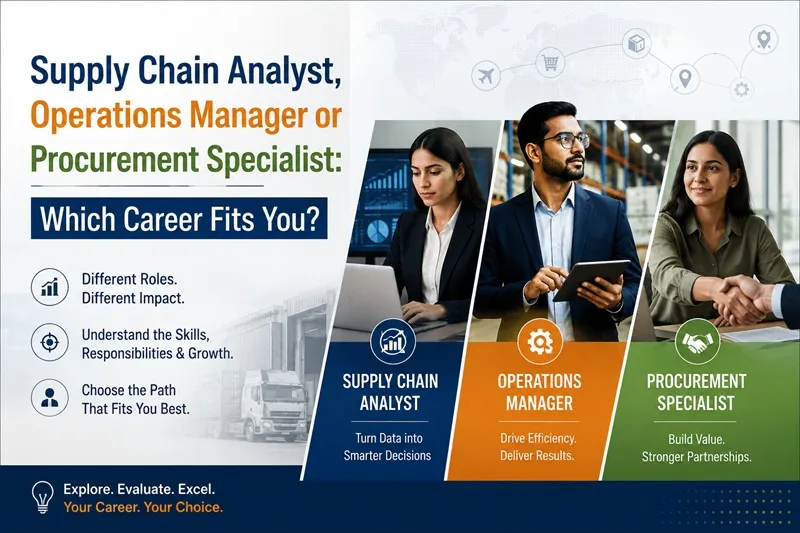

Modern businesses depend on people who can keep products, materials, suppliers and processes moving efficiently. Yet careers within this space are quite different. A supply chain analyst works heavily with data, an operations manager focuses on execution, while a procurement specialist manages sourcing and supplier decisions. Understanding these differences can help you choose a career direction before pursuing a PGDM in supply chain management.
What Does a Supply Chain Analyst Do?
A supply chain analyst uses data to understand how products and materials move through a business. The role involves identifying inefficiencies, monitoring inventory and helping teams make better planning decisions.
Typical responsibilities may include:
- Analysing demand and inventory data
- Tracking supply chain performance
- Supporting demand forecasting
- Identifying delays or bottlenecks
- Creating reports and dashboards
- Helping improve logistics and distribution
This role may suit you if you enjoy working with numbers, spotting patterns and solving problems through data.
What Does an Operations Manager Do?
Operations managers focus on how efficiently everyday business activities are performed. Their responsibilities vary by industry. A manufacturing company may focus on production and quality, while a retail or service business may prioritise fulfilment, productivity and customer experience.
The role requires coordination, decision-making and the ability to handle unexpected problems without losing sight of larger performance goals. Students interested in building these capabilities often explore a PGDM in operations management.
What Does a Procurement Specialist Do?
Procurement specialists help organisations obtain the goods and services required to operate.
Their work goes beyond finding the lowest price. A supplier also needs to meet expectations around quality, reliability, delivery and commercial terms.
Procurement professionals may evaluate vendors, compare quotations, negotiate agreements and monitor supplier performance. They also need to understand what happens when a critical supplier cannot deliver.
This career may appeal to you if you enjoy negotiation, relationship management and commercial decision-making.
How Are These Three Careers Different?
The easiest way to separate the roles is to look at the questions they answer.
A supply chain analyst asks: What does the data tell us, and how can we improve the flow of goods?
An operations manager asks: How can we run this process efficiently every day?
A procurement specialist asks: What should we source, from whom and under what terms?
In practice, these professionals often work together. A forecast from an analyst can influence procurement requirements, while supplier delays can affect an operations manager's plans.
Which Career Matches Your Strengths?
Consider the type of work that naturally interests you.
Choose supply chain analytics if: you enjoy numbers, forecasting, dashboards and identifying patterns.
Consider operations management if: you like coordinating people and processes, making quick decisions and improving execution.
Explore procurement if: you are interested in negotiation, suppliers, commercial terms and strategic sourcing.
Your first job does not necessarily determine your entire career. Experience across one function can also help you understand opportunities in another.
What Skills Should You Start Building?
All three careers require problem-solving and business understanding, but some skills are role-specific.
Supply chain analysts benefit from Excel, data visualisation, forecasting and analytical thinking. Operations professionals need process improvement, planning and people-management abilities. Procurement professionals require negotiation, supplier evaluation and cost awareness.
Communication matters across all three because decisions rarely happen in isolation.
Conclusion
Supply chain analytics, operations and procurement solve different parts of the same business challenge. Some professionals work with data and forecasting, others manage processes and execution, while procurement specialists focus on sourcing, vendors and commercial decisions. Understanding these differences early can help students choose a career path that matches their strengths.
Students interested in these areas can explore the PGDM in Operations and Supply Chain Management at Vivekanand Business School (VBS). The programme follows a 15-month classroom learning and 9-month internship structure, with subjects covering supply chain management, international logistics, supply chain analytics, resource optimisation, strategic sourcing, ERP, fulfilment centre management and operations analytics. It also includes practical exposure through live projects, plant visits, simulations and industry interactions, helping students understand how supply chain and operations roles work in real business environments.


























Sign in to leave a comment.