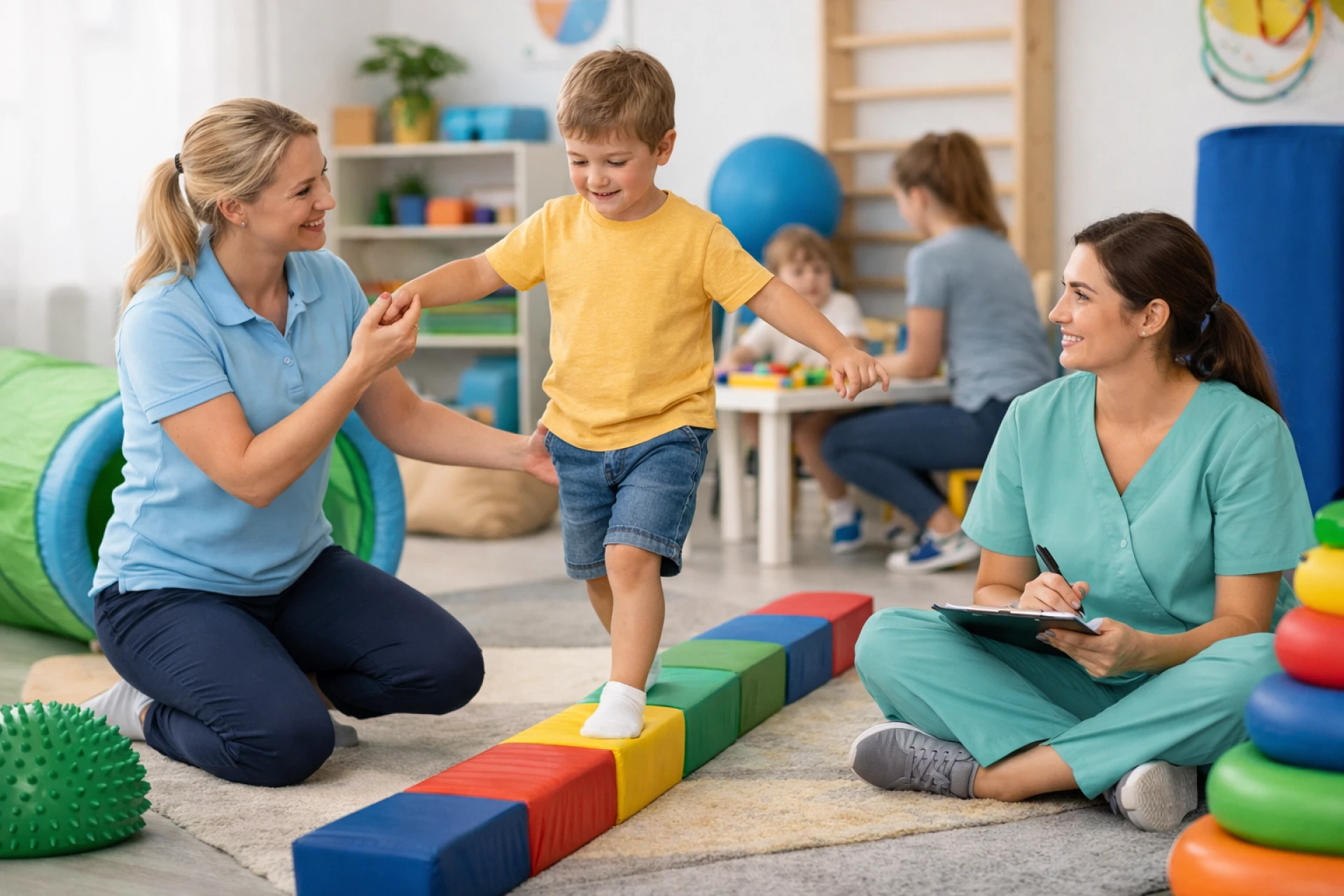

Child development is a complex and individual journey that unfolds over time. From learning to move and explore, to developing coordination, independence, and confidence, each child grows at their own pace. For many families, questions arise when development does not follow the expected path or when everyday tasks seem more challenging than anticipated. This is where allied health services play an important role in providing early childhood development support in a way that is informed, respectful, and responsive to each child’s needs.
Allied health professionals work alongside children and families to better understand development, identify strengths, and support participation in daily life. Two of the most commonly accessed services for children are paediatric physiotherapy and children’s occupational therapy. While these disciplines differ in focus, they often work collaboratively to support development across physical, functional, and participation-based areas.
Understanding child development in early years
Early childhood is a period of rapid growth and change. Skills related to movement, coordination, play, communication, and self-care are developing simultaneously. Development is influenced by many factors, including environment, health, opportunities for practice, and individual differences.
Some children may experience delays or differences in areas such as gross motor skills, fine motor skills, balance, coordination, or sensory processing. Others may have diagnosed developmental conditions or disabilities that affect how they engage with their world. In these situations, early childhood development support aims to provide guidance and strategies that align with the child’s abilities and everyday routines.
Rather than focusing solely on milestones, contemporary allied health approaches consider how a child participates in meaningful activities such as play, learning, and family life. This broader view helps ensure support is relevant and sustainable.
The role of paediatric physiotherapy
Paediatric physiotherapy focuses on how children move and use their bodies. This includes posture, strength, balance, coordination, and physical endurance. Physiotherapists with training in child development understand how movement skills evolve and how physical challenges can affect participation.
Paediatric physiotherapy may support children who experience difficulties with activities such as running, jumping, climbing, or maintaining balance. It can also assist children with neurological, genetic, or developmental conditions that influence movement patterns.
Assessment in paediatric physiotherapy is typically play-based and age appropriate. Observations, standardised tools, and parent discussions help build a clear picture of how a child moves in different environments. From there, support strategies may include guided play activities, movement-based exercises, and ideas for incorporating skill practice into everyday routines.
Importantly, paediatric physiotherapy does not aim to push children toward a single outcome. Instead, it supports gradual skill development that fits within the child’s abilities, interests, and family context.
The role of children’s occupational therapy
Children’s occupational therapy focuses on enabling participation in daily activities that are meaningful to the child and their family. These activities may include self-care tasks, play, learning, and social interaction.
Occupational therapists consider how physical skills, sensory processing, emotional regulation, and environmental factors influence a child’s ability to engage in everyday life. Children’s occupational therapy may support areas such as fine motor skills, hand strength, coordination, sensory processing, attention, and independence in daily routines.
Assessment often involves observing how a child interacts with tasks and environments, as well as discussing family goals and priorities. Support strategies are then tailored to the child’s needs and may include activity adaptations, skill-building tasks, and environmental modifications.
Children’s occupational therapy recognises that small changes in routines or environments can make a significant difference to participation and confidence.
Why early childhood development support matters
Early childhood development support is most effective when it aligns with a child’s everyday life. Rather than isolated therapy sessions, best practice focuses on building skills through meaningful activities that occur naturally within family routines, early learning settings, and play.
Providing support early allows families to better understand their child’s development and feel confident in how to encourage skill growth. It can also help identify when additional supports or referrals may be beneficial.
Early childhood development support does not guarantee specific outcomes, as each child’s developmental pathway is unique. However, it can offer families clarity, practical strategies, and reassurance during times of uncertainty.
A family-centred approach to allied health
Family-centred practice is a core principle across allied health services. Families know their child best and play a central role in supporting development. Allied health professionals work collaboratively with families to set goals that reflect what matters most in daily life.
This approach values listening, shared decision-making, and flexibility. Support strategies are designed to fit within family routines rather than adding unnecessary burden. When families feel heard and supported, they are more likely to feel confident in applying strategies over time.
In paediatric physiotherapy and children’s occupational therapy, family involvement may include learning ways to encourage movement during play, adapting tasks to suit the child’s abilities, or understanding how environmental changes can support participation.
Collaboration across environments
Children develop skills across multiple environments, including home, childcare, school, and community settings. Effective early childhood development support considers how strategies can be applied consistently across these spaces.
Allied health professionals may collaborate with educators, carers, and other health professionals to ensure shared understanding and aligned support. This collaborative approach helps reduce confusion and promotes consistency for the child.
When paediatric physiotherapy and children’s occupational therapy services work together, they can address both movement and functional participation in a coordinated way. This collaboration supports a more holistic understanding of the child’s needs.
Supporting participation rather than perfection
A key principle in contemporary allied health practice is focusing on participation rather than perfect performance. Children benefit from opportunities to engage in activities that are meaningful and enjoyable, even if tasks look different from peers.
Paediatric physiotherapy and children’s occupational therapy both support this philosophy by adapting activities and environments to reduce barriers. This may include modifying tasks, using assistive equipment, or breaking activities into manageable steps.
By prioritising participation, early childhood development support encourages confidence, resilience, and enjoyment, which are essential for long-term learning and wellbeing.
When families may seek allied health support
Families may consider allied health services when they notice differences in their child’s development, receive feedback from educators, or feel unsure about what is typical. Others may seek support following a diagnosis or recommendation from another health professional.
There is no single reason or correct time to seek paediatric physiotherapy or children’s occupational therapy. Each family’s situation is unique, and accessing information can help guide decision-making.
Early childhood development support is not limited to children with diagnoses. Many families seek guidance to better understand development and explore ways to support skill growth in everyday contexts.
Looking ahead
Child development is not a linear process, and progress can look different for every child. Allied health services aim to support children and families through this journey with knowledge, empathy, and practical strategies.
Paediatric physiotherapy and children’s occupational therapy contribute valuable perspectives on movement, function, and participation. When provided within a family-centred, collaborative framework, early childhood development support can help families feel informed and supported as their child grows and develops.
By focusing on meaningful activities, respecting individual differences, and working alongside families, allied health professionals play an important role in supporting children to engage with their world in ways that feel achievable and rewarding.




























Sign in to leave a comment.