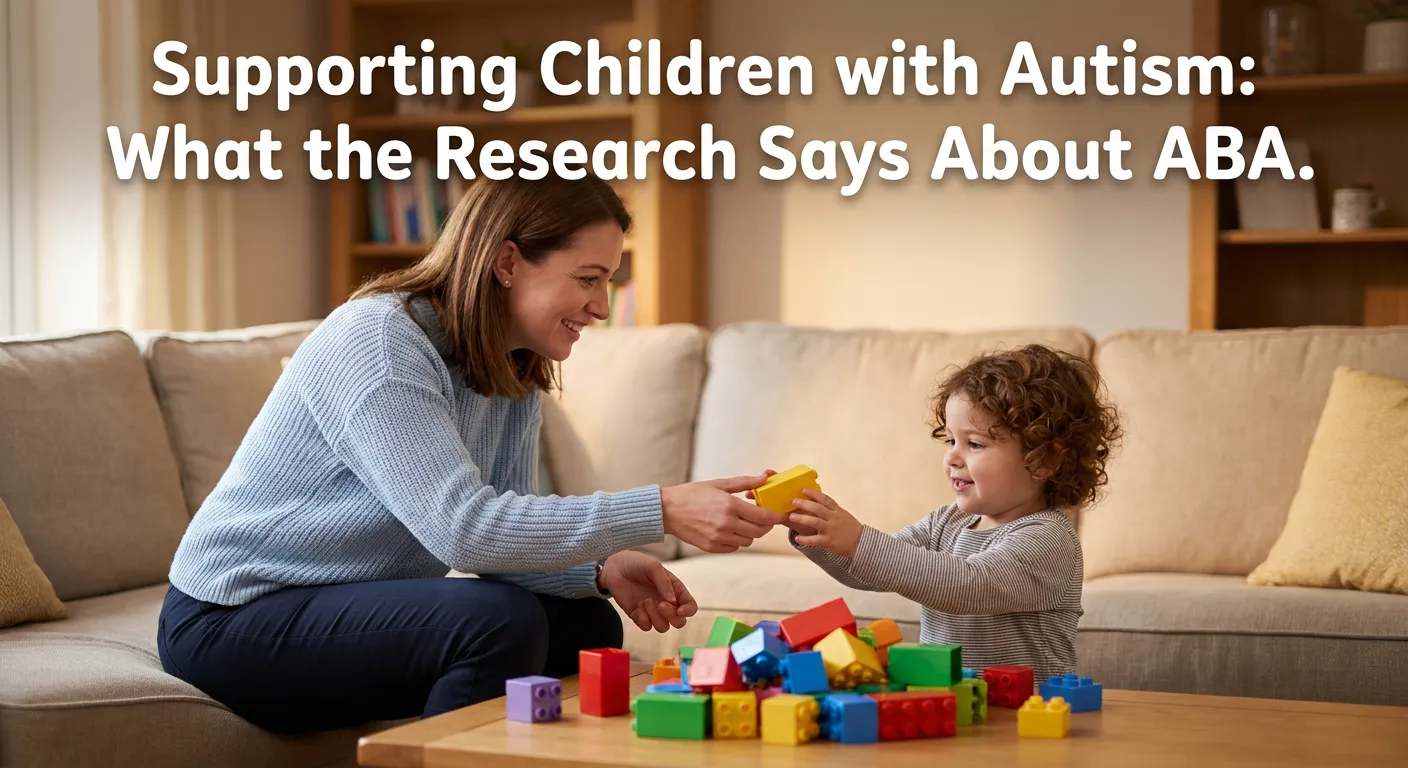

When families begin exploring treatment options for a child newly diagnosed with autism spectrum disorder, they quickly encounter the term ABA — applied behavior analysis. The volume of information online can be overwhelming, and not all of it is equally reliable. Here's a grounded look at what the evidence actually shows.
A long research history
Applied behavior analysis has been studied in the context of autism treatment for more than five decades. The foundation of the approach was laid in the 1960s and 1970s, with early researchers demonstrating that structured behavioral techniques could teach children with ASD skills they had previously struggled to acquire.
Since then, hundreds of peer-reviewed studies have examined ABA's effectiveness across a wide range of skills and age groups. Major health organizations — including the American Academy of Pediatrics and the US Surgeon General — have recognized ABA as an evidence-based treatment for autism.
What the evidence supports
Research shows consistent gains in communication and language skills, social interaction, adaptive daily living skills, and reduction of challenging behaviors when ABA is delivered with appropriate intensity and individualization. The strongest evidence applies to early intensive intervention programs for young children, though research also supports ABA-based approaches for older children and adolescents.
It's worth noting that "ABA" encompasses many specific techniques and program models. The quality and effectiveness of a given program depends heavily on the clinical team, the individualization of the plan, and the involvement of caregivers.
What modern ABA looks like
ABA has evolved considerably from its earlier forms. Contemporary ABA programs emphasize naturalistic teaching — using everyday routines and the child's own interests to create learning opportunities — alongside more structured skill-building activities. The focus is on meaningful, generalized outcomes rather than rote compliance.
Most modern providers also include a significant caregiver training component, reflecting research showing that skills learned in therapy transfer more reliably when families reinforce them at home.
Things to keep in mind when evaluating claims
ABA is not a cure for autism, and no ethical provider should suggest otherwise. It's a framework for teaching skills and supporting development. Progress varies between children, and factors like diagnosis severity, starting age, and program intensity all influence outcomes.
When evaluating providers, look for transparency about how progress is measured and how programs are adjusted when goals aren't being met. A data-driven approach is one of ABA's core features — families should be able to see their child's progress in concrete, trackable terms.
For families in the Denver area who want to see how research-grounded ABA is applied in a real clinical setting, this article links to more information about Cedar Grove ABA's approach and the services they offer to Colorado families.
Choosing the right fit
The research supports ABA, but the right provider matters enormously. Look for board certified behavior analysts in clinical leadership roles, ask about supervision structures, and pay attention to how well the program is individualized to your child's specific goals. A quality ABA provider welcomes detailed questions — it's a sign they're confident in their clinical model and committed to transparency with families.































Sign in to leave a comment.