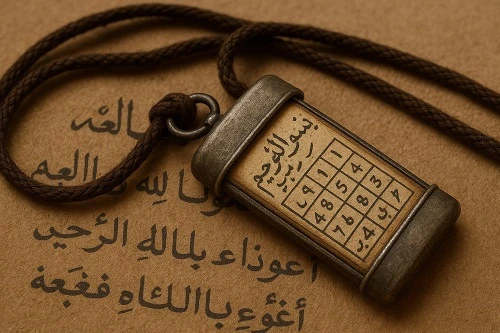

In South Asian Muslim contexts, the term taweez refers to a written amulet containing Qur’anic verses, divine names, supplications, or numerological grids intended to confer protection or facilitate desired outcomes. Within this broader category, “love taweez” denotes talismanic objects specifically oriented toward intimate and relational aims: increasing affection between spouses, easing marriage negotiations, reconciling estranged partners, or reducing interpersonal tension. These uses appear in traditional Hanafi-leaning advisory literature and are discussed in contemporary fatwa portals, where scholars differentiate between permissible textual amulets and prohibited practices involving non-Islamic symbols or claims of autonomous magical power.
London Pakistani diaspora: where practices live
London hosts one of the largest Pakistani populations outside South Asia, with significant concentrations in boroughs such as Redbridge, Newham, Waltham Forest, Brent, Ealing, and Hounslow, according to UK Census 2021. These neighbourhoods form dense social, linguistic, and religious corridors where Urdu, Punjabi, Pashto, and Mirpuri speakers maintain transnational networks tied to Pakistan’s Punjab and Azad Kashmir regions. Within these areas, the circulation of taweez, including love-oriented talismans often follows existing communal infrastructures: mosques aligned with Barelvi/Sufi traditions, informal spiritual advisors, family-based trust networks, and South Asian retail clusters.
Two spatial settings are especially relevant.
First, East London’s Green Street–Ilford corridor, where small Islamic bookstores, jewellery shops, and perfumeries sell silver lockets, black-thread pouches, and pre-written amulets. These venues commonly offer discreet referrals to a pir or khalifa who prepares personalized taweez for relational issues such as marital conflict or stalled marriage proposals. Second, West London’s Southall–Hounslow axis, characterized by multigenerational Pakistani households and strong links to Sufi-oriented community centres. Here, taweez work is often domestically embedded: mothers or elder sisters store folded taweez inside wardrobes, stitched pouches under mattresses, or small waterproof packets in handbags, reflecting inherited South Asian household practices.
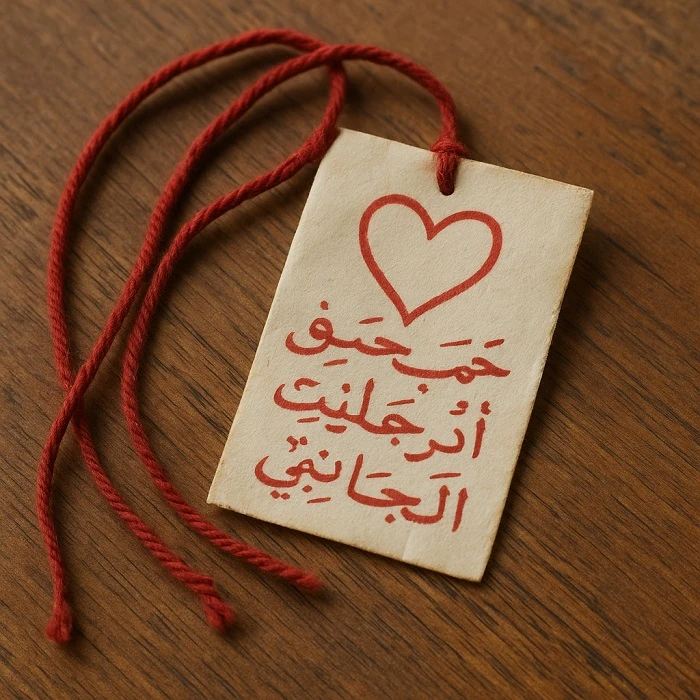
Sufi mediation and transnational ties
The circulation of love taweez among London’s Pakistani migrants cannot be understood without tracing the Sufi genealogies that structure religious authority across Pakistan–UK networks. Much of the Pakistani diaspora in Britain originates from Punjab and Azad Kashmir, regions where Barelvi-aligned Sufi orders (notably Qadiri, Chishti, and Naqshbandi branches) maintain strong devotional cultures centred on pirs, shrines, and hereditary spiritual lineages. These networks did not dissolve after migration; rather, they re-anchored themselves in the UK through community centres, travelling shaykhs, and lay representatives.
A key mechanism is the khalifa system, whereby a pir designates trusted disciples to provide guidance, recitation schedules, and where locally accepted written taweez. Families in London often rely on a khalifa who traces his instruction back to a Sufi teacher in Pakistan. A common example is the network around Ghamkol Sharif, whose British branches organise gatherings, dhikr sessions, and offer spiritual counsel. While these institutions do not centrally promote talismanic commerce, individual members of such networks are frequently consulted for wazifa (recitation routines), dam (breath-blessing over water), and amulet preparation for intimate and relational concerns.
Migrants often request a taweez from Pakistan via relatives, believing the script prepared “back home” carries more baraka (blessing) due to proximity to shrines or scholars. This practice reflects a wider South Asian pattern: spiritual efficacy is imagined as tied to lineage, geography, and devotional purity rather than to the commercialised settings sometimes found in British retail districts.
At the same time, London’s religious pluralism produces internal tensions. Deobandi and Salafi-influenced mosques typically discourage amulets, while Sufi-oriented communities frame them as permissible. The result is not doctrinal uniformity but a layered religious marketplace, where migrants navigate multiple overlapping authorities.
Normative debates: permissibility vs. shirk
Debates surrounding love taweez within London’s Pakistani diaspora reflect a well-established theological divide across contemporary Sunni Islam. In mainstream Hanafi and Barelvi-leaning environments, amulets containing Quranic verses, Prophetic supplications, or the Names of God are generally considered permissible when used with the understanding that efficacy belongs solely to God, and the taweez serves as a vehicle for invoking divine protection or harmony. Scholars in these traditions often cite early juristic discussions permitting written supplications, provided the content is exclusively Islamic and free of symbols or formulas associated with pre-Islamic magic. Many Pakistani families in London align with this permissibility framework.
In contrast, Deobandi reformist voices tend to be more cautious, emphasising the risk of crossing into practices that resemble talismanic magic, even when the text is Quranic. Their concern centres on intention, potential misuse by unqualified practitioners, and the blurring of boundaries between devotional writing and magical thinking. Meanwhile, Salafi-influenced perspectives adopt a stricter position: amulets are discouraged or outright condemned on the grounds that they can lead to shirk (associating partners with God) by attributing power to a physical object.
These doctrinal differences produce practical consequences in London. In a single extended family, one branch may quietly encourage a folded script placed inside a silver locket “for reconciliation,” while another insists that prayer alone should be used. Younger Muslims exposed to reformist teaching on YouTube may challenge their parents’ reliance on talismans, creating generational tension around what counts as legitimate Islamic practice.
Materiality of love taweez: objects, inks, carriers
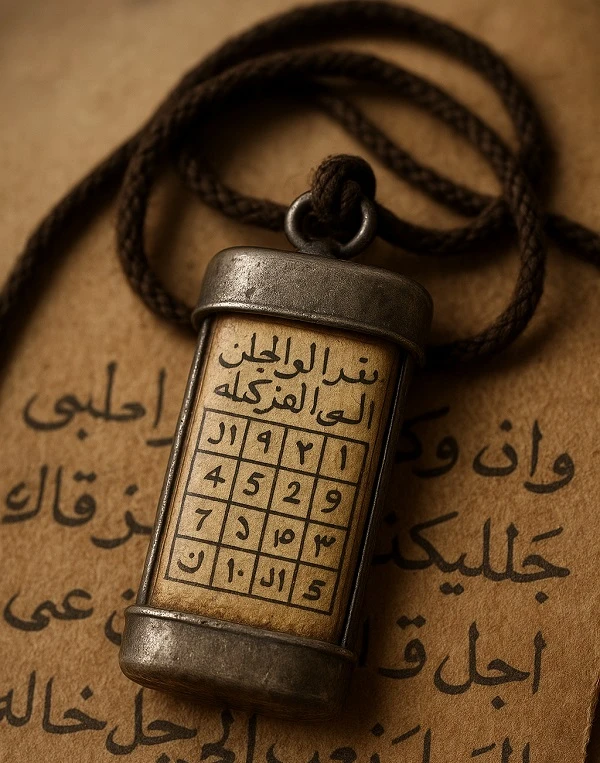
The material form of a love taweez is central to how migrants in London perceive its efficacy, legitimacy and intimacy. Most talismans begin as handwritten scripts on thin beige or off-white paper, folded multiple times into compact rectangles. Practitioners commonly use black waterproof ink or blue fountain ink, while more traditional South Asian recipes may incorporate saffron diluted in rose water for writing Qur’anic verses or divine names - an approach associated with purity rather than magical potency. In London, khalifas working within Sufi networks often retain the conventional black ink style, considering it practical and discreet.
Love-oriented taweez frequently include:
– short Qur’anic verses related to mercy, tranquility, or reconciliation;
– Asma ul-Husna written in grid patterns;
– numeric squares (abjad-based), which some communities treat as cultural inheritance rather than supernatural numerology;
– supplication formulas invoking affection or easing conflict.
Once prepared, the paper is sealed inside a protective carrier. Three types dominate in London:
1. Silver lockets - sold in South Asian jewellery shops in Ilford, Green Street, Southall, and Hounslow;
2. Stitched leather pouches attached to a black cotton thread, worn under clothing;
3. Plastic-laminated packets designed to withstand moisture, kept inside handbags, wardrobes, or under pillows.
Use-cases typology with vignettes
Among London’s Pakistani migrants, love taweez appear in several recurring relational scenarios. These uses are not merely “magical requests” but culturally structured strategies for navigating emotional uncertainty, family expectations, and social constraints. Four dominant patterns emerge.
1) Premarital attraction and parental consent
Young adults often seek a taweez when relationships unfold in the grey zone between personal choice and family approval. A common pattern involves a couple who met at university, but the woman’s parents remain hesitant. In such cases, an aunt or elder sister discreetly consults a khalifa. The taweez is worn under clothing, while the family performs a short wazifa aimed at “softening hearts.” This practice acts less as coercion and more as a culturally sanctioned attempt to harmonize competing expectations.
2) Post-conflict marital reconciliation
Married couples use taweez when communication breaks down or when extended families exert pressure. The object is paired with dam (breath-blessing over water), shared between spouses at night. The symbolic message: the marriage is worth repairing, but external emotional support is needed.
3) Protective overlap: jealousy and the evil eye
Love taweez often coexist with nazr/evil-eye concerns. Women may place a taweez inside a wardrobe or bedframe to shield the relationship from gossip or envy.
Gendered labor of procurement and secrecy
The circulation of love taweez within London’s Pakistani diaspora is shaped by gendered patterns of labour, responsibility, and discretion. Although both men and women may wear or keep the talisman, the procurement process is heavily feminised. Mothers, elder sisters, and married aunts typically act as intermediaries who identify trustworthy practitioners, negotiate instructions, and manage follow-up communication. Their involvement reflects long-standing South Asian assumptions that women are custodians of domestic harmony and bear moral responsibility for maintaining relational stability.
Men participate, but often in more limited or symbolic ways. Younger men may accept a taweez framed as protection - a socially safer category rather than acknowledging it explicitly as a love-oriented object. By contrast, young women often treat the taweez as a relational tool, combining it with recitations, discreet prayers, or emotional self-regulation practices shared intergenerationally.
Secrecy plays a crucial role. Because of doctrinal controversy and fear of being judged as “superstitious,” many families keep taweez use confined to the private sphere. Women are the primary managers of this discretion: they hide pouches in inner compartments of handbags, behind folded clothes, or between mattress layers. Men, when involved, usually carry the talisman under clothing or store it in workplace lockers to avoid attracting scrutiny from peers.
The platform turn: digital taweez markets
Digital platforms have reshaped how Pakistani migrants in London access love taweez, creating a dispersed, semi-anonymous online religious marketplace that operates across borders. Urdu-, Hindi-, and Punjabi-language websites optimised for search terms such as “mohabbat ka taweez,” “love problem solution,” and “rishta issues wazifa” dominate South Asian search results. These sites typically offer standardised scripts, downloadable amulets, or paid remote consultations. Many explicitly target UK-based users, referencing British time zones and providing WhatsApp contact buttons for “urgent cases.”
On Facebook, hundreds of public and semi-private groups circulate posts from self-described pirs and amil practitioners offering solutions for marital conflict, relationship breakdown, or unreciprocated affection. Visual patterns are consistent: green-and-gold Qur’anic motifs, before/after narratives, testimonials written in Urdu, and QR codes for direct messaging apps. Although families in London rarely purchase talismans directly through group posts, these spaces serve as informational hubs, allowing migrants to compare practitioners, read user comments, and triangulate reputations.
YouTube further amplifies taweez visibility. Urdu and Pashto-speaking preachers provide daily wazifa routines, step-by-step recitation guides, and live-streamed advice sessions. Viewers across the UK interact via comments, creating transnational micro-communities around shared emotional concerns. For some migrants, these channels offer a way to bypass local gatekeepers and obtain guidance without revealing personal issues to family members.
Ritual mechanics: timing, breath, and recitation
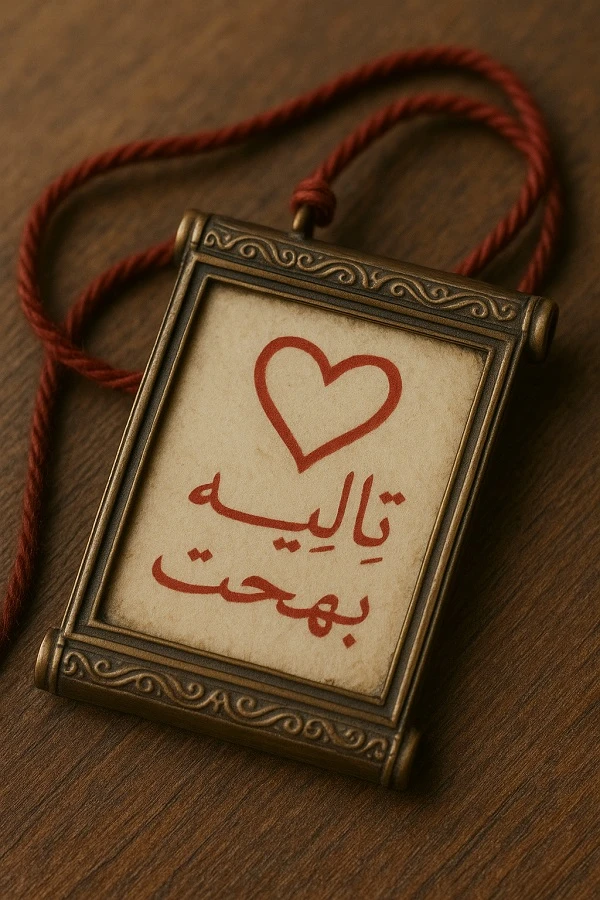
The preparation and use of love taweez follow a recognisable sequence of embodied actions that blend devotional discipline with practical routine. Though specific instructions vary by lineage and teacher, several patterns recur across Sufi-oriented Pakistani communities in London.
The ritual typically begins with the selection of Qur’anic verses or divine names relevant to reconciliation, affection, or tranquility such as verses emphasising mercy (rahma) or mutual affection (mawadda). Practitioners often prepare the writing surface after wudu (ablution), using black ink or, in more traditional cases, saffron mixed with rose water. The script is written in a single sitting to maintain concentration, then folded in a precise sequence so the text remains internally oriented and protected from wear.
Timing matters symbolically rather than astrologically. Friday before Jumu‘ah, the evening period after Maghrib, or the first days of a new lunar month are commonly chosen; these moments are associated with heightened receptivity to supplication.
Once the text is completed, the practitioner performs dam - reciting Qur’anic verses and gently blowing over the taweez or a cup of water. The recipient may be instructed to drink the blessed water nightly or to apply a few drops to their palms before sleep. Parallel to this, most users complete a 7-day wazifa cycle involving repeated dua or recitation of specific divine names.
The taweez is finally placed in a protective carrier and worn discreetly under clothing or kept near the bed. These actions operate not as isolated amulet rituals but as structured devotional routines that weave prayer, discipline, and emotional focus into daily life.
Conclusion
The use of love taweez among Pakistani migrants in London demonstrates how intimate relationships are negotiated through a blend of devotional practice, cultural continuity, and pragmatic adaptation to diaspora life. Far from being marginal or exotic, these talismans function as moral and emotional technologies, offering users a structured way to navigate uncertainty around marriage, conflict, family expectations, and generational change. Sufi networks, family-based authority, and online platforms together create a multi-layered landscape in which taweez circulate sometimes quietly, sometimes contentiously within the everyday rhythms of migrant households.




















Sign in to leave a comment.