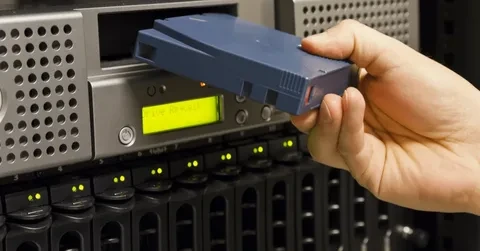

The present state of the business environment is defined by an unparalleled increase in the quantity of data available. Data has become the vital source that powers decision-making, creativity, and the course of action. However, as the amount of data continues to rapidly increase, there is a crucial demand for effective strategies to manage and handle this data. Tape backup, an age-old technology, remains highly significant in present times.
This solution intelligently balances the current digital era with the traditional physical era. In today's world, where data breaches are an ongoing danger, the distinctive features of this technology provide an extra level of protection.
Let’s look at tape backup's role in modern data management by scrolling below in this blog.
Cost-Effective Long-Term Storage
Tape backup is commonly acknowledged as a cost-effective solution for long-term data storage. Primarily owing to its comparatively lower cost per gigabyte in comparison to alternative storage alternatives. The aforementioned approach proves particularly advantageous when confronted with substantial quantities of data that must be preserved to satisfy regulatory adherence, legal obligations, or historical objectives. Tape cartridges are engineered to endure physical degradation and damage, thus exhibiting exceptional durability conducive for extended storage periods. In contrast to hard drives or solid-state drives (SSDs), tape cartridges are impervious to mechanical failures or electronic breakdowns.
Reliable Way to Protect Critical Data
Tape can be implemented as an integral component of a multi-tiered backup approach. Thereby augmenting redundancy measures. The secure storage of critical data can be achieved through the utilisation of both online and offline (tape) backup systems. Mitigating the potential for data loss resulting from hardware malfunctions, software glitches, or unanticipated incidents. Tape libraries and backup software frequently incorporate automation capabilities that enhance the efficiency of backup operations, data retention, and data migration processes. This mechanism diminishes the propensity for human fallibility and guarantees the reliable and accurate archival of crucial data.
Enables Offline Storage
Tape cartridges utilised for backup purposes possess the capability to be manually disengaged from the network infrastructure, thereby guaranteeing their segregation from online connectivity. The isolated condition effectively hinders cybercriminals or malware from gaining unauthorised access or tampering with the stored data. Storing sensitive data on tape cartridges, thereby maintaining it in an offline state, serves as a protective measure against a range of cyber threats, including the likes of ransomware attacks, viruses, and hacking endeavours. Due to the unavailability of data through network connections, malicious individuals are unable to directly concentrate their efforts towards compromising or altering the offline backup system.
Compliance and Regulatory Requirements
Various industries and regions may impose stipulated timeframes for the preservation of specific categories of data. One conceivable scenario entails the potential imposition of a mandated obligation on financial institutions to uphold the maintenance of transactional records for a specific duration, spanning across a specified number of years. Tape backups have the capacity to function as a viable storage medium for preserving data throughout the necessary time frames designated for retention. Industries such as finance, accounting, and taxation are frequently subjected to rigorous regulatory compliance obligations.
Tapes have the potential to facilitate the preservation of financial records and transactional data. Thereby assisting in the adherence to regulatory requirements governing financial activities.
Air Gap Protection
Tape cartridges encompassing valuable information undergo physical disconnection from both the network and any online systems through the utilisation of air gap protection. This implies that the data cannot be accessed through the internet or any other network-connected devices.
FEATURE
TAPE BACKUP
EXTERNAL HDD
NAS
USB
Provides Air Gap Protection
Yes
No
No
No
Immunity to Online Threats
Yes
No
No
No
Isolation from Cyberattacks
Yes
No
No
No
Data Safety from Ransomware
Yes
No
No
No
Defence Against Malware
Yes
No
No
No
Consumes Less Energy
Tape backup systems generally do not necessitate the implementation of active cooling mechanisms. Including devices such as fans or liquid cooling, as commonly observed in extensive data centres that accommodate disk-based storage arrays. The lack of active cooling results in a decrease in energy usage and diminishes the costs associated with infrastructure.
Integral Part of Disaster Recovery Strategies
In the context of disaster recovery scenarios, it is imperative for organisations to expeditiously restore both data and systems. Tapes, when coupled with a meticulously crafted disaster recovery strategy, facilitate expeditious data retrieval and system reinstatement, thereby mitigating downtime and mitigating disturbances to business operations. Tapes serve as a vital means for organisations to comply with data retention requirements imposed by regulatory compliance standards. During times of adverse events, institutions can rely on tape backups as a means to preserve historical records and showcase compliance with data retention regulations.
Summing It Up
The process of tape backup has continuously evolved and adapted throughout its history. Its core principles have seamlessly integrated with the needs of modern data challenges. The benefits it provides are not simply remnants of the past, but rather long lasting characteristics that are applicable in today's data driven environment. Therefore, it is clear that this backup solution goes beyond the current technological tools available.
























Sign in to leave a comment.