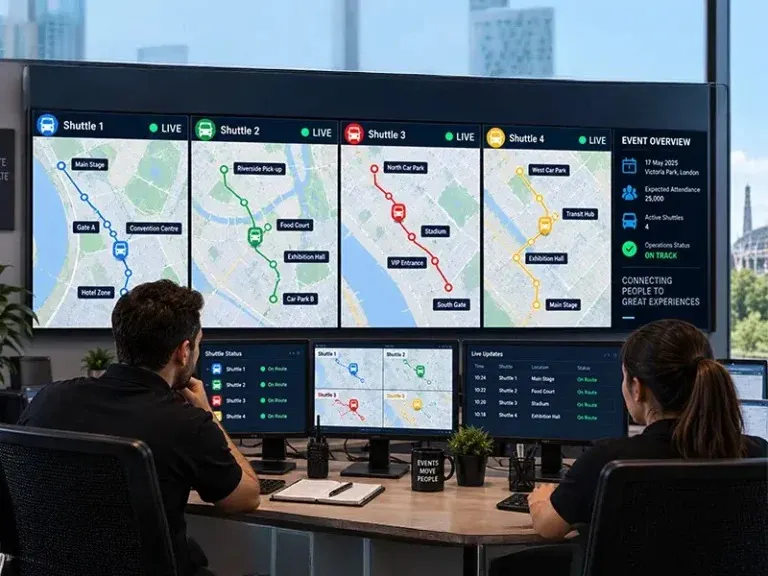

An event transportation command center depends on technology to turn vehicle and passenger information into a usable operational view. For large events, this can provide transportation teams with greater awareness of what is happening across multiple locations.
What Powers a Command Center?
Modern command centers can connect several sources of transportation data, including GPS-enabled vehicles, driver devices, passenger systems, and other connected technologies.
The information can be presented through a live dashboard showing:
- Vehicle location and movement
- Active routes and trips
- Pickup and drop-off points
- Estimated arrival times
- Fleet status
- Operational alerts
- Passenger activity
Instead of collecting updates manually from different teams, transportation coordinators can access these details through a centralized environment.
How Does the Technology Support Operations?
Event transportation management software connects fleet tracking, route visibility, alerts, passenger information, and transportation reporting.
For instance, when a shuttle is delayed, the team can identify its location, review the estimated arrival time, check nearby transportation activity, and coordinate with the appropriate operational team.
EventFalcon provides this type of centralized visibility for event transportation operations.
The technology is useful across conferences, sporting events, concerts, stadium programs, and trade shows where transportation conditions can change quickly.
A command center is therefore more than a screen showing vehicle locations. It creates a technology-supported environment where transportation information can be monitored, shared, and used for real-time operational coordination.
Source Link - https://eventfalcon.com/what-is-an-event-transportation-command-center-how-it-works-and-why-events-need-one/





















Sign in to leave a comment.