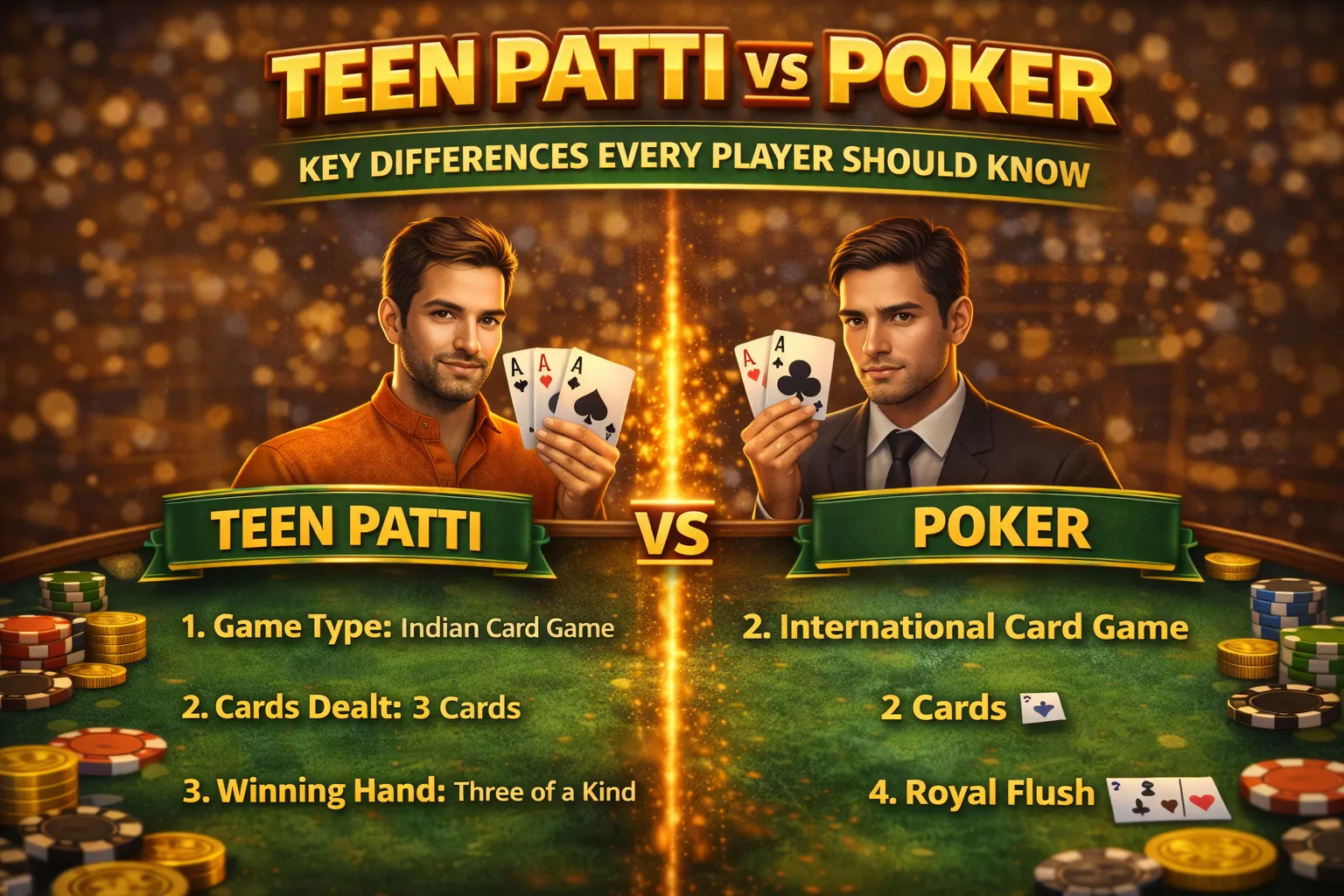

Card games have always held a special place in social gatherings and competitive play. Two of the most popular ones—Teen Patti and Poker—are often compared because of their similarities in betting and bluffing. However, despite some overlap, they differ significantly in rules, gameplay, and strategy. If you’ve ever wondered which one suits your style better, here’s a clear breakdown of the key differences.
Origins and Popularity
Teen Patti originated in India and is deeply rooted in cultural traditions, especially during festivals like Diwali. It’s often played casually among friends and family.
Poker, on the other hand, has Western origins, particularly in the United States, and is now a global phenomenon. Variants like Texas Hold’em dominate international tournaments such as the World Series of Poker.
Number of Cards Dealt
One of the most noticeable differences lies in how many cards each player receives:
- Teen Patti: Each player is dealt 3 cards, all face down.
- Poker: Typically, players receive 2 cards (in Texas Hold’em), along with 5 community cards placed face up on the table.
This difference alone changes how the games are played and the level of complexity involved.
Gameplay Style
Teen Patti is generally faster and more straightforward. Players rely heavily on intuition, luck, and bluffing. There are fewer rounds, and decisions are often made quickly.
Poker, in contrast, is more structured and strategic. Players must consider community cards, betting rounds (flop, turn, river), and opponents’ behavior over time.
Hand Rankings
Both games use similar hand rankings, but their importance differs due to the number of cards and gameplay format.
- In Teen Patti, combinations like trail (three of a kind), pure sequence, and color are key.
- In Poker, hands like flush, straight, and full house are formed using a mix of personal and community cards.
Because Poker involves more cards, the probability and frequency of strong hands are different compared to Teen Patti.
Betting Structure
Betting is central to both games, but the style varies:
- Teen Patti uses a simpler betting system with options like “chaal” (betting after seeing cards) and “blind” (betting without seeing cards).
- Poker has more complex betting rounds, including blinds (small and big), raises, checks, and folds across multiple stages.
Poker’s structured betting allows for deeper strategic play, while Teen Patti keeps things quick and engaging.
Bluffing and Strategy
Bluffing is essential in both games, but it works differently:
- In Teen Patti, bluffing is more frequent and often based on gut feeling due to limited information.
- In Poker, bluffing is more calculated. Players analyze betting patterns, position, and probabilities before making a move.
Poker rewards long-term strategic thinking, whereas Teen Patti leans more toward psychological play and spontaneity.
Game Duration
Teen Patti games are typically shorter. A round can end quickly, especially if players fold early or someone places a high bet.
Poker games, especially in tournaments, can last for hours. Events like the World Series of Poker may span several days, requiring endurance and consistent strategy.
Skill vs Luck
This is one of the most debated aspects:
- Teen Patti: Heavily influenced by luck due to fewer cards and simpler gameplay.
- Poker: More skill-based, as players can use probability, psychology, and long-term strategy to gain an edge.
While both games involve chance, Poker gives skilled players more control over outcomes in the long run.
Social vs Competitive Nature
Teen Patti is often played in informal settings—family gatherings, festivals, or casual meetups. The focus is on fun and interaction.
Poker has a more competitive environment, especially in professional settings. Online platforms and global tournaments have turned it into a serious mind sport.
Variations
Both games offer exciting variations:
- Teen Patti: Joker, AK47, Muflis, and more.
- Poker: Texas Hold’em, Omaha, Seven-Card Stud, etc.
These variations add diversity, but Poker generally has a broader range of globally recognized formats.
Which One Should You Choose?
It depends on what you’re looking for:
- If you enjoy fast-paced, social, and easy-to-learn games, Teen Patti is a great choice.
- If you prefer deep strategy, calculated risks, and competitive play, Poker is likely more suitable.
Final Thoughts
Teen Patti and Poker may share a common foundation of cards and betting, but they deliver very different experiences. Teen Patti thrives on simplicity and social fun, while Poker stands out for its strategic depth and global appeal.
Understanding these differences helps you not only choose the right game but also improve your approach when playing either one. Whether you’re sitting with friends during Diwali or competing in a high-stakes poker tournament, both games offer their own kind of thrill.


























Sign in to leave a comment.