
A Divine Odyssey: The Ultimate Temple Tour of South India
The southern peninsula of India is a region where spirituality is etched into stone and history is told through towering monuments. Unlike the north, where many ancient structures were lost to time, the south has preserved its architectural heritage with startling clarity. A Temple Tour of South India is a journey through a landscape of "Gopurams" (gateway towers), intricate rock-cut caves, and sprawling complexes that have served as the heartbeat of Tamil, Kannada, and Malayali culture for millennia.
The Dravidian Grandeur of Tamil Nadu
Tamil Nadu is often called the "Land of Temples," and for good reason. The state is the birthplace of the Dravidian style of architecture, characterized by pyramidal towers and vast pillared halls. The journey often begins in Madurai, home to the legendary Meenakshi Amman Temple. This massive complex is a city within a city, featuring fourteen colorful gopurams adorned with thousands of vibrant stone figures of gods, demons, and animals.
Further north lies the "Great Living Chola Temples," a UNESCO World Heritage site. The Brihadisvara Temple in Thanjavur is a masterpiece of engineering; its main tower (Vimana) is built from interlocking stones without the use of mortar. The precision of the carvings and the scale of the monolithic Nandi (bull) statue leave visitors in awe of the Chola dynasty’s vision. A visit to the shore temples of Mahabalipuram adds a different flavor, where eighth-century rock-cut sanctuaries overlook the crashing waves of the Bay of Bengal.
The Hoysala and Vijayanagara Marvels of Karnataka
As the tour moves into Karnataka, the architectural style shifts from the towering gopurams of the south to the intricate, star-shaped temples of the Hoysala Empire. The temples of Belur and Halebidu are famous for their soapstone carvings, which are so delicate they resemble ivory work. Every inch of the exterior walls is covered in friezes depicting scenes from the Ramayana, Mahabharata, and the daily life of ancient India.
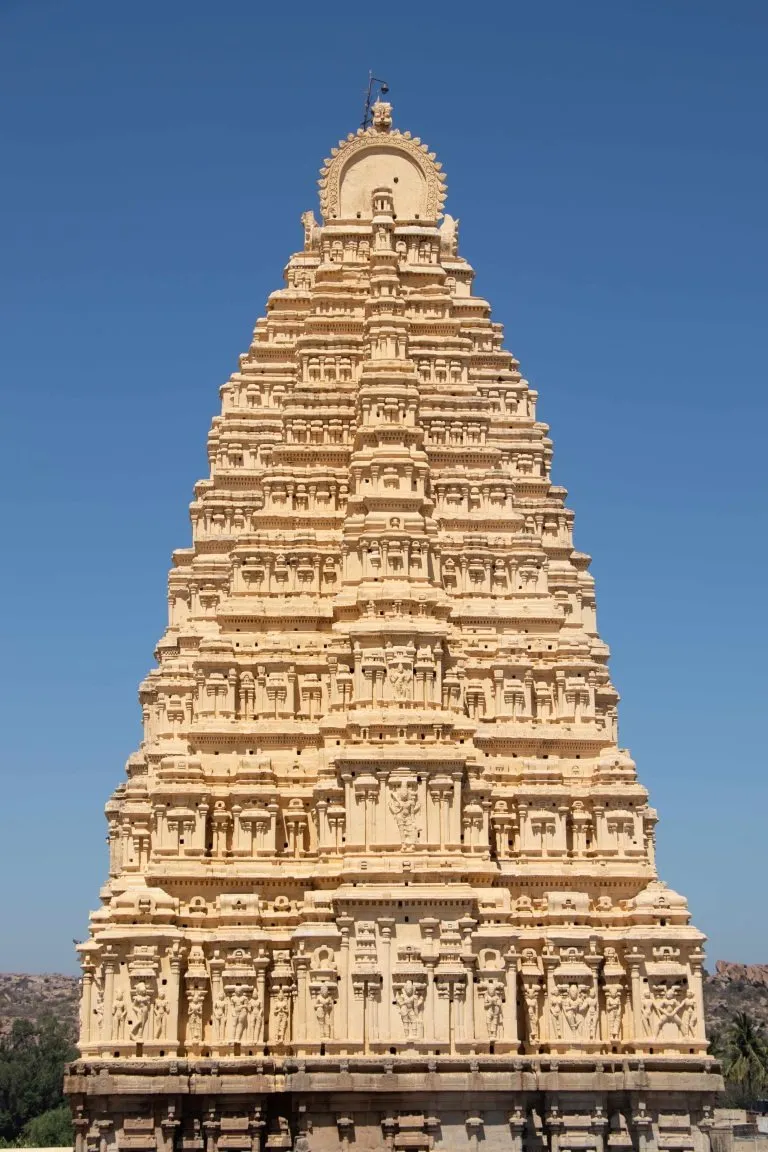
No temple tour is complete without exploring the ruins of Hampi, the former capital of the Vijayanagara Empire. The Virupaksha Temple, which remains active today, stands amidst a surreal landscape of giant boulders and crumbling palaces. The nearby Vittala Temple, with its iconic stone chariot and "musical pillars" that produce different notes when tapped, showcases the height of medieval Indian artistic achievement.
Spiritual Serenity in the Temples of Kerala
The temples of Kerala offer a stark contrast to the grand stone structures of its neighbors. Built primarily with wood, tile, and white-washed walls, Kerala’s architecture reflects the lush, tropical environment of the state. The Padmanabhaswamy Temple in Thiruvananthapuram is a stunning example of the indigenous Chera style mixed with Dravidian influences. Known as one of the wealthiest religious institutions in the world, its gold-plated exterior and strict traditional dress codes maintain an aura of ancient sanctity.
In the central part of the state, the Guruvayur Temple serves as a major pilgrimage site for devotees of Lord Krishna. These temples are often centers for traditional arts, where you can witness "Thayampaka" (temple drumming) or "Chakyar Koothu" (satirical storytelling). The emphasis here is on simplicity and deep-rooted Vedic rituals, providing a quiet, meditative conclusion to a journey through the grandiosity of the south.
Planning Your Spiritual Heritage Journey
The best time to embark on a South Indian temple tour is from October to March, when the tropical heat is at its most manageable. Many of these temples are active places of worship, so travelers should be prepared to follow local customs, such as removing footwear and adhering to modest dress codes.
In 2026, the experience has been enhanced by improved heritage corridors and digital guides that explain the complex iconography of the carvings. Whether you are an art historian, a spiritual seeker, or a curious traveler, the temples of South India offer a profound connection to a civilization that has celebrated the divine through art for over two thousand years. It is a journey that promises to leave you both humbled and inspired.



























Sign in to leave a comment.