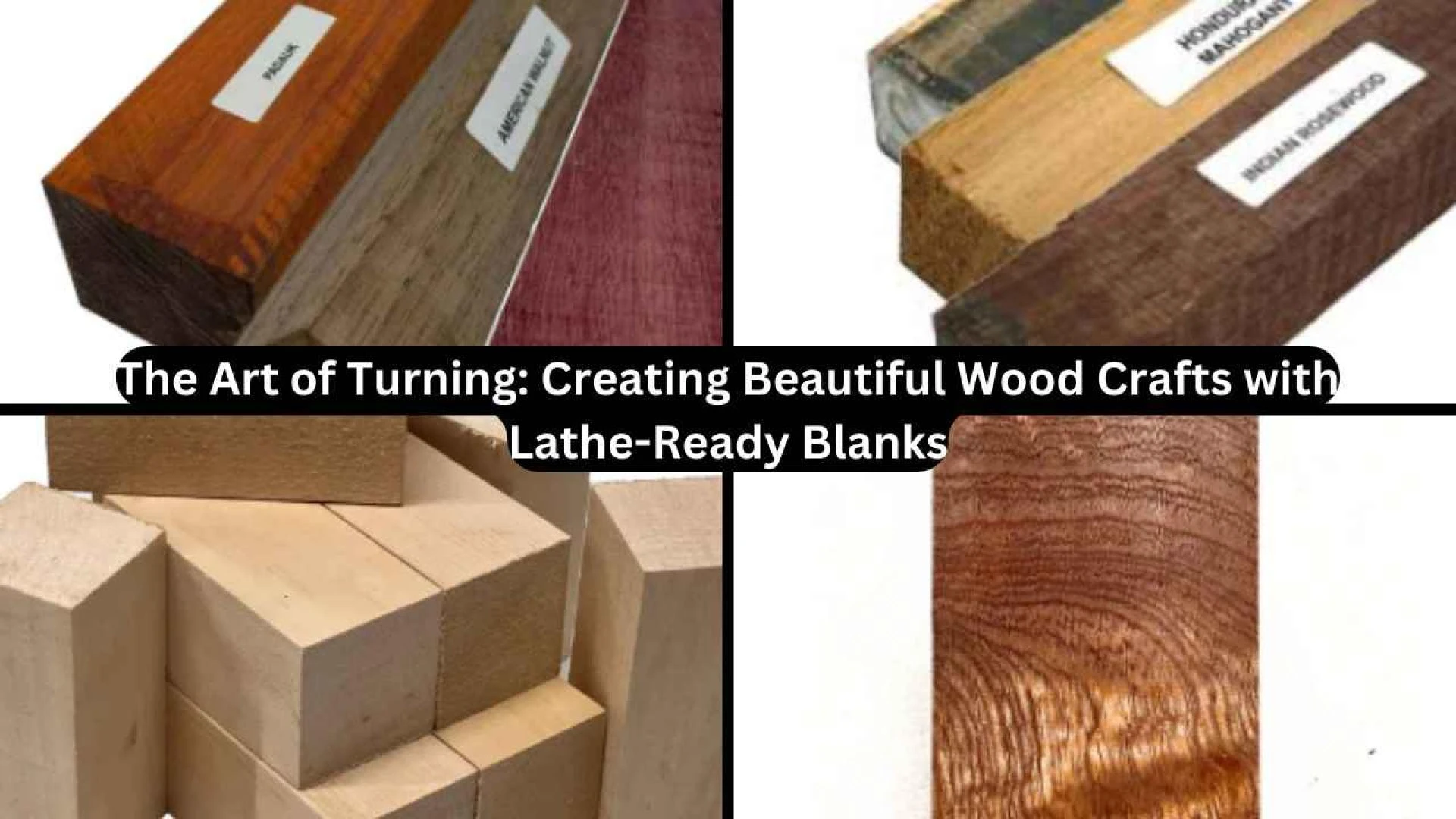

Introduction
Woodturning entails selecting the proper type of wood for a project based on its grain pattern, hardness, and adaptability. After selecting a blank, the artisan secures it to a lathe machine. The craftsman expertly slices layers of wood with chisels and gouges to reveal hidden beauty. This dynamic dance between the artist and the lathe produces precise details, graceful shapes, and tactile attraction. Woodturning captures history while allowing for unlimited artistic expression, making it appropriate for both useful and decorative pieces.
1. Understanding Lathe-Ready Blanks
Lathe-ready blanks save time and provide consistency and accuracy in woodturning. These pre-cut blocks are painstakingly prepared, offering a consistent starting point for craftspeople. This consistency speeds up the turning process and improves the quality of the finished components. Woodturners can explore elaborate patterns with confidence, knowing that the foundation given by lathe-ready blanks aids in precision and symmetry. Because many wood varieties are available, artists can experiment with textures, colors, and grains to enhance their work. Lathe-ready blanks allow woodturners to more efficiently realize their artistic ideals.
2. Choosing the correct blank
Choosing the appropriate blank is critical for creating a masterpiece. Mounting the blank securely ensures stability and precision. Beginners should master fundamental techniques such as drive centers and live centers before moving on to more complex techniques such as chuck mounting. This solid attachment lays the foundations for a smooth, controlled turning experience, allowing for artistic expression as the wood takes shape on the lathe.
3. Tools of the Trade
Woodturners must be skilled with basic equipment and informed about various wood species, as understanding grain patterns, hardness, and moisture content may all have a big impact on project success. Sharpening tools by professionals improves precision and produces a more pleasant experience. Proper safety precautions, such as protective equipment and a well-organized workspace, enable a safe and enjoyable woodturning practice. Spending effort on these details might result in a more fun and gratifying woodturning experience.
4. The Creative Process
The woodturner's deft hand and sharp eye combine to produce a one-of-a-kind work of art. They remove wood layers to reveal the rich textures and hues of the selected timber. The physical relationship to the material enables instinctive explorations of shape and proportion, transforming the raw blank into a perfected work of art. The buzz of the lathe creates a soothing backdrop, complementing the focused creativity of the woodturner.
5. Including personal touches
Woodturning is a one-of-a-kind art form that involves a dance between the artist and the wood, bringing the natural beauty of the wood to life via the turner's intuition and expertise. The artisan brings the wood to life, changing it into a vessel that both serves a purpose and tells a narrative. Each turned piece is a monument to the union of workmanship and creative vision, with faults, grain patterns, and subtle nuances in color becoming important aspects of the tale. Each piece becomes a one-of-a-kind expression of the artist's passion, leaving an everlasting imprint on the ageless canvas of wood.
6. Finishing Touches and Beyond
Woodturning finishing is an important phase in developing a piece into a work of art. Woodturners employ a variety of techniques to showcase grain patterns and distinguish wood qualities. The finish chosen can have a significant impact on the entire feel and ambiance of the final piece, making it an important stage in transforming a turned wood creation into a work of art.
Conclusion
Woodturning is a craft that necessitates the careful selection of wood species for your creations. From grain patterns to turning responses, each wood species is distinct. Understanding the subtleties of various materials gives dimension to your creations. Working with natural ingredients and observing their metamorphosis adds to the satisfaction of the woodturning journey. Experimenting with shapes, sizes, and finishes sharpens your technical abilities and allows you to express your artistic vision in a durable medium.
























Sign in to leave a comment.