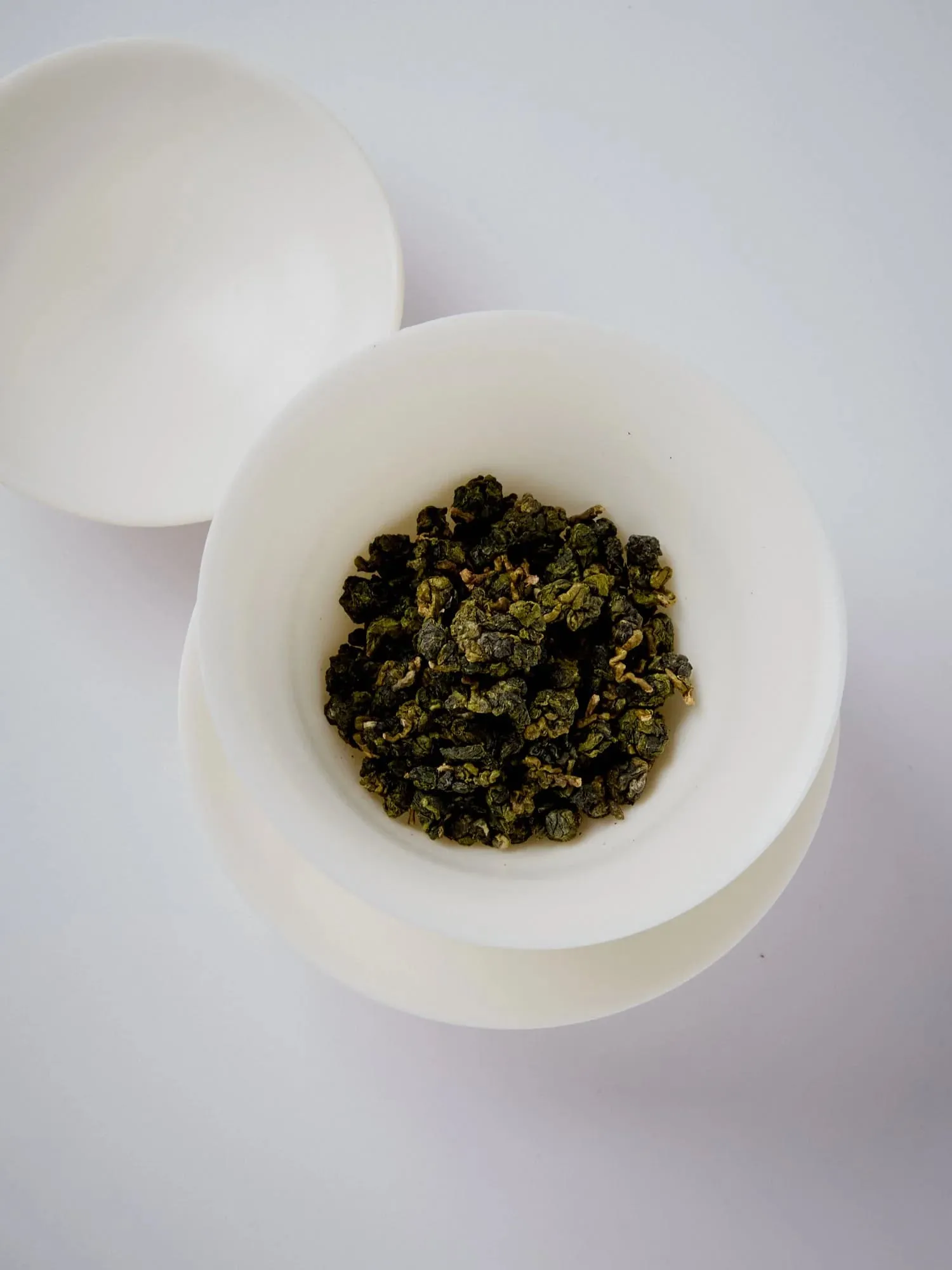

Taiwan produces a small fraction of the world's tea by volume. By reputation, it punches well above that fraction. Among serious tea drinkers — in Japan, Hong Kong, mainland China, and increasingly in Western countries — Taiwanese tea occupies a category of its own. Understanding why requires looking at both the geography that makes it possible and the culture that has shaped how it's grown and prepared.
The Geography That Makes Taiwanese Tea Exceptional
Tea quality is inseparable from the conditions in which it grows. Temperature, humidity, altitude, soil composition, and the presence or absence of mist all affect how the leaf develops and what flavours it accumulates before harvest.
Taiwan's Central Mountain Range provides conditions that are, by most measures, ideal. Elevations above 1,000 metres — where the island's most celebrated high-mountain teas are grown — bring cooler temperatures that slow leaf growth, allowing the plant more time to develop complex flavour compounds. The persistent cloud cover and morning mist that characterise these mountain regions maintains humidity and diffuses sunlight, producing a gentler growing environment than open lowland farms.
The result is a leaf that grows more slowly, accumulates more of the aromatic compounds responsible for complexity and aftertaste, and arrives at harvest with a concentrated flavour profile that lower-altitude tea simply cannot replicate. High mountain teas — Ali Shan, Li Shan, Da Yu Ling — are sought after precisely because the conditions that produce them cannot be faked or relocated.
The Oolong Tradition
If there is one style of tea that Taiwan is most associated with globally, it is oolong. Oolong occupies the spectrum between green tea and black tea — partially oxidised, which means the leaf has been allowed to react with oxygen for a controlled period after picking, producing a flavour profile that is neither the fresh grassiness of green tea nor the full robustness of black tea.
Taiwan's oolong tradition spans a remarkable range within this category. Lightly oxidised oolongs — like the high mountain varieties of Alishan — are floral, delicate, and complex, with a long aftertaste and a softness that is distinct from the sharper profile of most Chinese green teas. More heavily oxidised oolongs — like Dong Ding — have depth, roasted warmth, and a lingering sweetness. Heavily roasted varieties carry the character of the charcoal roasting process alongside the tea's inherent flavour.
This range is part of why Taiwanese oolong has attracted such sustained interest among serious tea drinkers. It is not a single flavour profile but a spectrum of possibilities, each reflecting different growing conditions, processing decisions, and the judgment of the farmer and master tea maker.
The Role of Craftsmanship
Growing conditions explain part of the quality equation. The other part is human: the skill of the people who process the leaf after harvest.
In Taiwan, tea processing is a craft that is passed down across generations. The withering, shaking, oxidation, fixing, rolling, and drying of an oolong tea each involve decisions that materially affect the final flavour. The duration of oxidation, the temperature of the fixing process, whether and how to roast — these are not simply technical parameters but judgments that require experience and sensitivity to what the leaf is doing at each stage.
This is why two teas from the same mountain and the same harvest year can taste noticeably different when processed by different hands. The farmer and the tea master are not simply following a recipe — they are responding to the specific leaf they have in front of them, year after year.
Taiwan has maintained this craftsmanship tradition in part because the domestic market for premium tea has historically been sophisticated and demanding. Taiwanese consumers have long expected and rewarded quality, which has sustained the investment in skill that quality requires.
Wild and Natural Farming in Taiwan
Within Taiwanese tea culture, there is a growing interest in teas grown without chemical intervention — not simply organic in the certification sense, but genuinely wild or naturally cultivated in ways that predate the industrialisation of tea farming.
Wild tea, where tea trees grow untended in mountain forests rather than in managed rows, produces a leaf that reflects its specific environment more completely than a farmed plant. The root system reaches deeper, drawing from a broader range of soil minerals. The plant develops its own resistance to pests and disease rather than relying on external chemical management. The flavour of the resulting tea is often described as wilder, more complex, and more deeply connected to the terrain in which it grew.
UCIA Tea specialises in this approach — teas grown using Ucia Natural Agriculture, where the plants grow wild within native forests without pesticides or chemical intervention. The resulting teas reflect the specific mountain terroir of their origin in a way that conventional farming cannot produce.
Why the World Is Paying Attention
Taiwanese tea has had an international following for decades in East Asian markets. What has changed more recently is the breadth of that following — the growing interest in Western markets, including Australia, where specialty tea culture is developing alongside the established specialty coffee scene.
The drivers are similar to what has happened in specialty coffee: increasing awareness that quality varies enormously, that the conditions and methods of production matter, and that the experience of drinking something genuinely excellent is qualitatively different from the everyday alternative.
For drinkers who have reached that threshold — who have had a cup of properly prepared high-mountain Taiwanese oolong and understood what it is doing — the journey back to commodity tea is difficult. The flavour complexity, the long aftertaste, the way the character of the tea changes through multiple infusions — these are not subtle differences. They are the difference between a drink and an experience.
UCIA Tea brings premium wild-grown Taiwanese tea to Melbourne — naturally cultivated in mountain forests without pesticides, available online and at the South Yarra boutique on Chapel Street.



























Sign in to leave a comment.