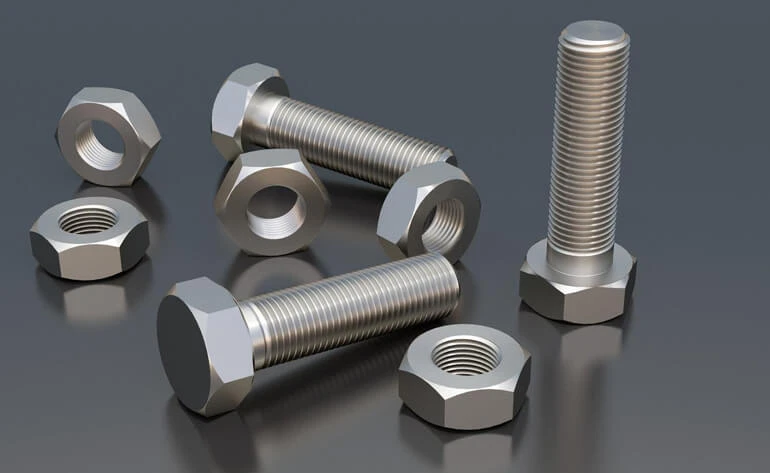
Nickel alloy screws are fasteners made from various nickel-based alloys, which offer superior corrosion resistance and high-temperature strength compared to traditional stainless steel screws. Nickel alloys are composed of various metals, such as nickel, chromium, molybdenum, and copper, and are used in a wide range of applications that require high strength & resistance to extreme conditions. Nickel Alloy Screws are commonly used in aerospace, petrochemicals, and marine engineering industries.
Applications of Nickel Alloy Screws
Nickel alloy screws are used in aircraft engines, gas turbines, and other aerospace applications due to their ability to withstand high temperatures and pressures. Nickel alloy screws are used in the petrochemical industry for their high corrosion resistance, especially in environments containing sulfuric acid, hydrochloric acid, and other corrosive substances.Nickel alloy screws are used in marine applications due to their excellent resistance to seawater corrosion and high-stress environments.Nickel alloy screws are used in power plants, where they can withstand high temperatures and pressures while resisting corrosion and erosion.Nickel alloy screws are used in chemical processing applications requiring resistance to various corrosive chemicals.Nickel alloy screws are used in medical applications due to their biocompatibility and resistance to corrosion, making them ideal for implants and other medical devices. Nickel alloy screws are used in the nuclear industry for their ability to withstand high temperatures and radiation exposure.
Benefits of Nickel Alloy Screws
Corrosion Resistance: Nickel alloys have excellent resistance to corrosion and oxidation, making them ideal for use in harsh environments.
High-Temperature Strength: Nickel alloys can withstand high temperatures and maintain their strength, making them suitable for high-temperature applications.
Excellent Mechanical Properties: Nickel alloys have excellent mechanical properties, such as high strength, toughness, and flexibility, making them suitable for use in demanding applications.
Versatility: Nickel alloys are highly versatile and can be used in various applications, from aerospace to medical equipment.
Weldability: Nickel alloys can be easily welded, allowing for easy fabrication and assembly.
Resistance to Cracking: Nickel alloys have good cracking resistance, making them suitable for use in applications where fatigue or stress corrosion cracking may be a concern.
Low Thermal Expansion: Nickel alloys have a low thermal expansion coefficient, making them ideal for use in applications with critical dimensional stability.
Magnetic properties: Some nickel alloys are magnetic, making them ideal for electromagnetic devices.
Biocompatibility: Some nickel alloys are biocompatible, making them suitable for medical applications such as implants.
Cost-Effective: Despite their many benefits, nickel alloys are often cost-effective compared to other materials, making them an attractive option for many applications.



























Sign in to leave a comment.