

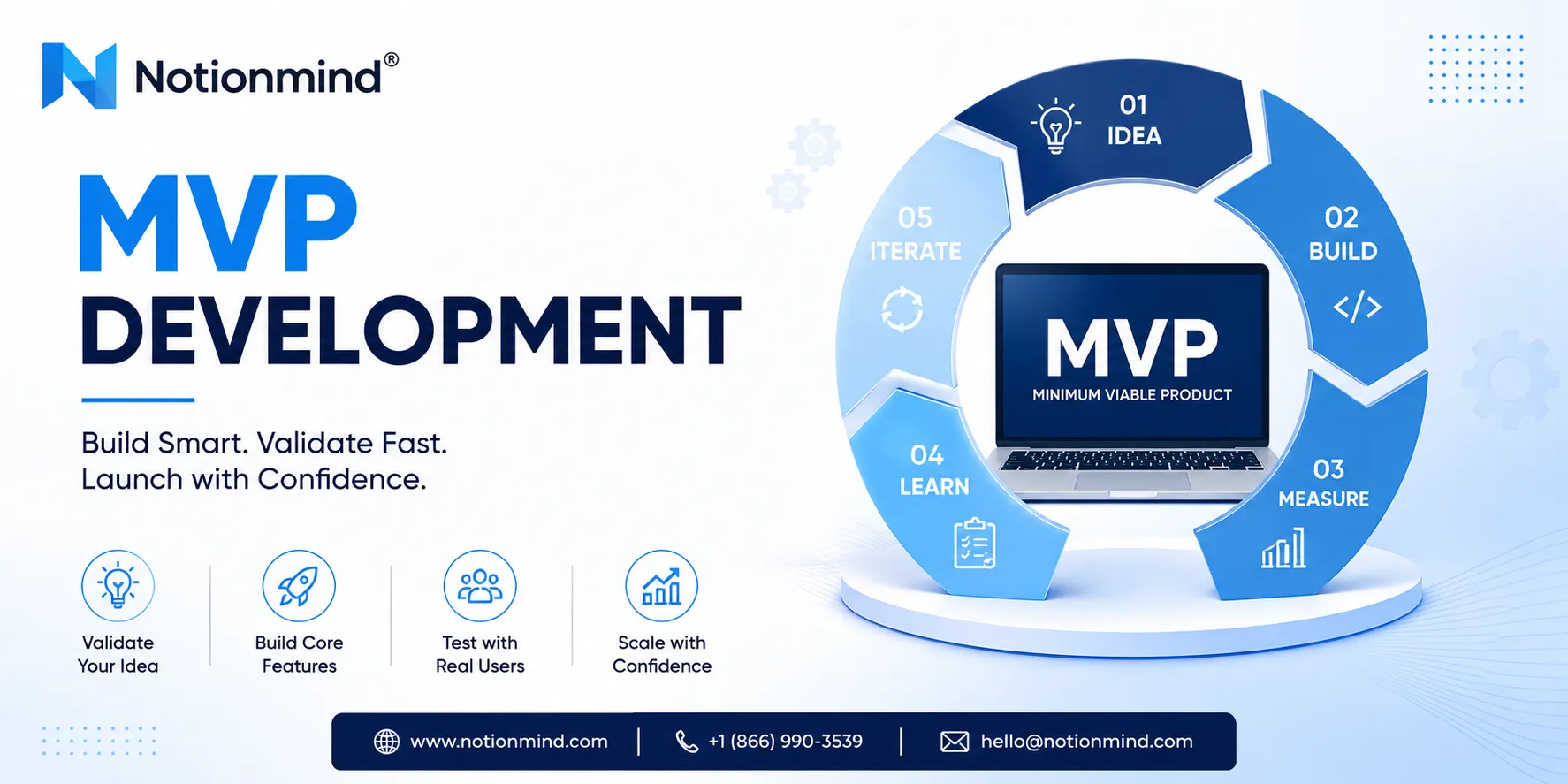
Two very different failure modes show up at two very different stages. Early on, founders overbuild an MVP, spending months on infrastructure a five-person company doesn't need yet. Later, once the product has real traction, the opposite mistake shows up: still running on the same lean architecture that got them started, now buckling under real user load. Both mistakes trace back to the same root cause, not planning the bridge between the two stages before you need it.
MVP software development and enterprise level solutions aren't opposing approaches. They're two ends of the same growth path, and how well you plan the transition between them determines whether scaling feels like a natural next step or a painful, expensive rebuild.
Why MVP Architecture Can't Just Scale Up as Is
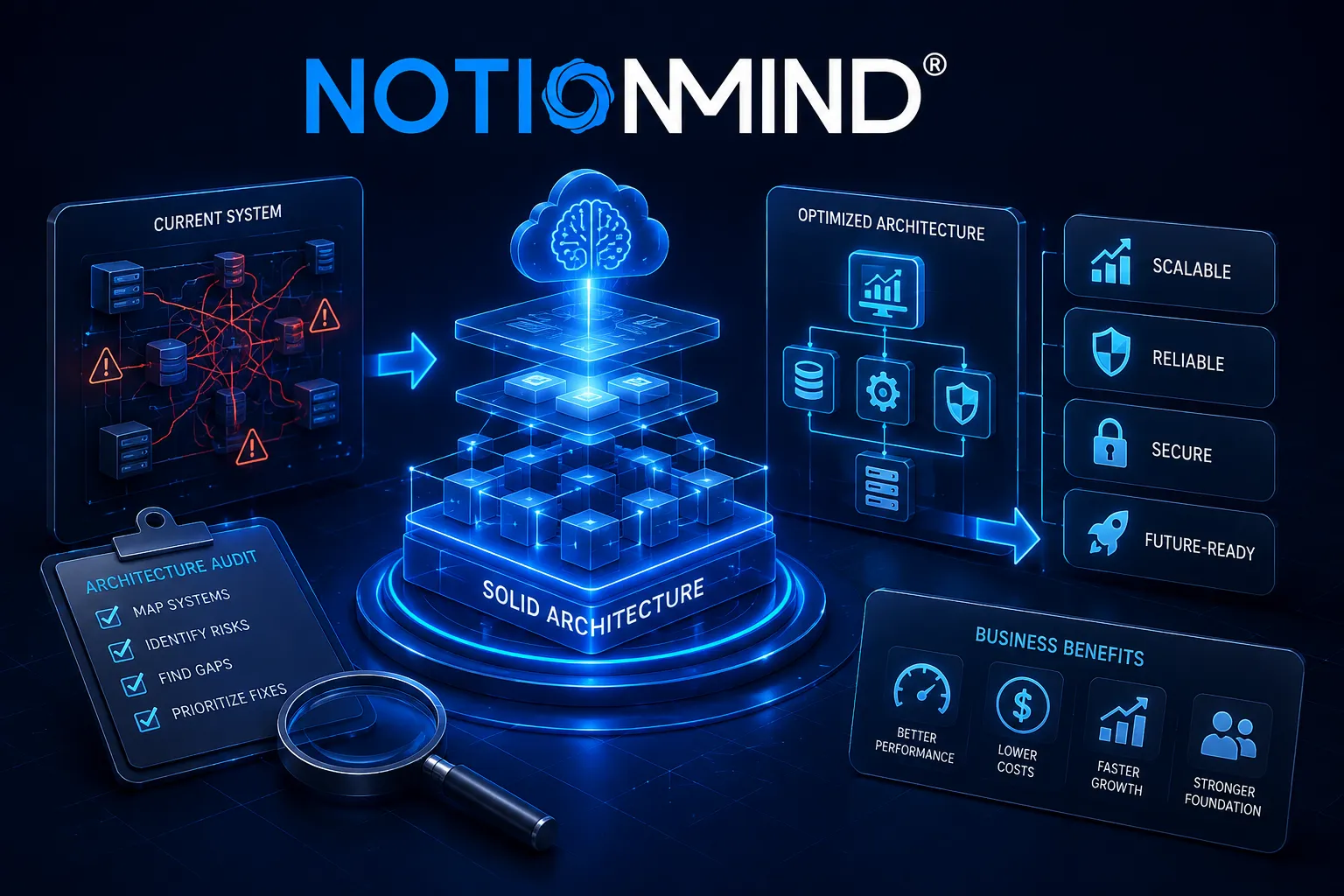
An MVP is deliberately lean. It's built to answer one question with as little investment as possible, not to handle the load of a company ten times its current size. Trying to stretch that same lightweight architecture to enterprise-level demands usually surfaces the same problems: systems that don't integrate cleanly as more tools get added, performance that drops as usage grows past what the original build anticipated, and data that starts flowing in silos instead of through one connected system.
None of this means the MVP was built wrong. It means it was built for a different job than the one it's now being asked to do.
The Modular Design Choice That Makes the Bridge Possible
The businesses that transition smoothly from MVP to enterprise-level systems almost always made one deliberate choice early: they designed the MVP with modularity in mind, even while keeping the initial build lean. That single decision is what separates a natural evolution from a full rebuild.
Modularity means the core loop can be extended without tearing apart what already works, new components can be added as separate pieces rather than bolted onto a rigid structure, and the underlying data model was built with room to grow, even if most of that room went unused in the early stages. Enterprise platform architecture is built on these same principles at a larger scale: modularity, scalability, and interoperability, so systems can expand functionality without needing to be rebuilt from scratch.
Signs You're Approaching the Bridge
A few signals typically show up before a business is ready to move from MVP thinking to enterprise-level investment. User growth has moved past what the original architecture was scoped for. Integration requests are increasing as the business adds more tools and departments that all need to share data reliably. Manual workarounds that were fine at a small scale are now creating real operational drag. And leadership needs real-time, centralized data to make decisions, rather than reports pulled together from scattered spreadsheets.
Seeing two or three of these signals at once usually means the bridge conversation is overdue, not premature.
What Actually Changes at the Enterprise Stage
Moving into enterprise-level solutions isn't just "more of the same, but bigger." The priorities shift. Cloud infrastructure architecture needs to stay stable under real load while keeping performance and cost under control, not just handle a demo's worth of traffic. API and integration architecture becomes central, since the platform now has to work as one connected system across departments, not a single lean feature. Compliance and security move from a future consideration to a present requirement, especially in regulated industries. And performance planning shifts from "does it work" to "does it perform consistently," since inconsistency at enterprise scale creates operational risk, not just user frustration.
A Real Example of Making This Transition Work
Verisurg's transformation illustrates this well. The business came in with fragmented communication between clinics and surgery centers, paper-based consent workflows, and no real-time visibility into operating room schedules or inventory. The solution wasn't a patch on the existing setup. It was a properly architected, compliant enterprise platform: centralized patient data, automated scheduling, real-time inventory tracking, and role-based dashboards built to support multi-site operations without the operational drag that had been holding the business back. Manual processes were eliminated and scheduling errors dropped to near zero, outcomes that required treating the platform as enterprise-grade infrastructure, not an extension of an early-stage build.
Quick Answers
Should every MVP be designed with enterprise scale in mind from day one? Not entirely. Over-engineering an MVP for scale it doesn't have yet wastes early budget. The goal is modularity, not premature enterprise infrastructure, so growth doesn't require starting over.
How do you know if it's time to move from MVP thinking to enterprise architecture? Watch for integration strain, performance issues under real usage, and leadership needing centralized, real-time data instead of scattered reports. Multiple signals appearing together usually means it's time.
Is skipping straight to enterprise-level architecture ever the right call? Occasionally, for businesses entering regulated industries or dealing with complex multi-site operations from the start, where the risk of under-building outweighs the cost of building for scale early.
Does moving to enterprise-level solutions mean abandoning what the MVP validated? No. The enterprise stage should build on what the MVP proved worked, not discard it. The core value proposition stays the same. What changes is the infrastructure supporting it.
Planning the Bridge Before You Need It
The transition from MVP software development to enterprise level solutions isn't a sign that the MVP failed. It's a sign that it worked well enough to outgrow its original scope. Businesses that plan for this bridge early, building modularity into the MVP without overinvesting in premature infrastructure, make that transition far more smoothly than those that wait until the cracks are already showing under real pressure.
If you're somewhere between early-stage validation and enterprise-level demand, Notionmind's team can help you figure out exactly where you are on that bridge and what comes next.

























Sign in to leave a comment.