
If you have ever watched the Masters go down to the wire, you already know that feeling the kind that makes you forget to breathe. Two players, same score, 72 holes done, and everything still undecided. What happens next is something golf fans genuinely live for. But if you have ever wondered exactly how the Masters decides its champion when the scores are tied, you are not alone. A lot of people watch the drama unfold without fully knowing the rules behind it. So let us walk through it together, simply and clearly.
How the Masters Actually Handles a Tie?
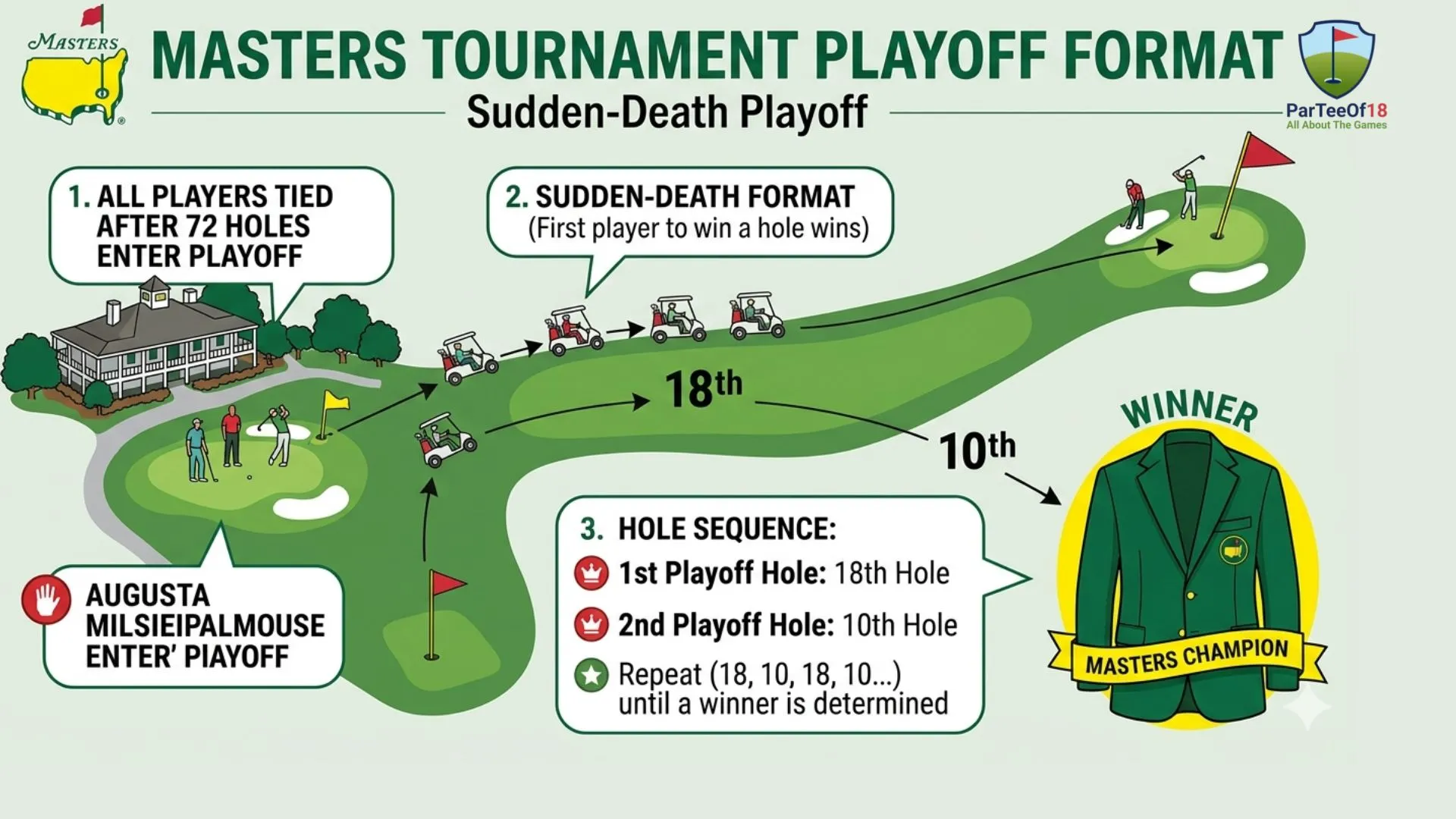
Here is the short version: the Masters uses sudden death. No long playoff rounds the next morning, no extended series of holes. Just go back out, play hole by hole, and the first player to win a hole wins the tournament. One green jacket, one winner, decided right there on the spot.
What makes Augusta's approach a little different is that the playoff does not start just anywhere on the course. There is a set route. Players start on the 18th hole. If still tied, they move to the 10th. Then back to 18 if needed, and so on, until someone finally wins a hole outright.
Simple as that sounds, the experience of actually being in that situation in front of those crowds, with that history all around you is anything but simple.
Why Sudden Death Actually Makes Sense Here?
Some people argue that sudden death is not the fairest way to settle a major championship. And honestly, that is a reasonable point. But at Augusta, it just works, and here is why.
Both playoff holes are genuinely hard. The 18th is a long uphill par-4 that does not forgive loose swings. The 10th is a downhill par-4 that has humbled some of the best players in the world. You are not getting an easy hole. You have to earn it.
There is also the matter of pure human drama. When every single shot could end your tournament, the pressure becomes something almost physical. You can feel it watching from home. Imagine actually standing over that ball. That is what makes Masters playoffs stick in your memory long after the broadcast ends.
The Moments That Made History
You cannot talk about the Masters playoff format without talking about the moments it has produced.
In 1987, Larry Mize chipped in from way off the green on the 11th hole not even one of the designated playoff holes and broke Greg Norman's heart in the process. People still bring that one up decades later. In 2005, Tiger Woods produced that famous chip on 16 during regulation, then closed out Chris DiMarco on the first playoff hole. And in 2017, Sergio Garcia, after years of near-misses in majors, finally got over the line against Justin Rose in a playoff that had the whole golf world emotional.
Every single one of those moments happened because of the sudden-death structure. One hole, one chance, and your whole career can change.
How Smart Players Prepare for Playoff Holes?
Here is something casual fans might not think about: the best players in the world do not just show up hoping for the best. They study those specific holes all week. They know the wind tendencies, the pin positions, the safest miss zones. Data matters.
A lot of tour players and their teams use a golf scoring app throughout tournament week to track shot patterns and performance details hole by hole. When a playoff comes down to one shot on 18, that kind of preparation is not a luxury it is the difference.
And for fans who want to get closer to the game, a golf scoring app is a genuinely fun way to engage with tournaments like the Masters. Tracking scores, understanding what plus-four really means, following how players manage a course it all adds depth to your viewing experience.
What If Nobody Wins Right Away?
It does happen. Players can halve a hole and move on to the next without a winner. In that case, the rotation simply continues 18, then 10, then 18 again until someone finally takes a hole.
Augusta officials do have the authority to pause things if light becomes a real concern, but that scenario has never played out into anything messy at the Masters. The pressure of sudden death tends to settle things fairly quickly. Players either make their moment or they do not.
Final Thoughts
The Masters playoff format is not complicated but what it produces can be extraordinary. Sudden death on two of Augusta's hardest holes, in front of one of golf's most passionate crowds, with a green jacket on the line. That combination creates something sport rarely manages to replicate. Now that you know how it works, the next time you see two names tied at the top of the Masters leaderboard on Sunday afternoon, you will feel that extra edge of anticipation. Because you will know exactly what kind of moment is coming.
FAQ
1.How many holes does a Masters playoff last?
There is no set number. It ends the moment one player wins a hole outright. Could be one hole, could be several. That uncertainty is part of what makes it so gripping.
2.Which holes do they actually play in the playoff?
Hole 18 first, then hole 10 if still tied, and that rotation continues until there is a winner.
3.Did the Masters always use sudden death?
No. Before 1976, ties were settled with a full 18-hole playoff the following day. Sudden death came in later and has been the format ever since.
4.What if it gets dark before someone wins?
Officials can pause the playoff overnight if needed, though that has not been a real issue in recent Masters history.
5.What is the most iconic Masters playoff ever?
Most people point to Larry Mize's chip-in against Greg Norman in 1987. But Sergio Garcia finally winning his first major against Justin Rose in 2017 is right up there for pure emotion.































Sign in to leave a comment.