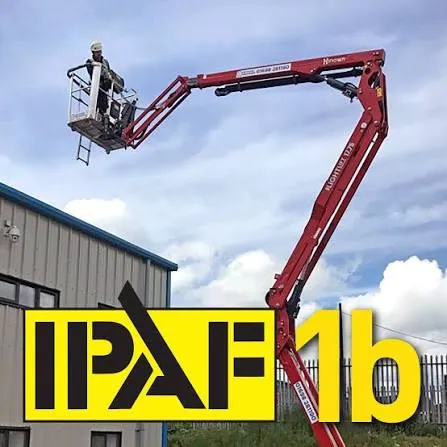

IPAF training
Working at height is common in construction, maintenance, logistics, and facilities management. Across the Middle East, many businesses use powered access equipment every day. Scissor lifts and boom lifts help workers reach high areas.
They are used for MEP work, building maintenance, glass installation, warehouse work, and many other tasks. Modern machines have many safety features.
These include load sensors, alarms, and emergency controls. However, good equipment alone is not enough. Operators must also know how to use the machine safely.
They need to understand site hazards, machine limits, and emergency procedures. This is why IPAF training is important for businesses that use powered access equipment.
What Is IPAF?
The International Powered Access Federation (IPAF) promotes the safe use of powered access equipment.
IPAF provides training for people who operate MEWPs. MEWP stands for Mobile Elevating Work Platform.
The training teaches operators how to:
- Use MEWPs safely
- Check equipment before use
- Identify site hazards
- Understand machine limits
- Work safely at height
- Deal with emergency situations
Good training can help reduce accidents and equipment damage. It can also help businesses meet site safety requirements.
Why Is IPAF Certification Important?
Working at height can involve many risks. A machine may tip over, hit an object, or come too close to a power line.
Poor ground conditions can also create problems. Strong winds and nearby traffic can add more risk.
Proper operator training helps reduce these risks.
There are several reasons why businesses choose IPAF MEWP training.
Better Safety
Trained operators know how to check the machine before use. They can also spot hazards around the work area.
Fewer Equipment Problems
Operators learn how to work within the limits of the machine. This can help reduce misuse and damage.
Better Site Compliance
Many large construction projects have strict safety rules. They may require operators to have suitable training before they use powered access equipment.
International Recognition
Successful IPAF candidates may receive a Powered Access Licence (PAL Card). The PAL Card is widely recognised in the powered access industry.
What Are IPAF 3a and 3b Categories?
IPAF uses different categories for different types of powered access equipment.
Two common categories are IPAF 3a and IPAF 3b.
The correct category depends on the type of machine the operator uses.
IPAF Category 3a
Category 3a covers mobile vertical machines.
This includes many self-propelled scissor lifts and vertical platforms.
These machines move mainly up and down. Some can also be driven while the platform is raised.
They are often used for:
- MEP installation
- Ceiling work
- Electrical work
- Warehouse work
- Building maintenance
- Indoor construction
IPAF Category 3b
Category 3b covers mobile boom platforms.
This includes articulated and telescopic boom lifts.
These machines can move the platform up and out. This allows operators to reach areas above or around obstacles.
They are often used for:
- Construction work
- Building maintenance
- Glass installation
- Electrical work
- Industrial maintenance
- Structural inspections
Why Choose IPAF 3a 3b Training?
Some businesses use both scissor lifts and boom lifts.
In this case, operators may need training for both equipment types. IPAF 3a 3b training can cover the relevant categories for these machines.
This can give businesses more flexibility when planning their workforce.
Before booking training, employers should check which machines their operators will use. They should then choose the correct IPAF categories.
What Do Operators Learn During IPAF Training?
IPAF training covers more than basic machine controls.
Operators learn how to plan the job and use the equipment safely.
The course includes theory and practical training.
Understanding Safety Rules
Operators learn the main safety rules for powered access equipment.
They also learn about their responsibilities when using a MEWP.
Spotting Worksite Hazards
Operators must check the work area before using the machine.
Common hazards include:
- Power lines
- Uneven ground
- Open edges
- Low ceilings
- Other vehicles
- Ground holes
- Weak surfaces
- Strong winds
- Nearby structures
Finding these hazards early can help prevent accidents.
Understanding Machine Limits
Every machine has operating limits.
Operators need to understand:
- Maximum working height
- Maximum outreach
- Platform capacity
- Machine weight
- Ground requirements
- Wind limits
- Safe operating conditions
The platform load includes the operator and any tools or materials.
The total load must stay within the manufacturer's limit.
Pre-Use Machine Checks
Operators should check the machine before starting work.
A pre-use inspection can help find problems before the machine is used.
The check may include:
- Tyres
- Hydraulic hoses
- Controls
- Emergency stop buttons
- Guardrails
- Harness anchor points
- Warning systems
- Fluid levels
- Visible damage
If a serious fault is found, the machine should not be used until the issue is dealt with.
Practical IPAF Training
Practical training gives operators a chance to use the equipment in a safe setting.
They can practise the skills they will need on real job sites.
Checking Ground Conditions
The machine must be placed on suitable ground.
Operators learn how to check the surface before starting work.
Some machines also use outriggers or stabilisers. Operators learn how to use these systems when required.
Moving the Machine Safely
Operators practise moving and positioning the machine.
They may need to work in tight spaces. They may also need to work close to buildings or other equipment.
Good machine control is important in these situations.
Using Emergency Controls
Operators also learn what to do during an emergency.
For example, the normal controls may stop working. In this situation, the operator may need to use the emergency lowering system.
Knowing these controls can help workers respond quickly.
Finding IPAF Training Centres in Dubai and the UAE
Choosing the right training provider is important.
Businesses should look for approved IPAF training centres that provide the required courses.
A suitable training centre should have qualified instructors and the right equipment for practical training.
For businesses searching for IPAF training Dubai, it is useful to check the following before booking:
- IPAF approval
- Instructor qualifications
- Available machines
- Training facilities
- Course categories
- Course dates
- Practical training options
- On-site training options
Businesses may also need training at their own workplace. Some providers can offer on-site training, depending on the course and equipment.
Why Use an Approved IPAF Training Provider?
Not every training provider offers the same level of training.
An approved provider follows IPAF's training requirements. This helps ensure that operators receive training for the correct equipment category.
This can be important for companies working on large construction projects.
Before booking a course, businesses should confirm that the provider is approved to deliver the required IPAF course.
How Much Does IPAF Training Cost?
IPAF training cost can vary from one course to another.
The price may depend on:
- Course category
- Number of operators
- Training location
- Equipment type
- Course length
- On-site training requirements
The cheapest course is not always the best choice.
Businesses should also look at the quality of the training. They should check the provider, instructors, equipment, and facilities.
Good training can help reduce the risk of accidents and machine damage. This makes it a useful investment for businesses that use MEWPs.
Business Benefits of IPAF Training
IPAF training can provide several benefits to employers.
Improved Workplace Safety
Trained operators know how to use machines correctly. They also learn how to identify common hazards.
Less Equipment Damage
Operators understand the limits of the machine. This can help prevent incorrect use and unnecessary damage.
Better Work Efficiency
Operators who understand their machines can work with more confidence.
They can also position the equipment more effectively. This may help reduce delays.
Support for Contractor Requirements
Large contractors may ask for proof of operator training.
Having trained operators can help businesses meet these requirements when working on major projects.
How Employers Can Improve MEWP Safety
Operator training is only one part of safe MEWP use.
Employers should also make sure that machines are suitable and well maintained.
Before work starts, employers should:
- Choose the right machine for the job.
- Check the work area.
- Check the ground conditions.
- Check weather and wind conditions.
- Complete a pre-use machine check.
- Confirm that the operator has suitable training.
- Follow the machine manufacturer's instructions.
- Use the correct safety equipment.
- Keep people away from dangerous areas.
- Have an emergency plan.
These simple steps can help create a safer worksite.
Choosing the Right IPAF Course
The right course depends on the equipment used by your team.
For example, an operator who uses a scissor lift may need Category 3a training.
An operator who uses an articulated or telescopic boom lift may need Category 3b training.
Some operators may use both types of equipment. In this case, training for both categories may be suitable.
Before booking a course, make a list of the MEWPs used by your team. This will help you choose the right training.
Building a Strong Safety Culture
A certificate alone does not make a worksite safe.
Businesses also need good safety practices every day.
Operators should feel comfortable reporting hazards. They should also be able to stop work when conditions become unsafe.
Managers and supervisors have an important role too.
They should make sure that:
- The right machine is used.
- Operators have suitable training.
- Equipment is maintained.
- Pre-use checks are completed.
- Site hazards are controlled.
- Emergency plans are in place.
Good communication between operators and managers can help prevent problems.
IPAF Training for Safer Work at Height
Powered access equipment is now an important part of many construction and maintenance projects across the Middle East.
MEWPs can help workers reach high areas quickly and efficiently. However, these machines must be used by trained and competent operators.
Professional IPAF training teaches operators how to use MEWPs safely. It also helps them understand site hazards, machine limits, inspections, and emergency procedures.
Businesses in Dubai and across the UAE should choose the correct course for their equipment. They should also work with suitable IPAF training centres and qualified trainers.
The cost of training is an important factor, but safety should remain the main priority.
By combining good training, suitable equipment, regular checks, and proper site planning, businesses can create safer work-at-height operations.




















Sign in to leave a comment.