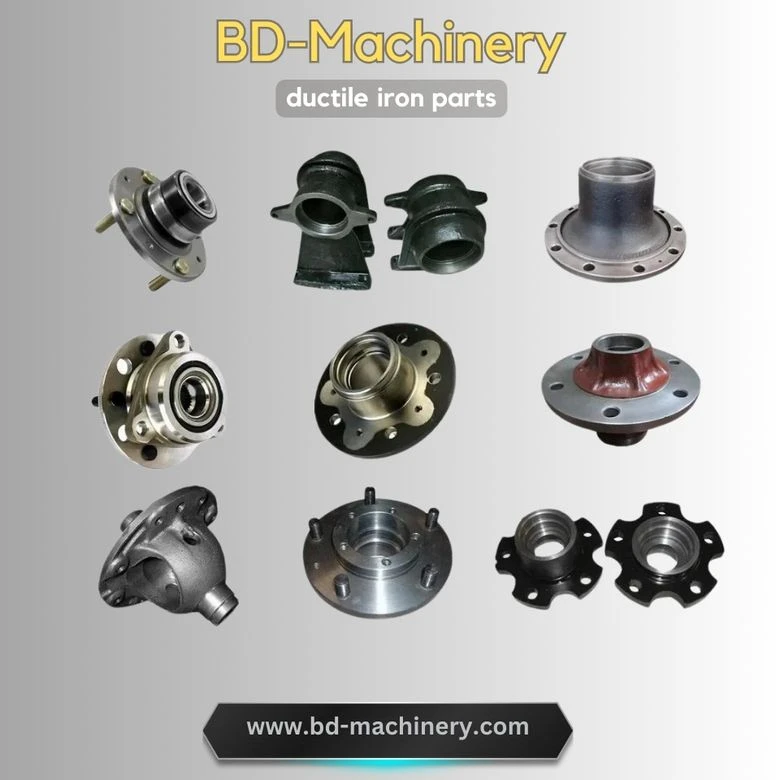

Ductile iron, also known as nodular cast iron or spheroidal graphite iron, is a versatile material widely used in various industries for its unique combination of strength, durability, and cost-effectiveness. This guide delves into the properties, applications, and manufacturing processes of ductile iron parts, offering insights into why it\'s a preferred choice in engineering and manufacturing.
Properties of Ductile Iron
Ductile iron inherits many of the beneficial properties of traditional gray iron but with enhanced ductility due to its unique microstructure. Key properties include:
High Strength and Toughness: Ductile iron offers excellent tensile strength and toughness, making it suitable for parts subjected to heavy loads and stress.
Flexibility in Design: Its ability to be cast into complex shapes and thin sections without sacrificing strength makes it ideal for a wide range of applications.
Corrosion Resistance: Ductile iron can be alloyed to enhance its corrosion resistance, making it suitable for outdoor and marine applications.
Machinability: Unlike some other metals, ductile iron is relatively easy to machine, which reduces manufacturing costs and time.
Applications of Ductile Iron Parts
Ductile iron\'s versatility extends its use across various industries:
Automotive Industry: Commonly used for engine blocks, crankshafts, and suspension components due to its high strength and vibration damping properties.
Construction and Infrastructure: Used in water and sewer pipes, valve bodies, and fittings due to its corrosion resistance and durability.
Machinery and Equipment: Parts such as gears, housings, and hydraulic components benefit from ductile iron\'s strength and machinability.
Agricultural Equipment: Ductile iron parts are found in tractor components and tillage equipment, where strength and wear resistance are crucial.
Manufacturing Processes
The production of ductile iron parts involves several key steps:
Melting and Casting: Pig iron, steel scrap, and other materials are melted in a furnace and poured into molds.
Inoculation: Additives are introduced to the molten metal to promote the formation of graphite nodules, enhancing ductility.
Heat Treatment: Depending on the application, parts may undergo heat treatment to improve mechanical properties.
Machining and Finishing: Once cast, ductile iron parts are machined to precise specifications and finished as required.
Advantages of Ductile Iron Parts
Cost-Effective: Ductile iron offers a cost-effective alternative to steel and other materials, especially for large and complex parts.
High Fatigue Resistance: Its ability to withstand cyclic loading without fracturing makes it suitable for dynamic applications.
Environmental Benefits: Ductile iron parts are highly recyclable, contributing to sustainable manufacturing practices.
Conclusion
Ductile iron parts continue to be integral to modern manufacturing, offering a unique balance of strength, ductility, and cost-effectiveness across diverse applications. Understanding ductile iron parts properties, applications, and manufacturing processes helps in optimizing designs and selecting the right material for various engineering challenges.


























Sign in to leave a comment.