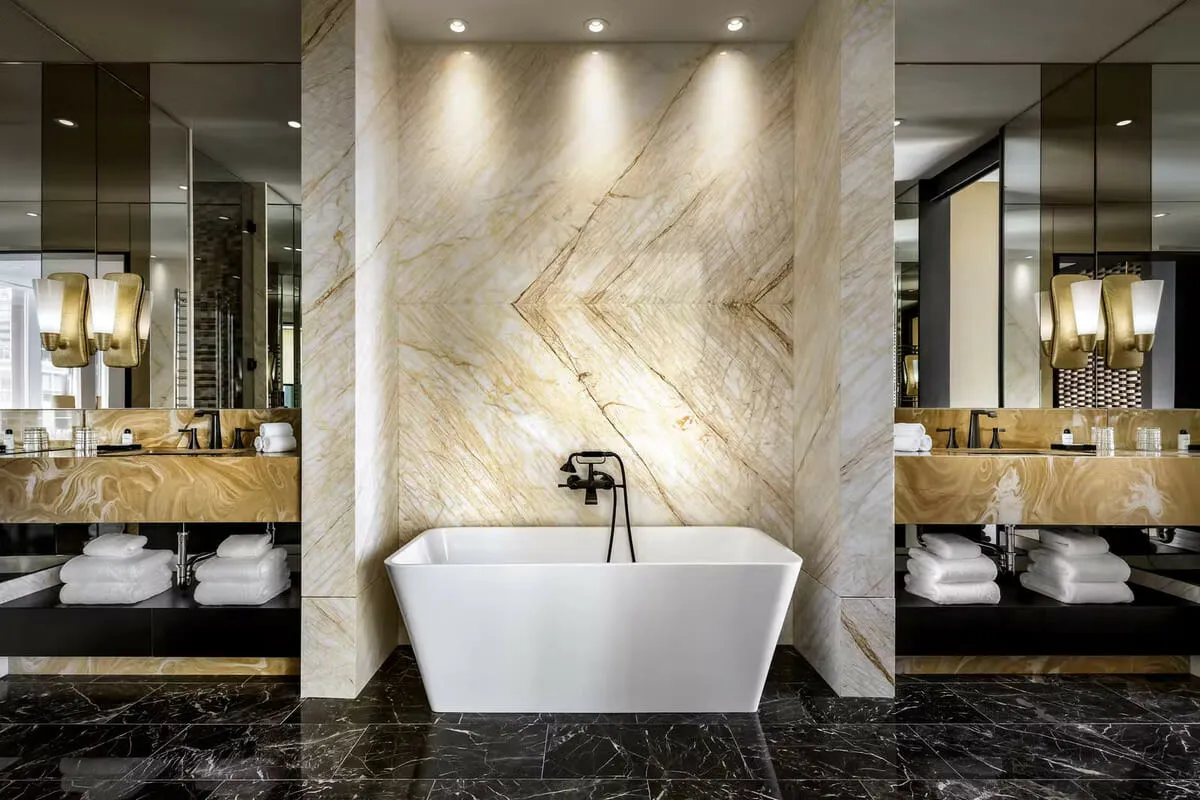

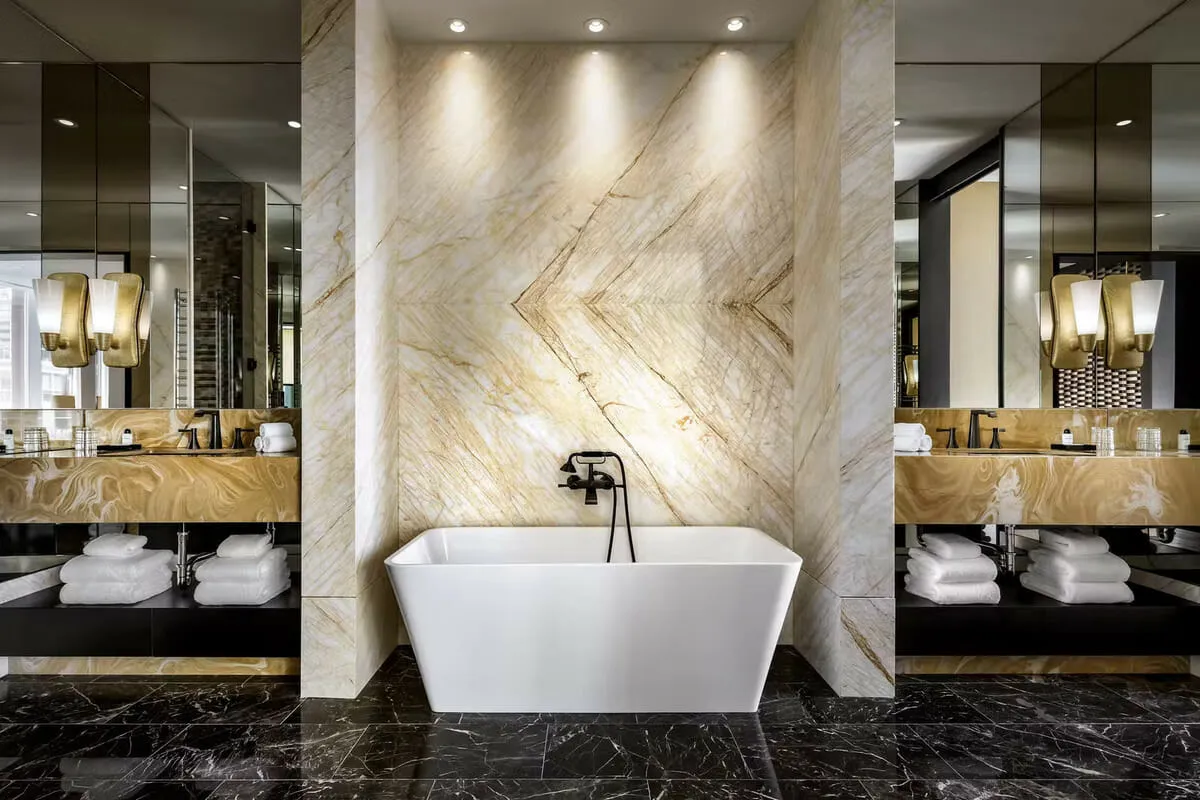
The Evolution of the Marble Bath Suite: How Rare Stone and Architectural Plumbing Turn a Private Room Into a Sculptural Masterpiece
Few rooms in a home have changed as dramatically over the past two decades as the bathroom. What used to be a functional space with a tub, a toilet, and maybe a framed print on the wall has become something closer to a private gallery — a place where rare stone, precise plumbing, and careful lighting are composed with the same rigor an architect would bring to a façade. The marble bath suite sits at the center of this shift. It is where homeowners now invest in material, craft, and quiet ceremony, and where interior designers get to work at the intersection of geology, engineering, and art.
This is not just about bigger showers or fancier taps. It is a full rethinking of how a bathroom should feel when you walk into it first thing in the morning or return to it after a long day. The best examples function as sculptures you can live inside.
A Brief History: From Roman Thermae to the Modern Sanctuary
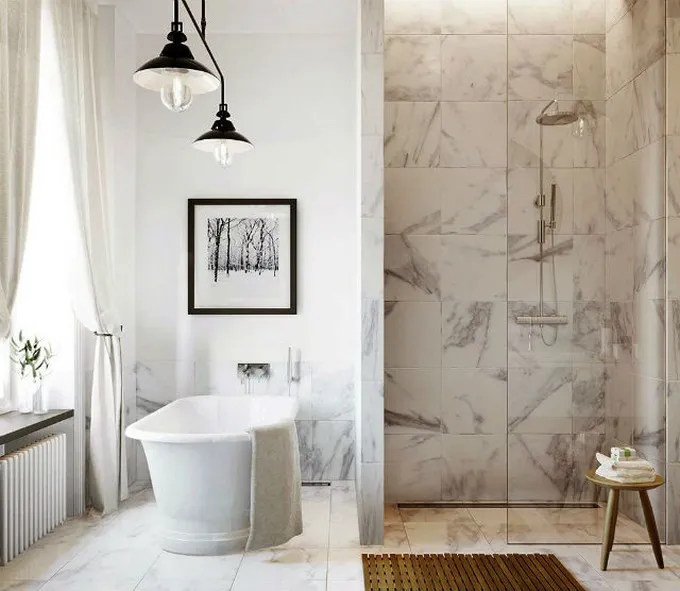
Marble bathing is not a new idea. The Romans built public thermae that were practically cathedrals of water and stone, with veined walls, marble basins, and heated floors fed by hypocausts. The Ottomans refined the hammam into an elaborate choreography of temperature and material, centered on a marble göbek taşı. Renaissance palazzi incorporated private marble-lined bathing rooms for the very wealthy. In each era, stone was the baseline because it was hygienic, durable, and visually commanding.
The twentieth century broke that tradition in most homes. Porcelain tile, then plastic laminates, then prefabricated tub-shower units, pushed marble into the rare-luxury category. For decades, a marble bathroom meant a single slab on a vanity top and cut-price "marble-look" tile everywhere else.
That changed in the late 2000s. Falling fabrication costs, better waterproofing, and a renewed taste for craft brought whole-slab bathrooms back into reach for a wider slice of the market. By the mid-2010s, bookmatched marble walls, monolithic stone tubs, and solid basins carved from single blocks had moved from magazine fantasy to buildable reality. Today, the marble bath suite is the signature gesture of a high-end residence.
Why Rare Stone Is Having a Renaissance
The return of stone is partly aesthetic and partly technical. Stone responds to light in a way that no printed tile can imitate. Move a pendant a few inches, switch out a warm bulb for a cooler one, and the entire room reads differently. Grain, translucency, and surface finish — honed, polished, leathered, brushed — give a designer more expressive range than almost any other material used in bathroom interior design.
It is also deeply personal. Every block is different. A homeowner who chooses a slab is essentially selecting a one-off painting, because the veining will never repeat. That scarcity has turned stone selection into a ritual. Designers now routinely travel to quarries in Carrara, Verona, or the Atlas Mountains with clients, tagging specific blocks that will eventually form the walls of a single room.
The most recognizable variety remains Italian white marble, but the palette has widened. Calacatta Viola, with its dramatic purple-red veining, is being used for feature walls and vanity tops. Verde Alpi and Verde Guatemala bring deep forest-green tones for more theatrical suites. Travertine, once associated with 1970s lobbies, has reappeared in soft, honed finishes that read as warm and contemporary. If you want to understand why one particular stone has been central to interior design for more than five centuries, this deep look at the heritage of a Tuscan quarry town lays out how geology, craft, and aesthetics came together in a single material.
Rare stone is also surprisingly practical when specified correctly. Sealed properly, marble resists water, heat, and most household staining. It develops a patina rather than simply wearing out, which is why historical bathhouses still feel alive centuries after they were built.
The Architectural Plumbing Revolution
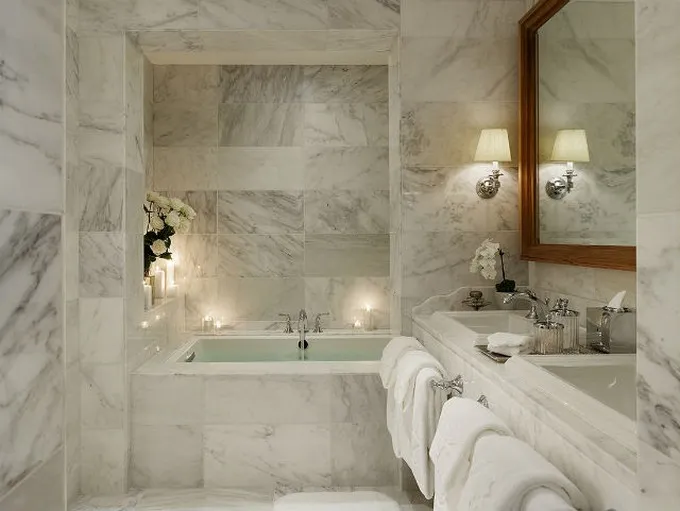
Stone would not be enough on its own. What pushes a contemporary marble bath suite into sculptural territory is the quiet engineering behind the taps, drains, and supply lines. This is where the phrase architectural plumbing earns its weight.
For years, plumbing fixtures were treated as accessories — chosen last, often as an afterthought to match a vanity. In the last decade, that has reversed. The best bathrooms are now planned around their plumbing, with water paths, valve locations, and drain positions drawn into the earliest architectural sketches.
A few specific moves define this approach:
- Ceiling-mounted taps. Moving the spout from the wall to the ceiling above a tub creates a clean arc of water from a single point. It also removes the visual clutter of hardware behind the bather, which lets a bookmatched marble wall read as a single composition.
- Linear and slot drains. Traditional round drains force a visible focal point in the middle of a floor. Linear drains run the full width of a shower or curbless wet zone, allowing a continuous marble slab to slope gently without interruption. Slot drains go further, hiding the evacuation point almost entirely.
- Integrated thermostatic controls. Separate hot and cold handles have given way to flush-mounted thermostatic plates, often machined in the same brass or brushed nickel as the rest of the hardware. The wall stays quiet; the function is still there.
- Floor-mounted tub fillers. A slim brass tube rising from the floor next to a freestanding tub is one of the defining images of the current bath suite. It treats the filler like a piece of architecture rather than a utility.
- Concealed rough-ins. This is the invisible half of the work. Modern marble suites rely on careful coordination between the stone fabricator and the plumber so that supply lines, shut-offs, and access panels disappear behind slab joints or are relocated to adjacent service walls.
Done well, architectural plumbing gives a bathroom the same compositional clarity as a gallery space. Done poorly, it produces a room full of conflicting chrome.
Designing the Contemporary Marble Bath Suite
A bath suite is not the same thing as a bathroom. The suite includes the bathing zone, a separate shower, a generous vanity area, and usually a dressing or linen zone — often with a discreet water closet behind a separate door. Planning the layout is where most of the design decisions actually get made.
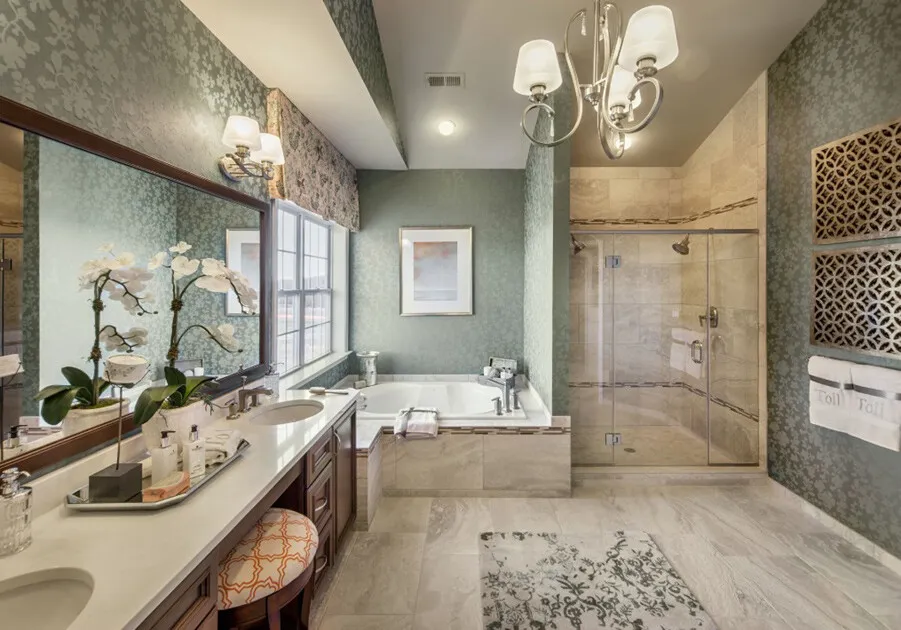
A few principles tend to govern the best work:
- Put the tub where the light is. A freestanding marble or stone tub deserves natural light. Placing it in front of a window, beneath a skylight, or against a softly lit niche transforms it from a fixture into the visual anchor of the room.
- Let the shower breathe. Wet rooms — curbless, glass-enclosed zones that integrate shower and sometimes tub — are the default for new builds. They let one continuous marble floor run uninterrupted across the whole suite.
- Separate the vanity from the wet zone. Keeping makeup, grooming, and storage in a drier area protects both the millwork and the stone. It also gives two people room to use the space at the same time without friction.
- Treat the water closet as a quiet room. A small, separately enclosed toilet room inside the suite is standard in most high-end residences now. It can be lined in the same marble or shift to a contrasting material for variety.
For anyone sketching a floor plan from scratch, this practical walkthrough of smart spatial planning covers the kinds of decisions that separate a functional bathroom from one that genuinely works in daily life. A lot of what feels luxurious in a finished suite is simply the result of good geometry: sightlines that land on stone rather than plumbing, doors that swing into empty space, and plumbing walls grouped efficiently so the rest of the room can be opened up.
Material Selection: Beyond Carrara
Choosing stone is the most consequential decision in a marble bath suite. It determines the color temperature of the room, the way light bounces around, and how forgiving the surfaces will be in daily use.
A short tour of what designers are currently specifying:
- Bianco Carrara and Statuario remain the benchmark whites. Statuario reads brighter and more dramatic; Carrara is softer and more forgiving.
- Calacatta Gold brings warmer veining and pairs beautifully with unlacquered brass hardware — a combination that has defined a particular strain of American and Middle Eastern luxury for the past decade.
- Calacatta Viola is the current darling for statement walls. Its purples and burgundies feel theatrical but work surprisingly well in small doses.
- Travertine — especially silver and walnut varieties — is back. Honed and filled, it reads as quietly luxurious rather than dated.
- Onyx, because it is translucent, can be backlit to turn a wall or vanity front into a soft lantern. It is also delicate and not appropriate for high-traffic surfaces.
- Engineered large-format slabs — sintered stone and porcelain — have improved enough that they are now genuinely competitive for floors and shower surrounds. They are not marble, but in a room where the real stone is reserved for one or two hero surfaces, they let a project stretch further.
A well-designed suite rarely uses more than two or three stones in total. Restraint is what allows each material to do its job.
One practical note on maintenance: marble is more forgiving than its reputation suggests, but it does require a sealer applied every one to two years and a pH-neutral cleaner rather than anything acidic. A dropped bottle of shampoo is not a disaster. A splash of citrus juice left overnight, on the other hand, will etch a polished surface. Honed and leathered finishes hide wear far better than polished ones, which is why most contemporary marble bathrooms specify them for floors and high-traffic counters while reserving polish for vertical hero walls.
The Five-Star Hotel Influence
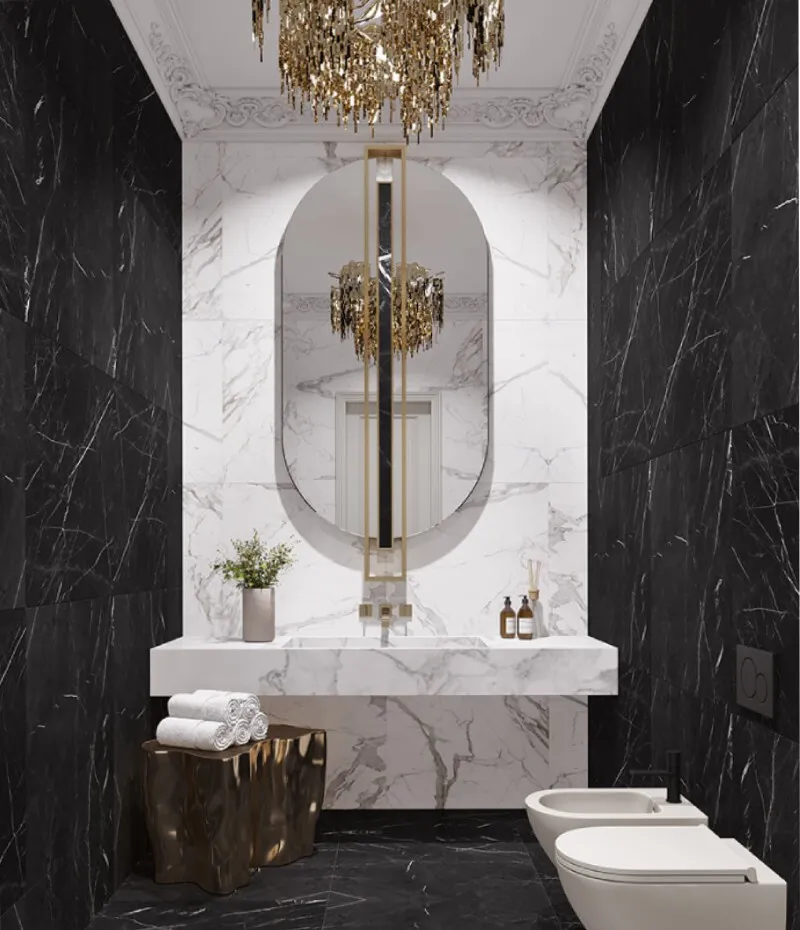
Many of the ideas now appearing in private homes were prototyped in luxury hotels. When the Aman, the Rosewood, or the Bulgari opened a new property, their bathrooms set the bar — curbless showers, stone tubs, dimmable warm lighting, heated floors, and discreetly hidden storage all became standards in those rooms long before they were common in residential work.
Homeowners who spend time in those hotels now expect the same experience at home. That has pushed residential designers to adopt the same logic: treat the bathroom as a destination, not a utility. This thoughtful piece on what makes a hotel-grade bathroom feel genuinely restorative is a useful outside perspective on the specific details — lighting layers, towel warmers, acoustic softness — that separate a good bathroom from one that actually feels like an escape.
Worth noting: the hotel influence is not about scale. A 60-square-meter master suite and an 8-square-meter guest bath can both read as five-star if the material, lighting, and plumbing decisions are precise. Square footage is not what makes a bathroom feel considered.
Signature Projects and Real-World Execution
Reading about marble suites is one thing. Seeing them resolved in built work is another. Details that sound simple on paper — a bookmatched wall, a monolithic tub, a hidden drain — take months of coordination between quarries, fabricators, plumbers, and joiners to pull off cleanly.
Looking at completed residences is the fastest way to calibrate expectations. This recent portfolio of finished private interiors shows how marble, hardware, and lighting get combined across different floor plans, budgets, and aesthetic directions. A few patterns are worth noticing when you study work like this:
- The hero surface is almost always a single continuous slab — a feature wall behind a tub, a shower back, or a vanity top. Everything else supports that surface rather than competing with it.
- Hardware finishes are kept tight. Brushed brass, polished nickel, or matte black throughout, rarely mixed. The discipline is what lets the stone stay the subject.
- Joinery and millwork are flush, integrated, and usually in a single tone — rift oak, walnut, or lacquered off-white — so that storage reads as architecture rather than furniture.
For a broader look at how all these elements come together across styles and budgets, this longer primer on the fundamentals of a well-resolved bathroom covers lighting, layout, and material pairings in one place.
Lighting and the Sculptural Effect
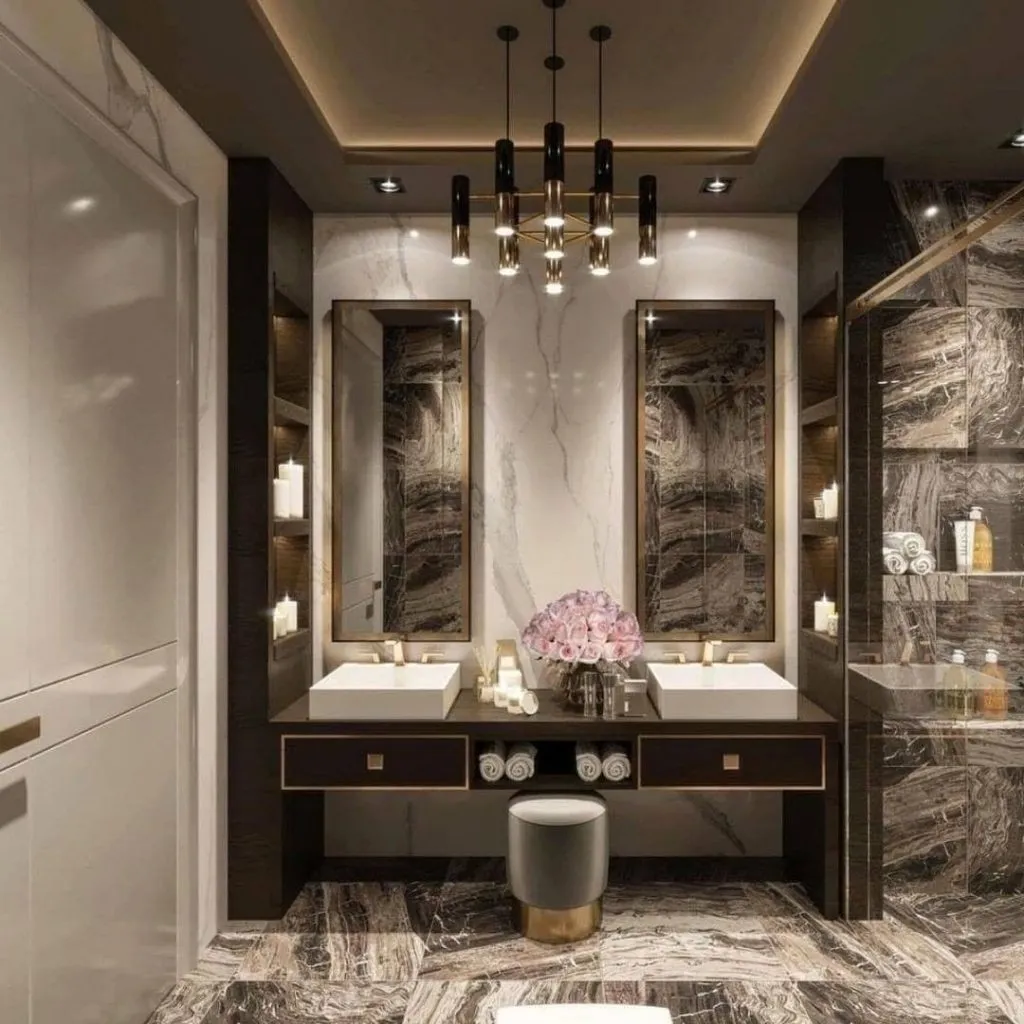
One final piece that separates a memorable marble bath suite from a merely expensive one is lighting. Stone without the right light is dead material. A stone with the right light becomes the room.
- Good practice layers three separate systems. Ambient lighting — usually recessed, warm, and dimmable — handles the base level. Task lighting at the vanity, almost always two vertical sconces flanking the mirror rather than a single fixture above it, renders faces accurately. Accent lighting, the most often skipped layer, is what brings stone to life: a thin wash on a bookmatched wall, a concealed strip under a floating vanity, or a backlit onyx panel.
- Color temperature matters more in a bathroom than almost anywhere else. Anything above 3000K pushes marble cold and clinical. Staying between 2700K and 3000K, with a high color rendering index, keeps the veining warm and the skin flattering.
The trick is to make the lighting feel incidental — as if the room is simply well-lit by some natural source — even when it is the result of a dozen carefully placed fixtures.
Working With Experts
Marble suites reward expertise and punish shortcuts. The margin between a memorable bathroom and an expensive mistake is the quality of the people drawing, specifying, and supervising the work. Slab selection, seam placement, drainage slopes, waterproofing details, and fixture coordination are all specialized skills, and they need to be handled together rather than in sequence.
This is why homeowners increasingly bring in a dedicated team early — ideally at the architectural stage rather than after construction has started. An experienced residential bathroom design will typically handle the entire chain: site survey, layout, stone selection at the quarry or warehouse, fabrication drawings, fixture specification, lighting scheme, and on-site supervision through install. Anything less than that integrated approach tends to produce a room where the stone is beautiful but the plumbing is clumsy, or vice versa.
The cost of getting it right is real, but the cost of getting it wrong — tearing out slabs, re-routing supply lines, replacing a cracked tub — is usually higher.
Conclusion
The marble bath suite has evolved from a status symbol into a genuine design discipline. It sits at the meeting point of geology, architecture, and craft, and it asks more of a designer than almost any other room in a home. When it works, it produces a space that does not just look expensive but feels permanent — a room that reads as sculpture and functions as a sanctuary.
Rare stone gives the suite its presence. Architectural plumbing gives it its discipline. Thoughtful layout gives it its ease. Considered lighting gives it its atmosphere. The best examples quietly combine all four, so you stop noticing the individual decisions and just feel the whole.
That is the point. A great bath suite should disappear into daily use and only reveal its craft when you slow down enough to look at it.

























Sign in to leave a comment.